
eVTOL Updates · analysis
Joby Q3 2026 Results: Blade Growth, FAA Testing and a $500 Million Defense Deal
Joby raised its 2026 revenue outlook after a $55.1 million quarter. We examine what Blade’s growth, the latest FAA milestones, airport demonstrations and the proposed $500 million Resonant deal mean for its electric air taxi plans.

Joby Aviation has raised its 2026 revenue forecast after reporting a $55.1 million third quarter. It is also flying its electric air taxi around major U.S. airports, expanding its defense business and increasing manufacturing output.
The revenue and the aircraft milestones tell different parts of the story. Most of the money is coming from Blade’s existing passenger services. Joby’s electric air taxi is still working through certification, with the latest testing timetable extending into 2027.
The November 4 results announcement shows a company building several businesses at once. Understanding how they fit together gives you a better view of its progress than the revenue headline alone.
Where Joby’s Q3 2026 revenue came from
Joby’s quarterly filing splits revenue into $53.2 million from passenger services and $1.9 million from other activities. Passenger services generated approximately 96.6% of the total.
That is predominantly Blade’s helicopter and fixed-wing bookings. The figures do not establish a commercial revenue stream from Joby’s electric aircraft.
Joby completed its acquisition of Blade’s passenger business on August 29, 2025. That timing matters. Q3 2026 includes a full quarter of the acquired operation, while Q3 2025 included only about one month. The approximately 144% increase in total revenue is therefore not a like-for-like measure of underlying growth.
The acquisition also brought something harder to build than an app: terminals, established routes and customers already willing to pay to avoid a long road transfer. Joby can learn from that business while preparing its own aircraft. It still has to prove how the economics change when electric aircraft enter the network.
Joby’s quarterly results at a glance
| Measure | Q3 2026 | Q3 2025 |
|---|---|---|
| Revenue | $55.1 million | $22.6 million |
| Operating loss | $278.1 million | $181.7 million |
| Net loss | $211.8 million | $401.2 million |
| Adjusted EBITDA loss | $207.9 million | $132.8 million |
Figures are rounded from Joby’s Q3 financial disclosures. Adjusted EBITDA is the company’s non-GAAP measure.
Operating loss widened even as net loss narrowed. Changes in warrant, earnout and contingent-consideration valuations improved the net figure. The smaller net loss does not mean the cost of running and developing the business fell.
Why Joby raised its 2026 revenue forecast
Joby now expects full-year revenue of $135 million to $140 million, up from $115 million to $125 million.
The arithmetic explains the company’s rounded 15% increase: the midpoint moved from $120 million to $137.5 million. That is an additional $17.5 million, or approximately 14.6%.
Blade carried more than 44,000 passengers during Q3, a quarterly record. New York airport passenger numbers increased 61% year over year. That percentage applies to the New York airport business, rather than every Blade route.
For an airport-transfer service, repeat customers and reliable connections matter. Growing that traffic gives Joby a base from which to introduce a different aircraft. It does not tell you what an electric flight will eventually cost, how often it will operate or how consistently it will fly through changing weather. Those answers will come from actual service.
FAA certification: what changed in Joby’s latest timeline?
Joby reports completed FAA for-credit testing across aircraft structures and systems. Its Q3 shareholder letter places FAA pilot training and Joby flight testing of the relevant aircraft in the first half of 2027, laying the groundwork for Type Inspection Authorization flight testing.
That wording deserves attention because earlier announcements pointed toward milestones in 2026.
| Update | What Joby said | What it established |
|---|---|---|
| March 11, 2026 | Its first FAA-conforming aircraft had flown; FAA pilots were expected to conduct for-credit flight testing later in 2026. | A conforming aircraft was flying, with FAA flight testing still ahead. |
| August 5, 2026 | Joby targeted its first eIPP passengers in 2026. | This was a passenger target, rather than confirmation of a launch. |
| November 4, 2026 | FAA pilot training and Joby flight testing of the relevant aircraft were expected in the first half of 2027. | The latest preparation milestones extend into 2027; no firm commercial launch date follows from them. |
The earlier expectations appear in Joby’s March aircraft announcement and second-quarter results.
For-credit testing means the results can support the formal certification process. Completing a structural test and completing FAA flight testing are separate achievements. Type Inspection Authorization, usually shortened to TIA, is part of the formal inspection and testing process used to establish compliance.
The FAA’s certification explanation also separates approval of an aircraft’s design from approval of the systems used to manufacture it. Progress in one area cannot stand in for the other.
According to Joby, the FAA has indicated that eIPP passenger operations require substantial TIA testing. That makes progress through testing a key milestone to follow. The preparation dates in the table should not be mistaken for certification or public launch dates.
What the Texas and Florida air taxi flights actually demonstrated
Joby’s airport flights are useful evidence of how the aircraft can fit into existing aviation operations.
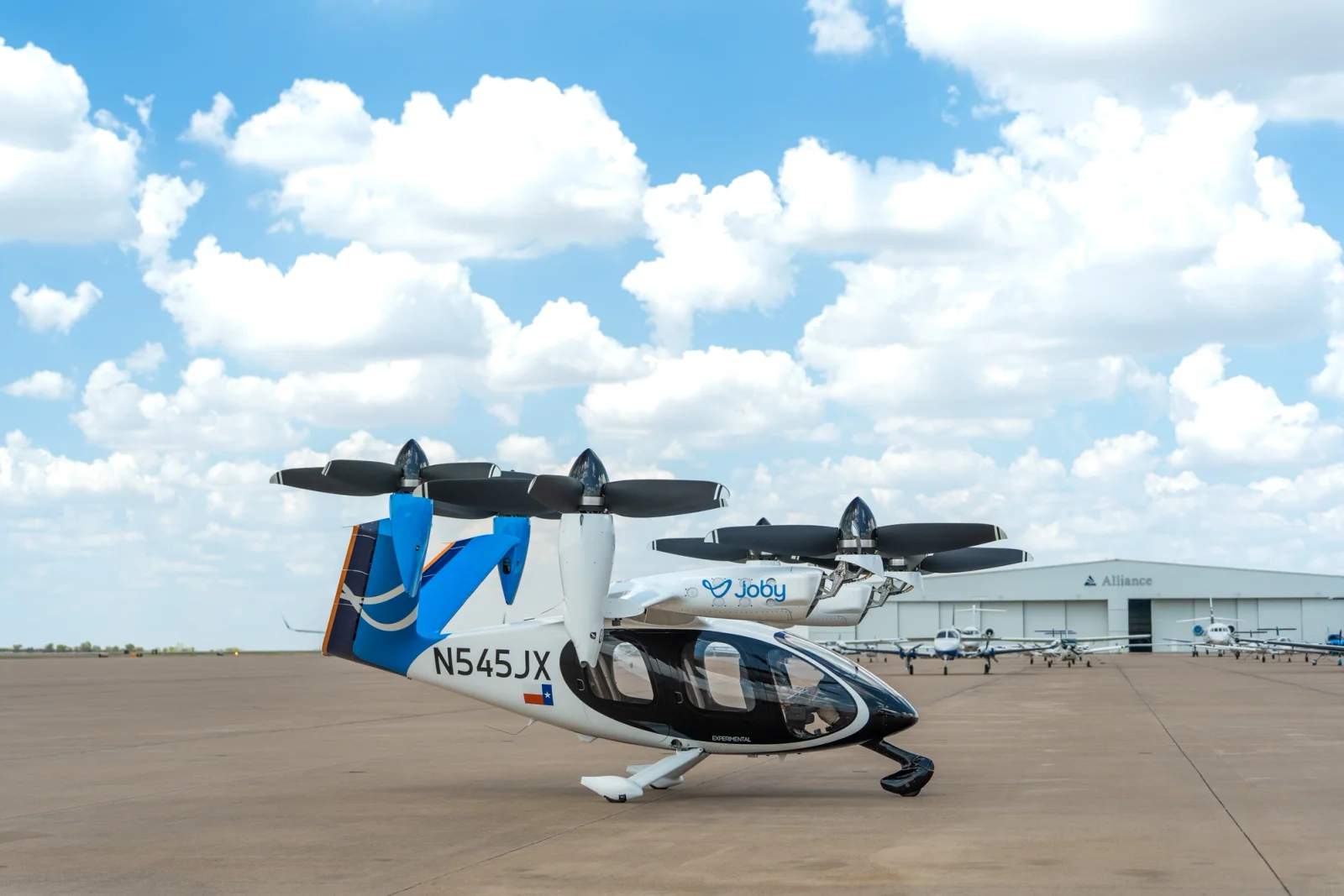
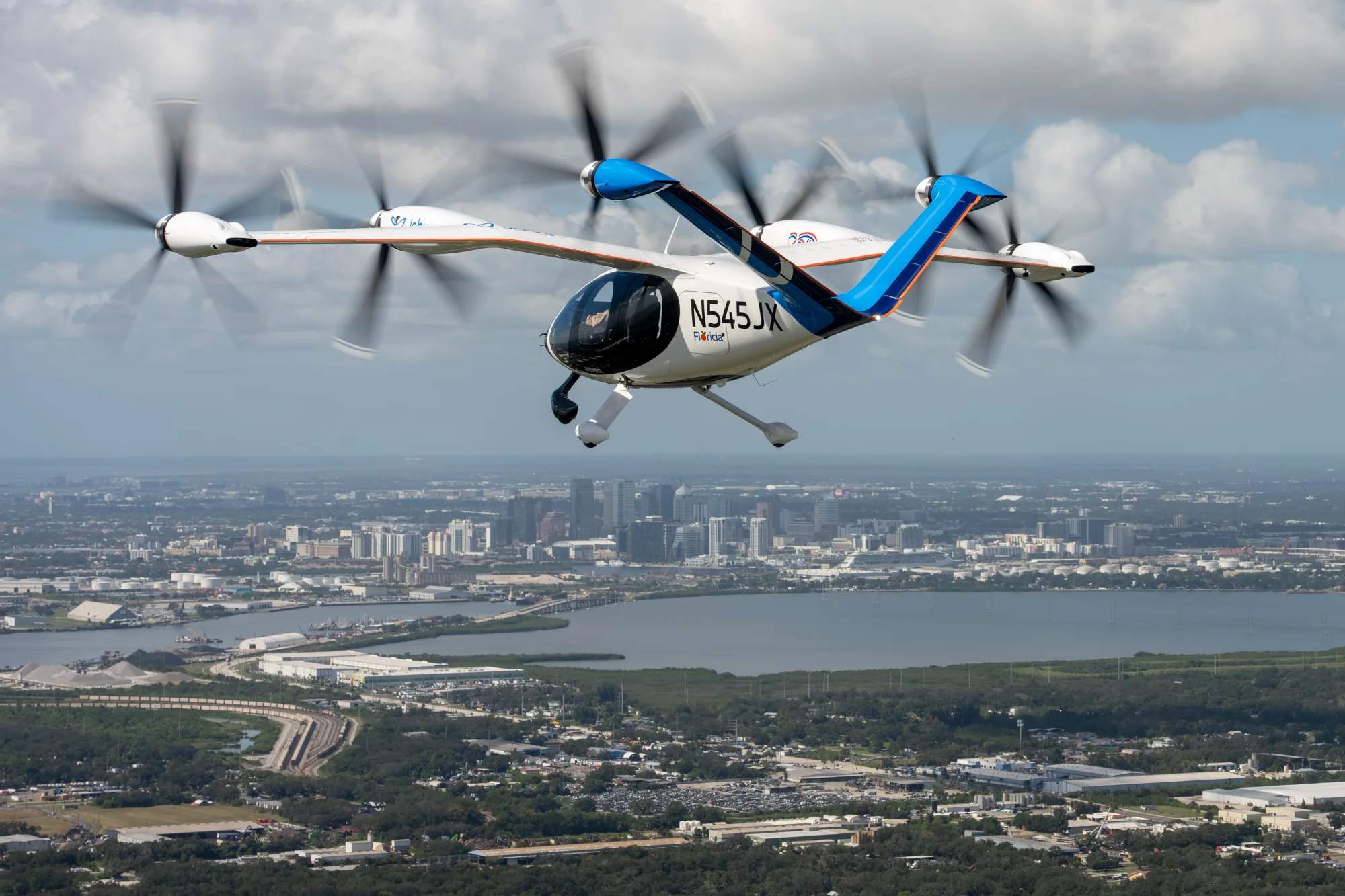
Its Texas campaign in September brought the aircraft into a region centered on Dallas Fort Worth. In Florida, the FAA described the October activity as demonstration flights, including flying between St. Petersburg’s Albert Whitted Airport and Tampa International Airport.
On November 4, the Florida Department of Transportation confirmed a demonstration landing at Orlando International Airport, using a dedicated vertipad near Terminal C and the train station.
These dates are worth separating. The Texas flights occurred within the third quarter. The Tampa and Orlando developments came after the September 30 reporting cutoff, although they formed part of the November business update.
These flights took place under the federal Electric Vertical Takeoff and Landing Integration Pilot Program, or eIPP. The FAA describes it as a framework for selected projects to develop operational experience. A demonstration under that program does not by itself establish that an airline-style schedule is open for bookings.
For you as a passenger, airport integration is about the entire connection. Where do you land? How do you reach the terminal? What happens when the main airport is busy? A short flight saves less time if the ground transfer at either end is awkward. That is why a vertipad’s location and coordination with airport operations deserve as much attention as the aircraft’s appearance overhead.
Toyota and the manufacturing question
Joby reported a 37% increase in output across eight core manufacturing shops between Q1 and Q3 2026. It had 17 aircraft in production.
Those measures describe work moving through factories and aircraft being built. They are not a delivery count. The next useful evidence will be completed aircraft reaching testing and operational assignments.
Joby and Toyota announced the initial phase of their manufacturing alliance and joint venture on June 30. Its stated priorities include productivity, quality, cost and preparation for greater production capacity.
That relationship addresses a practical challenge for any new aircraft manufacturer. A successful test aircraft is only the beginning. A commercial fleet requires repeatable production, consistent parts and a system that can support more aircraft without losing control of quality or cost.
For more on how the aircraft itself differs from the helicopters already serving these routes, see our guide to eVTOL aircraft versus helicopters.
The $500 million Resonant acquisition expands a separate business
The defense deal in Joby’s update was announced in August. It was not a new agreement signed with the November results.
Joby agreed to acquire Resonant Sciences for approximately $500 million, comprising about $450 million in cash and $50 million in shares, subject to adjustments. The latest expected closing is early 2027, following the required approvals and other closing conditions.
Resonant supplies technologies including radio-frequency systems, sensing and mission electronics. Joby said the business had more than $100 million in trailing revenue through July 2026 and was EBITDA-positive. Those are figures for the acquisition target; they are not already part of Joby’s Q3 revenue.
The proposal would create a dedicated defense business. Strategically, that gives Joby another source of activity alongside passenger aviation. Financially, it commits significant capital while the electric aircraft program is still under development.
Joby ended September with approximately $2.2 billion in cash, cash equivalents and short-term investments. That balance included approximately $128 million raised through its at-the-market share-sale program during the quarter.
The proposed $450 million cash consideration is roughly one-fifth of the September balance. That makes the acquisition a substantial capital commitment alongside aircraft development.
Joby reported using $195 million of cash, cash equivalents and short-term investments during Q3. Its second-half outlook remains $385 million to $415 million. Revenue growth and the cost of developing the aircraft need to be read together.
The autonomous cross-country aircraft was a Cessna Caravan
The autonomy milestone involves another aircraft entirely.
In its November 4 Air Force announcement, Joby described a modified Cessna Caravan using its Superpilot autonomous flight system. A safety pilot was onboard and, according to Joby, made no control inputs during the flights.
The eastbound cross-country journey covered 3,199 miles over multiple legs. It was not Joby’s electric vertical-takeoff aircraft flying that distance, nor was it a nonstop flight.
The same announcement put U.S. Air Force commitments at nearly $37 million. Contract commitments are different from revenue recognized in a particular quarter. They show demand for the defense technology, while the timing and delivery requirements determine when the work becomes revenue.
For the passenger business, this distinction matters. Progress in autonomous software should not be read as a change to the initial piloted air taxi service Joby is developing.
What to watch in Joby’s next update
The most useful milestones are specific: FAA pilot training, the relevant aircraft entering the next flight-test activities, completed production aircraft, and authorization for passenger operations. Each tells you more about the route to service than a broad launch-year headline.
Blade’s next results will also help show how its customer base develops beyond the strong summer quarter. For Resonant, the next questions are whether the acquisition closes on the expected terms and how the combined defense business performs.
There is a legal issue to follow as well. On October 2, a jury awarded Aerosonic $116.9 million. Aerosonic sought injunctive relief on November 2. Joby disputes the verdict and plans post-trial and appellate challenges, according to its November 5 quarterly filing. Our Aerosonic verdict report covers that dispute separately.
Joby now has an existing passenger business, a larger manufacturing operation and a proposed defense acquisition to manage alongside its electric aircraft. Its next major test is converting those capabilities into a dependable electric air taxi service you can actually book.
Frequently asked questions
How much revenue did Joby make in Q3 2026?
Joby reported $55.1 million for the quarter ended September 30, 2026. Passenger revenue accounted for approximately 96.6% of the total, predominantly from Blade’s existing services.
Has Joby launched commercial electric air taxi flights?
The November 4 update did not establish a public commercial passenger launch. It described airport demonstrations, certification work and preparations for further testing. Blade’s existing bookable services use conventional aircraft.
When will Joby complete FAA certification?
Joby has not provided a firm completion date in this update. Certification depends on satisfying the applicable requirements and receiving FAA approval; the testing timetable is one part of that process.
What is Joby’s 2026 revenue forecast?
The revised forecast is $135 million to $140 million. Its $137.5 million midpoint is approximately 14.6% above the previous $120 million midpoint, which Joby rounded to a 15% increase.
Did Joby’s electric air taxi fly autonomously across America?
No. The cross-country autonomy demonstration used a modified Cessna Caravan equipped with Superpilot. A safety pilot was onboard. It was a different aircraft and program from the electric air taxi.