
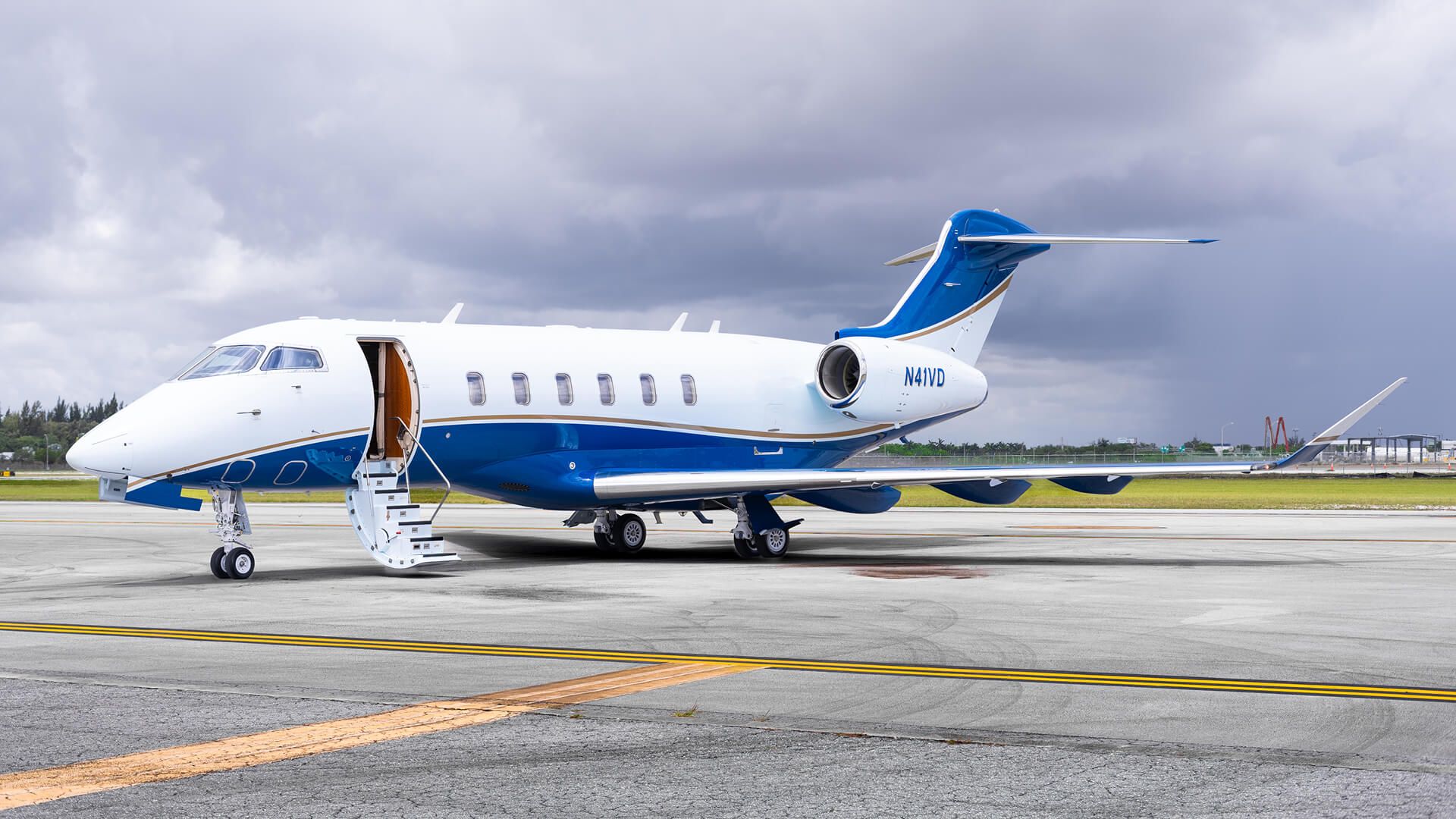
The Bombardier Challenger 350 did not become a bestseller by reinventing the business jet. It succeeded by improving an aircraft that operators already knew: the Challenger 300.
Bombardier paired a spacious cabin and transcontinental range with new engines, revised winglets, updated avionics and a redesigned interior. A launch partnership with NetJets then put the aircraft in front of one of private aviation’s largest customer bases.
The delivery figures show the result. According to the General Aviation Manufacturers Association (GAMA), Bombardier delivered 56 Challenger 350s in 2017 and 60 in 2018. Bombardier reported another 56 deliveries in 2019, when it said the aircraft led the super-midsize segment for a sixth consecutive year. By July 2019, the manufacturer had delivered its 300th Challenger 350, five years after the model entered service.
Those numbers establish its commercial success. Understanding why it sold so well requires a closer look at the aircraft it replaced, the missions it was designed to fly and the customers Bombardier needed to satisfy.
The Challenger 300 gave Bombardier a strong starting point
The Challenger 350’s story begins with the Challenger 300, which entered service in 2004. It offered a flat-floor cabin and the range to serve many long domestic and regional international trips, which is an appealing combination for corporate flight departments and private operators seeking more space than a midsize jet without moving into a larger aircraft category.
The Challenger 300 also gave Bombardier something valuable that a new design would have taken years to build: an established fleet. In June 2013, Bombardier announced delivery of the 400th Challenger 300. Its service history, operator feedback and support arrangements provided a foundation for the next version.
Early competition included the Gulfstream G200 and other aircraft spanning the midsize and super-midsize markets. By the early 2010s, buyers had more alternatives, including newer designs and substantial updates to existing jets.
Bombardier therefore needed to improve the Challenger’s performance and passenger experience while preserving the qualities that had made the 300 attractive. The manufacturer’s own 2012 market presentation placed the Challenger 300 and G200 in the same broad competitive field.
Why Bombardier evolved the aircraft
When Bombardier unveiled the Challenger 350 at the European Business Aviation Conference and Exhibition in May 2013, it described the aircraft as a response to feedback from Challenger owners and operators. Rather than discard the Challenger 300 platform, it concentrated on changes customers would notice in flight operations and in the cabin.
That decision had practical advantages. An evolution could build on a familiar aircraft family, while improvements to engines, aerodynamics and onboard systems addressed changing expectations. For an operator considering a fleet purchase, continuity also offers an easier proposition to evaluate than an entirely unfamiliar design. That is an inference from the aircraft’s development path, rather than a claim that one factor alone caused its sales success.
The Challenger 350 was more than a cabin refresh. Its principal changes included:
- Honeywell HTF7350 engines, rated by Bombardier at 7,323 pounds of thrust each at launch.
- New canted winglets intended to improve aerodynamic efficiency.
- Rockwell Collins Pro Line 21 Advanced avionics, including synthetic vision, dual inertial reference systems and weather-radar capability.
- A redesigned cabin with larger windows, revised seats, a new galley and an updated cabin-management system.
Bombardier presented these as a coordinated improvement to the aircraft’s performance, cockpit and passenger environment. The Challenger 350 first reached customers in June 2014, when NetJets received the launch aircraft.
Range that suited the super-midsize mission
Bombardier advertised the Challenger 350 with a range of 3,200 nautical miles, or approximately 5,926 kilometres, carrying eight passengers under specified operating conditions. That made coast-to-coast trips across the continental United States a central part of its appeal. The aircraft could also serve many longer regional routes, depending on the day’s flight plan and conditions.
Published range is a planning reference, not a promise that every route of that length can be flown nonstop. Winds, temperature, runway length, passenger and baggage weight, cruising speed and fuel-reserve requirements all affect the actual mission. An operator must calculate those factors for a particular flight.
The important commercial point is where the Challenger 350 sat in the market. It offered substantially more cabin space than many smaller jets while covering a large share of the trips for which customers might otherwise consider a bigger aircraft. That balance made it relevant to corporate travel, fractional ownership and charter service. It did not have to be the longest-range or fastest jet in the segment to be useful on a wide range of missions.
Bombardier also promoted the aircraft’s ability to carry a full passenger load with full fuel over its stated range.
A cabin built for the time spent onboard
Range gets passengers to a destination; the cabin determines how they spend the hours in between. This was one of the Challenger 350’s strongest selling points.
The aircraft retained the Challenger family’s wide, flat-floor layout. NetJets lists a cabin approximately six feet high and seven feet two inches wide, with 106 cubic feet of baggage space accessible during flight. Its aircraft can be arranged with club seating or a convertible divan, and layouts vary by operator.
Those details matter on a long business trip: passengers have space to talk, work, eat or rest, while bags needed during the flight remain within reach.
Bombardier made the 350 feel distinct from the 300 through larger windows and an extensively redesigned interior. Its original specification described updated seats, a modular galley and Lufthansa Technik’s nice HD cabin-management system, which let passengers control aspects of their environment and entertainment.
The specification described available and planned features at launch; equipment on an individual aircraft depends on its year, configuration and later upgrades.
For a fractional or charter operator, cabin appeal is not merely cosmetic. The aircraft must satisfy different customers on successive trips, often with different expectations for seating, baggage and connectivity. A flexible, comfortable cabin makes the jet easier to offer across a broad range of journeys.
The NetJets partnership put the 350 to work
Bombardier announced NetJets as the Challenger 350’s worldwide launch partner in 2013. The two companies worked together on the NetJets Signature Series cabin, and NetJets took delivery of the first aircraft in June 2014. At that handover, NetJets described a plan that could include up to 200 Challenger 350 aircraft over the following decade.
A launch customer of that scale mattered in two ways. It provided an early route into service for the new aircraft and demonstrated that a major fractional operator considered the model suitable for repeated, demanding use. It also exposed more passengers to the Challenger cabin than a small number of privately owned aircraft would have done.
What the delivery record proves and what it does not
The phrase “bestselling business jet” needs a defined category and measure. Aircraft manufacturers and industry reports commonly compare deliveries, meaning aircraft handed over to customers, rather than undisclosed order totals.
For the Challenger 350, the strongest supported claim is that it was a leading, and for several years the most-delivered, super-midsize business jet.
Bombardier said its 60 deliveries represented 58% of the super-midsize segment in 2018. It reported a 44% share in 2019.
Calling the Challenger 350 the most-delivered jet of every type in 2018 would be misleading. GAMA recorded 63 deliveries of the Cirrus SF50 Vision Jet that year, compared with 60 Challenger 350s. The aircraft serve very different markets, which is precisely why the category belongs in the claim.
Continuous improvements helped keep the aircraft relevant
Bombardier did not stop developing the Challenger 350 after its first delivery. In 2018, it announced an optional head-up display and enhanced vision system for new aircraft, with retrofit availability for jets already in service. These features supplemented the flight deck’s existing synthetic-vision capability; they were not standard equipment on every Challenger 350.
In 2019, Bombardier outlined further enhancements, including improved cabin sound insulation and a performance package focused on operations from shorter runways. The company said the package could materially increase the distance an aircraft could fly from certain short runways.
This steady development helped Bombardier address new customer expectations without asking every existing operator to switch to an unrelated platform. For prospective buyers, it also means two Challenger 350s built in different years may have different equipment and capabilities. An aircraft’s actual specification matters more than the model name alone.
Operating value involves more than the purchase price
A business jet earns its place in a fleet by completing the trips its owner needs, at an acceptable total cost and with manageable downtime. Range and cabin dimensions are only part of that calculation. Crew training, maintenance support, parts access, equipment choices, fuel use and eventual resale all matter.
Bombardier promoted the Challenger 350’s operating costs as competitive within its class and prepared its training and support network ahead of entry into service. Those are useful considerations, but a manufacturer’s category-wide cost claim cannot replace a budget for a specific aircraft.
Annual flying hours, maintenance status, location, crew arrangements and mission profile can change the economics substantially.
The established Challenger platform plausibly reduced some of the uncertainty operators face when introducing a new type. The delivery record indicates that many customers found the overall package attractive. It does not prove that the 350 was the cheapest aircraft to own or the best choice for every mission.
The Challenger 3500 carried the formula forward
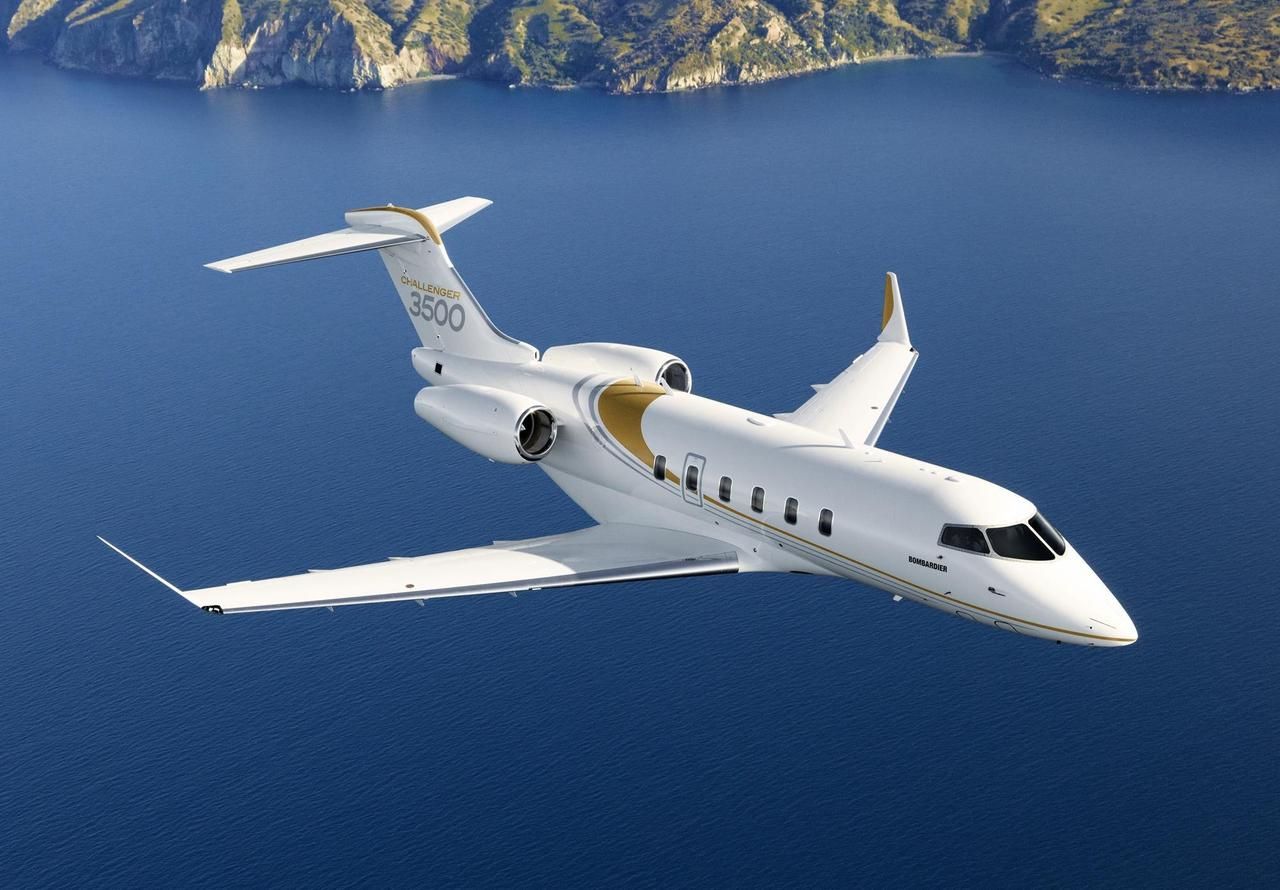
Bombardier introduced the Challenger 3500 in 2021 as the next evolution of the platform. It entered service in September 2022. The update focused heavily on the cabin, adding features such as the Nuage seat and voice controls, alongside a lower cabin altitude and standard autothrottle in the flight deck.
It extended the approach Bombardier had taken with the Challenger 350: keep a successful aircraft family current through targeted improvements.
In October 2024, Bombardier announced delivery of the 100th Challenger 3500. Together, the milestones show how long the underlying Challenger 300-series platform has remained commercially relevant.
Why did the Challenger 350 become a bestseller?
Its success came from the combination. The Challenger 300 gave Bombardier a proven foundation and an established operator community. The 350 improved the areas that mattered to customers: performance, cockpit technology and the experience of spending hours in the cabin.
Its advertised 3,200-nautical-mile range covered important business-travel missions, while its partnership with NetJets provided a prominent entry into service. Continued updates helped the model remain competitive as alternatives multiplied.
The clearest conclusion is also the most precise: the Challenger 350 became one of business aviation’s defining super-midsize jets, with delivery figures to support that description. Its history illustrates how a carefully developed aircraft can remain attractive through changing markets without being a completely new design.
Frequently asked questions
Is the Challenger 350 the same aircraft as the Challenger 300?
No. The Challenger 350 is an extensively updated development of the Challenger 300 platform. It introduced different engines, new winglets, updated avionics and a redesigned cabin while retaining the family’s basic concept.
What is the Challenger 350’s range?
Bombardier advertised 3,200 nautical miles with eight passengers under specified conditions. Actual nonstop capability depends on the route, weather, payload, runway, cruising speed and required fuel reserves.
When did the Challenger 350 enter service?
The Challenger 350 entered service in June 2014, when Bombardier delivered the first aircraft to launch customer NetJets.
Is the Challenger 350 still the newest aircraft in the family?
No. Bombardier introduced the Challenger 3500 in 2021, and the newer variant entered service in 2022. The Challenger 350 remains an important part of the platform’s history and of the aircraft available to owners and charter customers.