
Aircraft Ownership · guide
Buying an Older Business Jet: When the Lower Asking Price Costs More
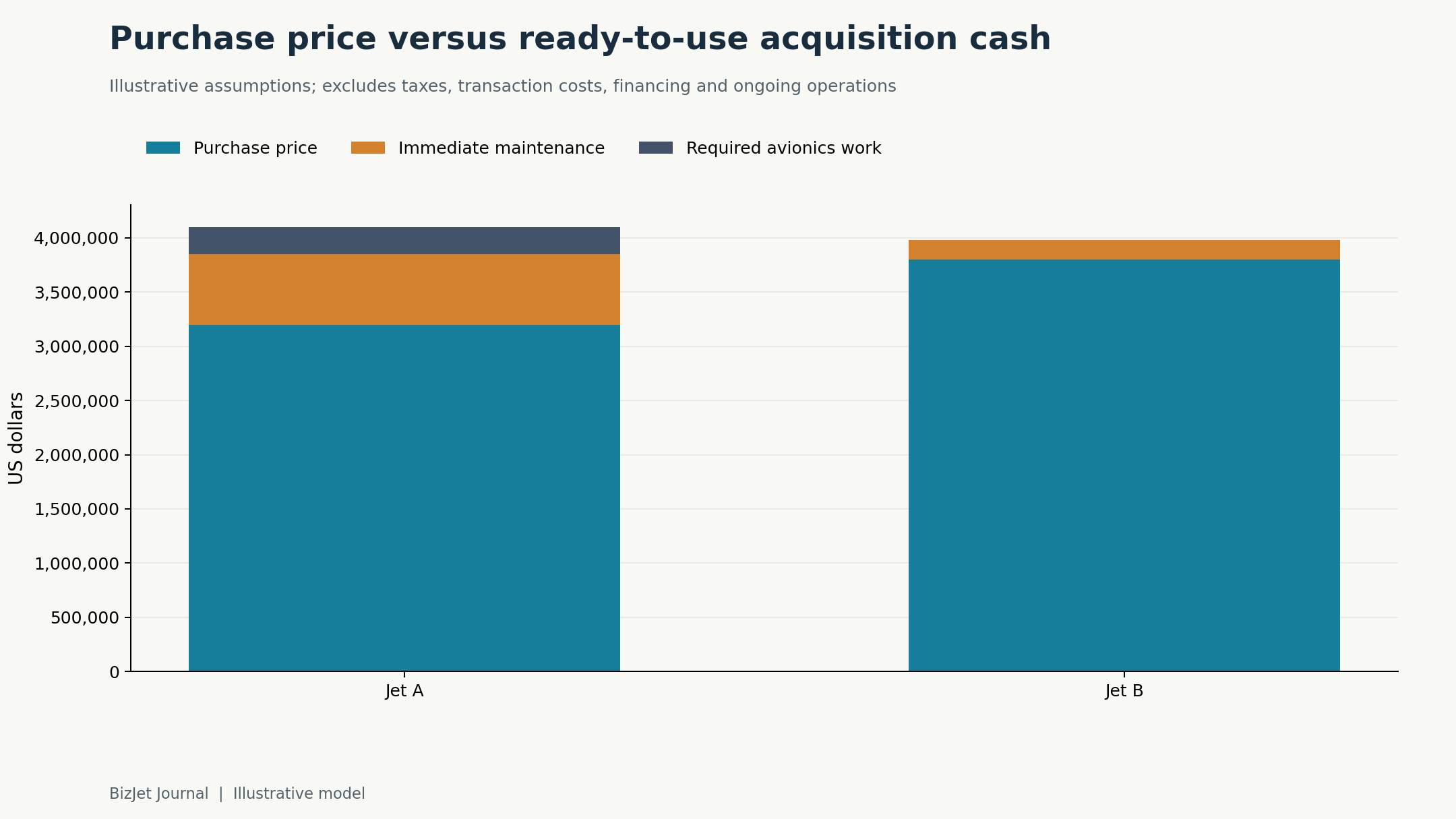
A $3.2 million jet can require more cash to put into service than a $3.8 million aircraft. The difference sits in maintenance due, installed avionics and the shop calendar.

A buyer looking at two older jets sees a $600,000 difference in asking price. One seller wants $3.2 million. The other wants $3.8 million. Both aircraft can fly the buyer’s regular trips. Yet in the example below, the more expensive jet takes $120,000 less cash to put into service. The lower-priced aircraft has more work coming due, and its cockpit needs an upgrade for the buyer’s intended operation.
What changes the cost of buying an older business jet?
For a company buying an older business jet, the first comparison starts with a flight the aircraft will make regularly. Can each aircraft carry the usual group and its bags from the airports the owner uses, in the conditions when those trips take place? A cabin that needs refurbishment has a price. A payload limit that forces a fuel stop on the company’s most frequent trip changes the service the owner is buying. That distinction matters when matching a business jet to its missions.
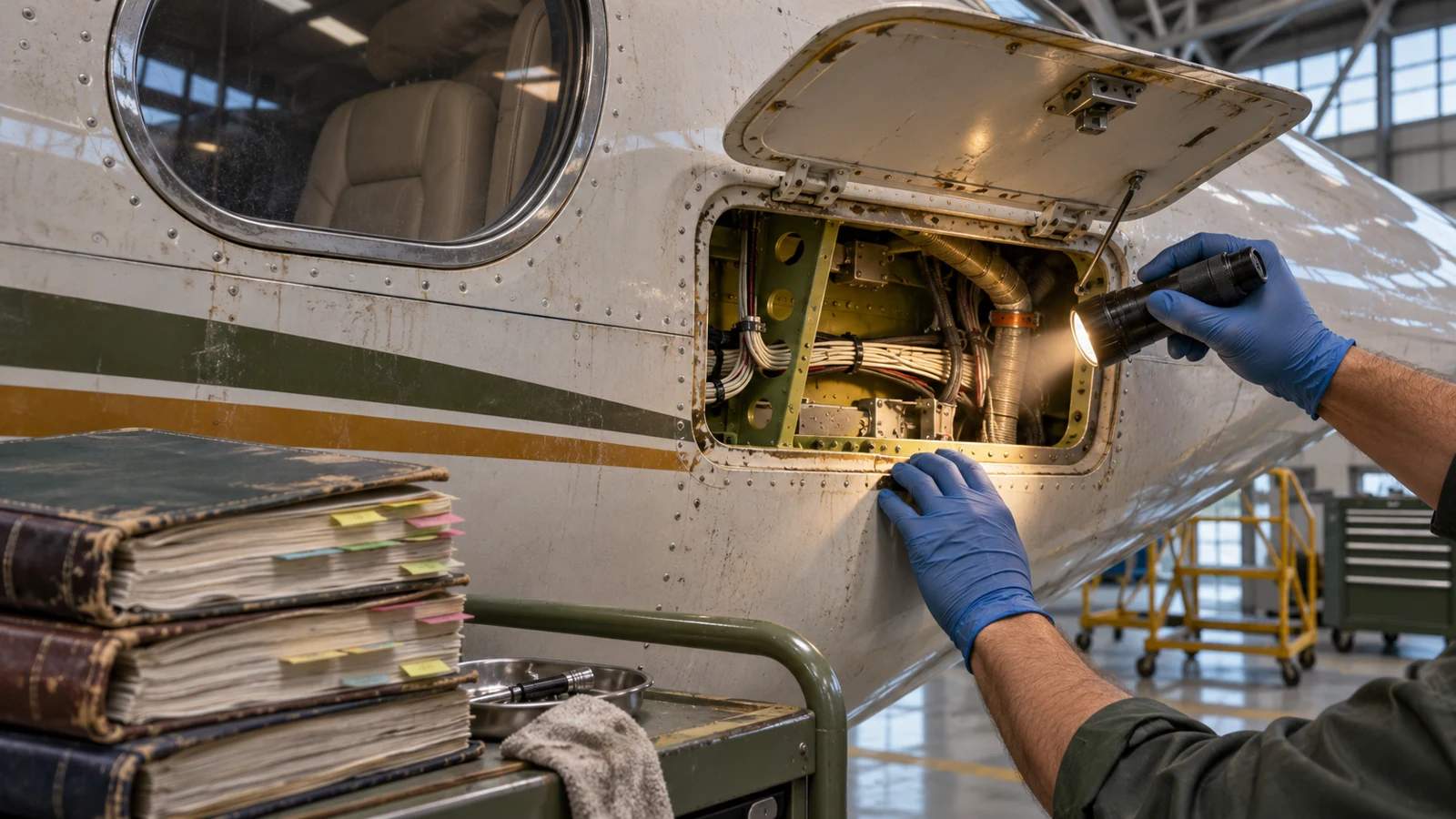
Once two aircraft qualify, the relevant unit of comparison is the individual airframe. Two jets that left the same production line in the same year can arrive at a sale with different engine histories, avionics installations and inspection dates. One owner may have completed a major inspection last month. The next owner of the other aircraft may have to schedule it before the busiest month of the year.
A $600,000 price advantage disappears in the maintenance shop
Here are two hypothetical US-dollar purchase budgets. Assume each seller accepts the asking price and each buyer pays for the listed work after closing. “Required avionics” means necessary for this buyer’s missions. The figures exclude taxes, financing, transaction expenses and substitute travel.
| Acquisition item | Jet A | Jet B |
|---|---|---|
| Purchase price | $3,200,000 | $3,800,000 |
| Immediate maintenance | $650,000 |