Flying Private · guide
Flying With Musical Instruments on a Private Jet
A cello may need an approved place in the cabin, while an older bow can affect the border paperwork. What changes when musicians charter the whole aircraft.

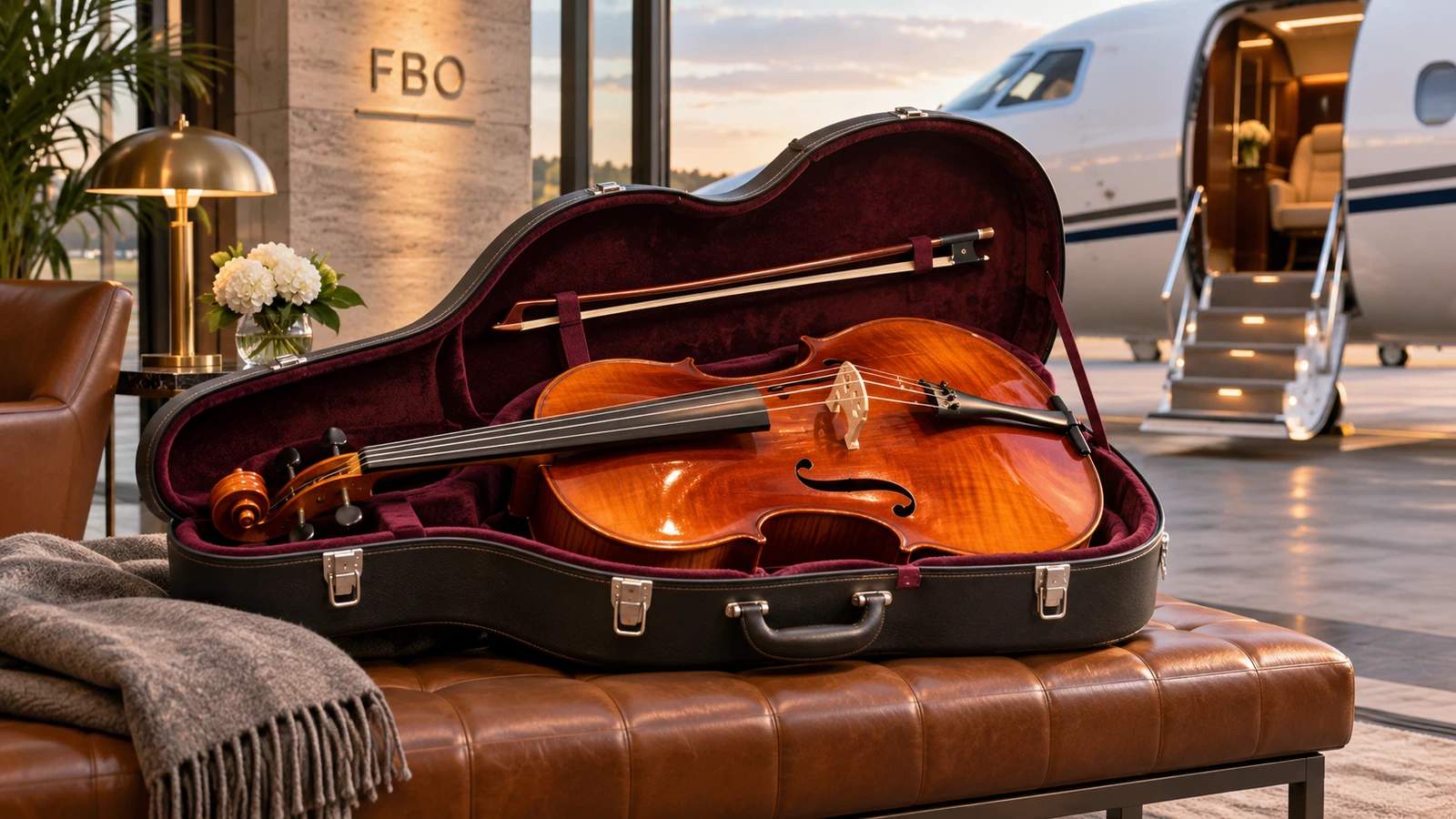
A string quartet can fit in four passenger seats. The two violins, viola and cello present a different booking problem. The cello may have to travel in the cabin, the violinists may have bows on loan and everyone may need to be onstage for a sound check an hour after landing. An offer that confirms transportation for four people has answered only part of the assignment.
Flying with musical instruments on a private jet gives the musicians and the operator a chance to agree on the arrangements before departure. The details that matter are where each packed instrument will travel, who handles it, whether the aircraft can accept it safely and what happens to the agreement if the operator substitutes a jet. For an international tour, the materials used in a single bow can influence the itinerary as much as the size of a cello case.
Flying with musical instruments on a private jet starts with the case
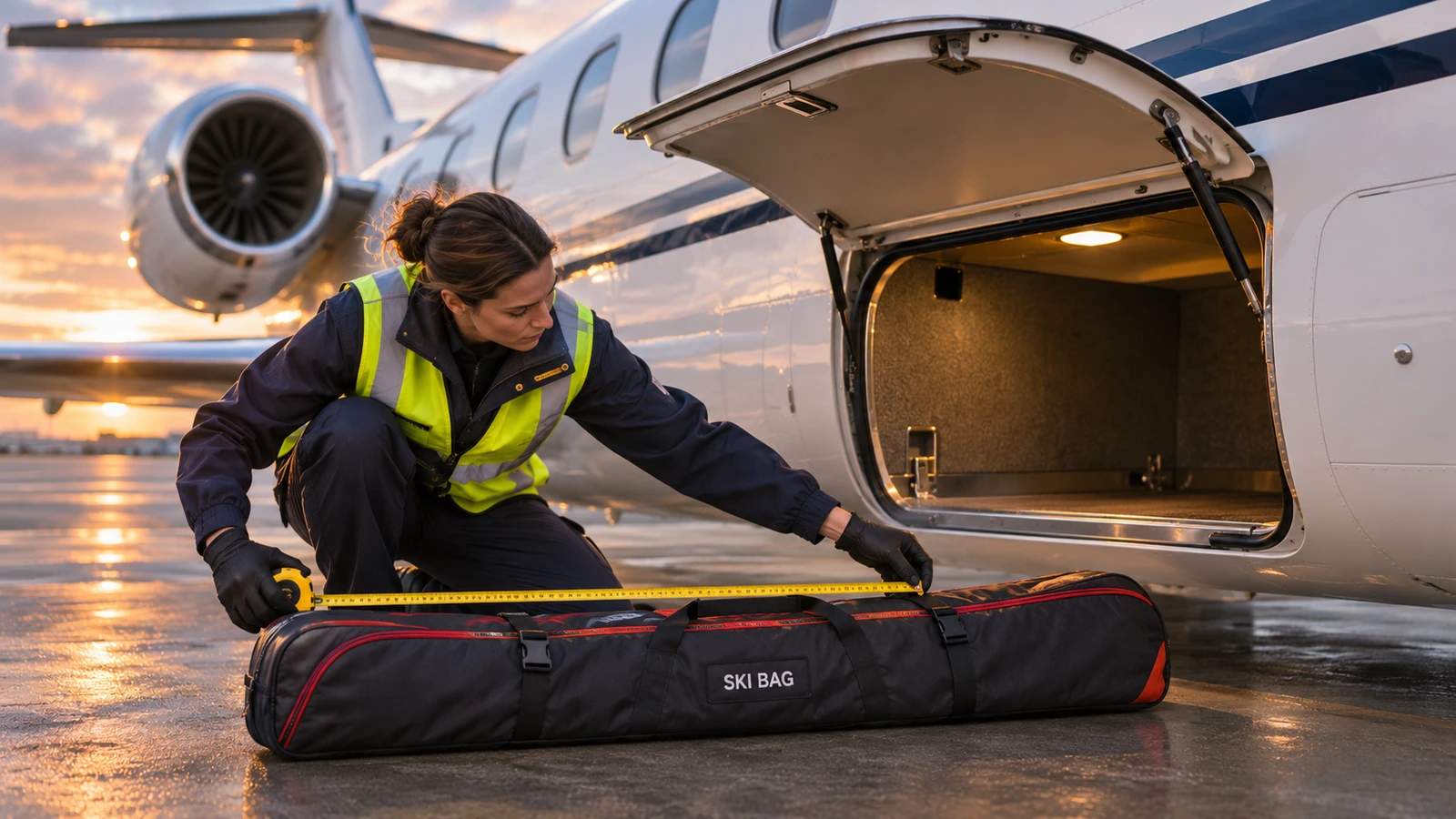
The dimensions useful to a charter operator are the outside measurements of the case as it will leave for the airport. A violinist might describe an instrument by the length of its body. The crew needs the case with its bow compartment, handle, protective cover and any protruding hardware included. A hard shell has to get through the aircraft door, past the seat backs or galley and into the proposed location. Its widest point may sit well below the handle.
Weight matters too. A compact rack of electronic equipment can weigh more than a large cello in a molded case. Describe each unusual piece separately and give the operator the total count of ordinary bags in addition. A photograph showing the whole packed case from the side helps identify its shape. A second view from the end can reveal depth that does not show in a length-and-width measurement.
The instrument owner may have a handling requirement of their own. A soloist borrowing a cello for a recital may be allowed to take it onboard only if it stays in their custody. A second possible restriction is how long it can remain outdoors at the departure or arrival airport. If an instrument has specific environmental limits, the maker, conservator or lender can supply those limits. The operator can then say whether the proposed compartment and ground arrangements can meet them.
When does a cello get a cabin seat?
On a U.S. scheduled airline, a musician may have experience buying a second seat for a large instrument. The federal musical instrument carriage rule defines the covered services as scheduled passenger service or public charter service. A group privately hiring an entire jet for an on-demand flight is making a different arrangement. The fact that the group has paid for every available seat does not establish that the operator can secure a cello in one of them.
For U.S. Part 135 charters, the cargo and carry-on rule addresses how items must be stowed or secured. Its provisions for certain cabin loads cover the strength of the restraint, seat or floor limits and access to required exits, among other conditions. A case cannot simply be propped against the sidewall for takeoff. Nor can a passenger promise to steady it if there is turbulence.
The useful confirmation describes the arrangement the operator can actually provide. It might accept a particular cello case secured at a designated location, two violin cases in approved storage and the viola in another suitable compartment. With that description, the players know which instruments stay in sight and how many passenger seats remain available. If someone later joins the trip, the apparently empty seat beside the cellist may already have a job.
What the quartet pays for in a different aircraft
Consider an illustrative domestic charter. Four musicians are offered a $16,000 flight on which the operator can take the smaller instruments but cannot accommodate the packed cello in the cabin. A specialist courier could carry the cello separately for $1,200. Another operator offers a $19,000 charter with an acceptable cabin arrangement for all four instruments. Assume the quoted totals include the relevant aircraft and courier charges and the larger jet requires no extra ground transfer.
With the courier, the group pays $17,200. Keeping the cello with the quartet costs $1,800 more. The difference buys a particular chain of custody and an arrival on the same flight. For a rehearsal the following afternoon, a confirmed courier delivery the night before may work. For a performance on the evening of arrival, a courier window that extends past the sound check may put the cheaper option out of contention. A lender’s requirement for the player to accompany the cello could eliminate it from the outset.
The booking terms can preserve that distinction if the original aircraft becomes unavailable. A substitute that carries all four people but takes the cello only in an exterior-access baggage compartment changes what the quartet bought. A written description of the accepted case and cabin arrangement gives the group a concrete basis for deciding whether a replacement works and which cancellation or replacement terms apply.
The handoff at the aircraft door
A cabin arrangement still leaves the transfer from car to aircraft and aircraft to venue. A player who wants to hand the case directly to a designated crew member needs to establish where that handoff can occur under the airport’s procedures. At arrival, the ground team needs to know which cases stay with the players. A driver loading matching black cases into two vans can undo a carefully planned flight in a few minutes.
An inventory photograph or case identifier helps connect each instrument with its owner. A written description of condition, an appraisal and any relevant loan or insurance documents serve different purposes. Insurance terms can distinguish between accompanied travel and shipment by a third party. The price of the charter, the instrument’s appraised value and the amount recoverable after damage are three separate figures. If the plan includes a courier, that leg belongs in the coverage discussion too.
Crossing a border with an older instrument or bow
For a performer, a bow is part of the instrument. For border authorities, the wood and the tip can raise separate questions. The U.S. Fish and Wildlife Service explains that the revised CITES treatment of finished pernambuco bows allows qualifying travel for a paid or unpaid performance without a CITES document for that wood. The instrument or accessory must return to the traveler’s country of usual residence and cannot be sold or transferred during the trip. A bow tip made with a regulated wildlife material can carry separate requirements.
For qualifying instruments containing regulated materials, the U.S. musical instrument certificate can cover multiple noncommercial border crossings and may be valid for up to three years. Eligibility depends on the materials and their history. The issuing authority also matters. The U.S. application is for those whose primary residence is in the United States. A performance fee and a proposed sale of the instrument abroad are different transactions.
A touring player can give the charter team the intended airports and dates while the owner establishes the materials, paperwork and places where the required inspection or validation can occur. Changing the airport to shorten the drive to a concert is worthwhile only if the new route still accommodates the instrument’s crossing.
Frequently asked questions
Can I keep my violin or guitar in the cabin of a private jet?
Often an operator can arrange it, once it has the packed case measurements and weight. A small instrument still needs suitable stowage or securement. If remaining in the cabin is a condition of the booking, the agreement should identify that requirement.
Will a private jet operator charge me for a seat for my cello?
On a whole-aircraft charter, the economic cost may be the need to assign a seat or select a different aircraft. A larger jet with a suitable cabin arrangement can cost more even when the operator charges no separate instrument fee.
Do I need a permit for every wooden bow I take overseas?
The answer depends on the materials, purpose of the trip and countries involved. A finished pernambuco bow accompanying a player to a performance can qualify for the CITES exception for that wood. Other materials in the same bow can trigger their own rules. A sale or transfer abroad also changes the analysis.
What if the operator changes the jet on the day of the flight?
The replacement crew needs the same case details and cabin requirements as the original crew. Acceptance of the instrument on one aircraft does not settle whether it can travel in the same location on another. The trip agreement determines the financial consequences if the proposed replacement cannot accommodate it.