Fractional Ownership · guide
Off-Fleet Charter in Fractional Programs: Who Supplies the Replacement Jet?
When a fractional provider brings in an outside jet, the operator, cabin and bill can all change. The replacement offer shows which promises still carry over.

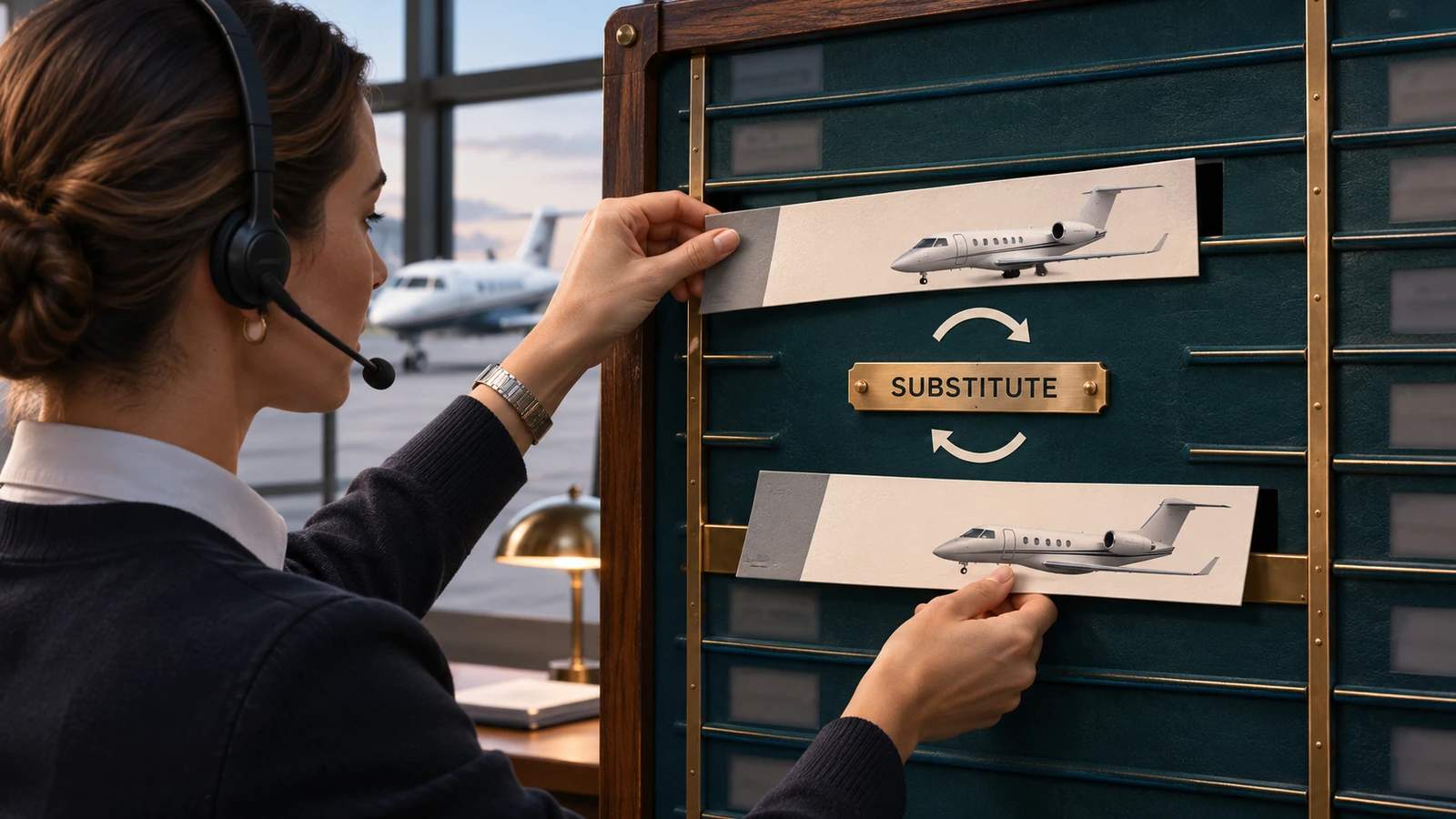
At 3 p.m. on Thursday, your fractional provider offers a replacement for Friday’s trip. It has found another jet that can take all six passengers. The flight will leave an hour later, use a different terminal and be flown by a charter operator you have never used. Your assistant still calls the same number. Who actually owes you the flight, and what will come off your account?
Off-fleet charter gives a fractional provider a way to cover a trip when its own schedule cannot supply a suitable aircraft. That can save an entire travel day. Whether it also preserves your price, arrival time and cabin requirements depends on the promise made in the management agreement and the replacement you accept.
What counts as off-fleet charter?
A different registration on the trip sheet is fairly weak evidence that anything unusual has happened. Fractional owners normally buy an interest in an aircraft and access to a pool. A provider can assign a different aircraft of the same type within that pool. It may also offer another program type under an interchange provision. Both changes can take place without buying a charter outside the program.
In a U.S. fractional ownership program, the use of a nonprogram aircraft to substitute for a program flight has a specific consequence. Subject to the exception stated in the rule for § 91.501(b), the substitute flight must operate under Part 121 or Part 135, as applicable. The owner must be informed whether a trip is a program flight or a Part 121 or Part 135 flight. A program manager that holds the appropriate certificate can also conduct an owner’s flight under those commercial rules using an aircraft listed on its operating specifications. The fractional substitute-flight rule explains both arrangements.
This makes two details worth separating. One is where the provider got the aircraft. The other is the authority under which the flight will operate. The name on a booking confirmation can identify the customer’s contact without answering either question. An operator name and the flight’s operating basis give the owner something concrete to work with when the aircraft changes.