Fractional Ownership · guide
When Fractional Owners Use Charter for Long-Haul Flights
One overseas round trip can consume a large part of a midsize share. The cost comparison changes with the larger-cabin debit and the domestic trips still on the calendar.

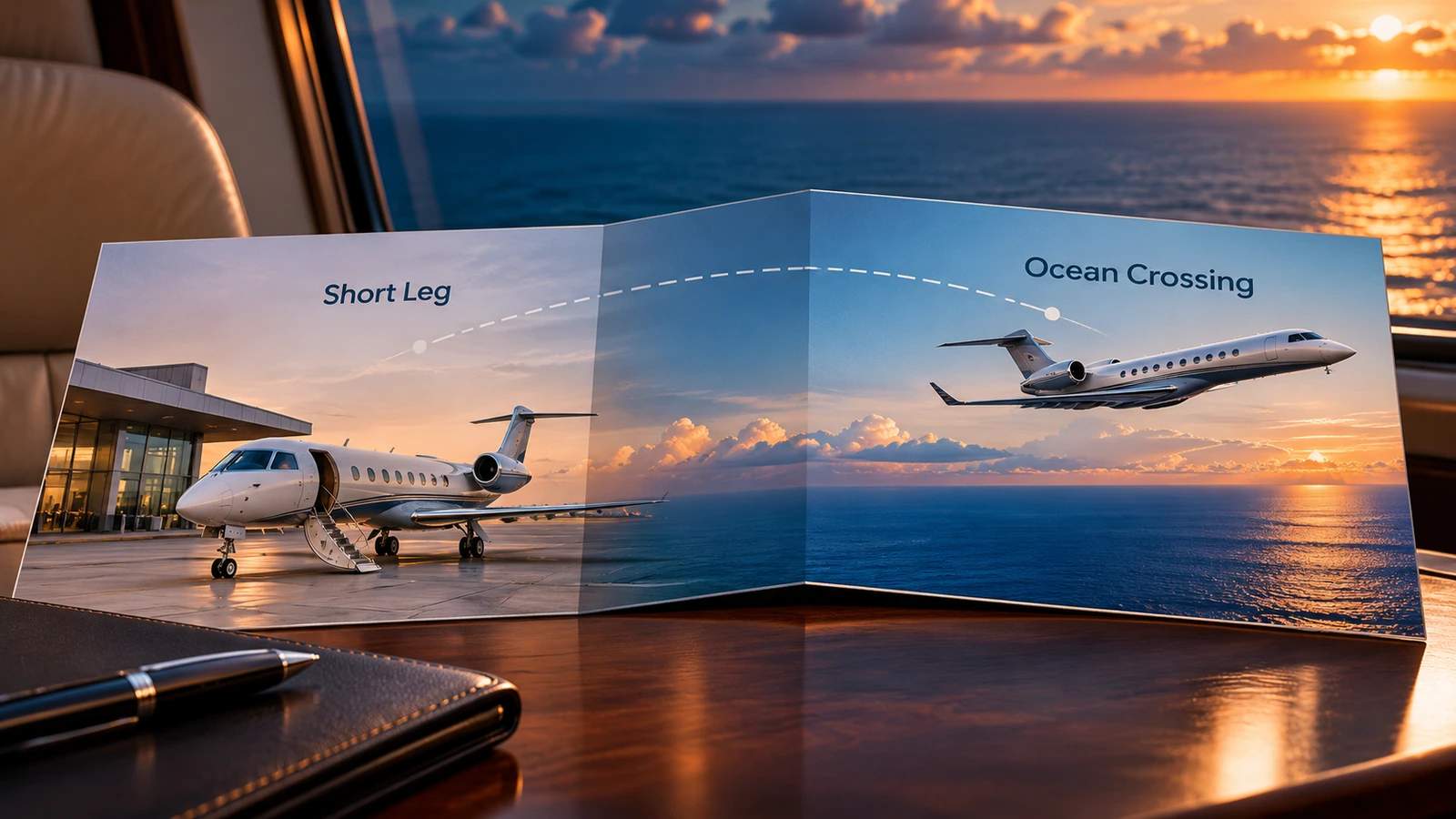
A company buys a midsize share for its regular U.S. trips. Once a year, eight people need to travel from the Northeast to London and back. The fractional provider offers a large cabin through the program. A charter operator quotes the whole trip separately. The charter is more expensive in cash, but it leaves enough hours in the share for the company’s autumn meetings. Which price belongs in the travel budget?
Chartering occasional long-haul flights lets a company size its fractional share for the trips it makes the other 50 weeks of the year. The decision turns on the aircraft that can do the trip, the allowance the program would take, and the value of using those hours later. Dividing the annual cost of the share by hours flown gives a useful ownership average. It does little to price an overseas trip that the owner can still buy either way.
When charter fits a fractional owner’s long-haul flights
The ordinary mission might be four passengers, light bags and an out-and-back flight inside the home service area. An ocean crossing with eight passengers changes more than flight time. Enough seats for takeoff need not mean enough berths for everyone to sleep. The group’s bags and fuel both make demands on aircraft weight. The westbound return may encounter stronger headwinds than the outbound. A technically feasible fuel stop can still make a poor solution for passengers heading straight into a meeting.
A published range figure cannot settle that schedule. An operator’s mission assessment considers the specific airports, carriage requirements, forecast winds and required fuel reserves. For example, on a U.S. Part 135 jet operating in IFR conditions, the applicable fuel rule requires enough fuel to reach the destination, proceed to an alternate where required and continue for 45 minutes at normal cruise. Carrying fuel for that contingency affects the payload the operator can accept even on a day the crew flies straight to the destination.
Owning access to an appropriate aircraft type also leaves the geographic question open. An agreement might cover the Atlantic crossing on an upgrade basis, price a European continuation separately, or require a return within a particular period. If the travelers spend a week overseas, the same crew and jet need not wait for them. Each quote should identify the actual flights it covers and any open items affecting the return. One late-added London-to-Paris sector can make two previously comparable offers quite different.