News · news
SyberJet Unveils SJ36 Mockup, Targets 2032 Deliveries
SyberJet’s SJ36 mockup debuted at Henderson Executive Airport on October 19. The company outlined projected performance, an SJ34 update and a limited $14 million SJ36 launch offer.

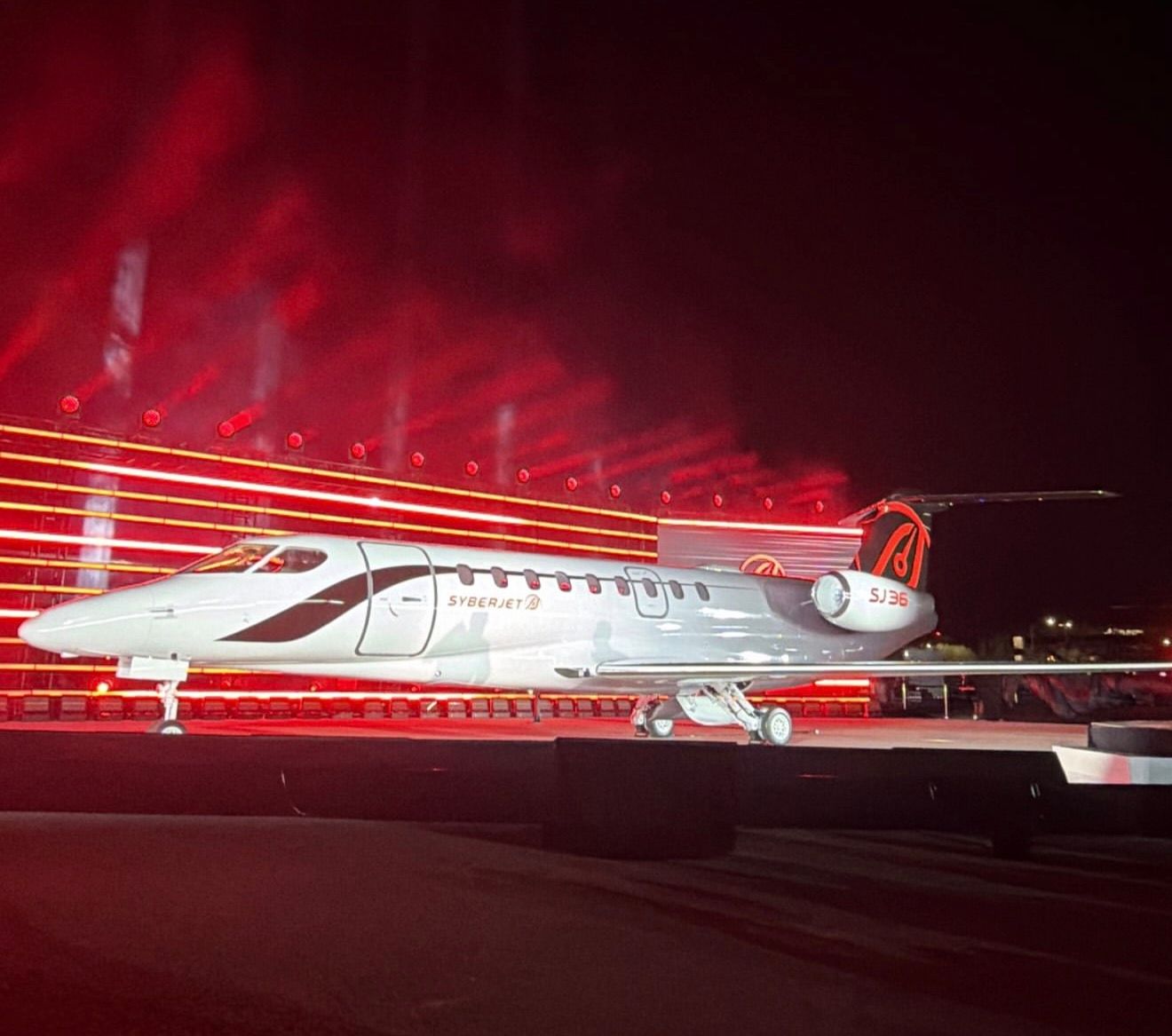
SyberJet Aircraft unveiled a full-scale SJ36 business jet mockup at Henderson Executive Airport, Nevada, on October 19, 2026, presenting the intended cabin and exterior of its next light jet as the company targets first deliveries in 2032.
The SyberJet World event also introduced an updated SJ34 program and new launch pricing. The aircraft on display was a mockup; the SJ36 remains under development, and its advertised performance has yet to be demonstrated in a certified production aircraft.
“The full-scale SJ36 mockup represents what the production aircraft is expected to look like,” CEO Trevor Milton said in the company’s October 20 announcement.
SyberJet announced the SJ36 program in September 2025; this event marked the full-scale mockup’s debut. The unveiling follows a lengthy succession of owners and development plans. Read BizJet Journal’s SyberJet history: from the SJ30 to Trevor Milton’s revival for the company’s origins, bankruptcy-era asset sale, SJ30i development and current management.
SJ36 specifications: Mach 0.88 and about 3,000 nautical miles
SyberJet’s current specifications describe a single-pilot aircraft with eight passenger places—nine seats in total. The company is targeting a maximum operating speed of Mach 0.88, a range of about 3,000 nautical miles and a 49,000-foot maximum operating altitude.
The proposed pressurization system would maintain sea-level cabin pressure through 41,000 feet. That figure refers to cabin pressure at altitude, rather than a separate flight ceiling.
Maximum speed and maximum range are different operating figures. SyberJet lists a long-range cruise speed of Mach 0.74 for the SJ36; the range target should not be read as a claim that it will fly 3,000 nautical miles at Mach 0.88.
| Projected specification | SJ36 | SJ34 |
|---|---|---|
| Crew and passengers | 1 pilot + 8 passengers | 1 pilot + 6 passengers |
| Maximum operating speed | Mach 0.88 | Mach 0.83 |
| Maximum range | About 3,000 nm | Up to 2,500 nm |
| Long-range cruise | Mach 0.74 | Mach 0.76 |
| Maximum operating altitude | 49,000 ft | 49,000 ft |
| Sea-level cabin pressure maintained through | 41,000 ft | 41,000 ft |
These are company projections. Actual capability will depend on the final aircraft configuration, loading and operating conditions.
Williams engines and a longer cabin
The SJ36 is an evolution of the SJ30 platform with a stretched cabin and more powerful engines. SyberJet identifies two Williams International FJ44-4A turbofans for the aircraft.
The published powerplant information gives approximately 3,621 pounds of thrust per engine. The FJ44-4A already has an established certification history: EASA’s engine data sheet records its European approval in 2011 and the same five-minute takeoff thrust rating.
An approved engine does not mean the aircraft installation or the SJ36 as a whole has been approved. The design remains a development program.
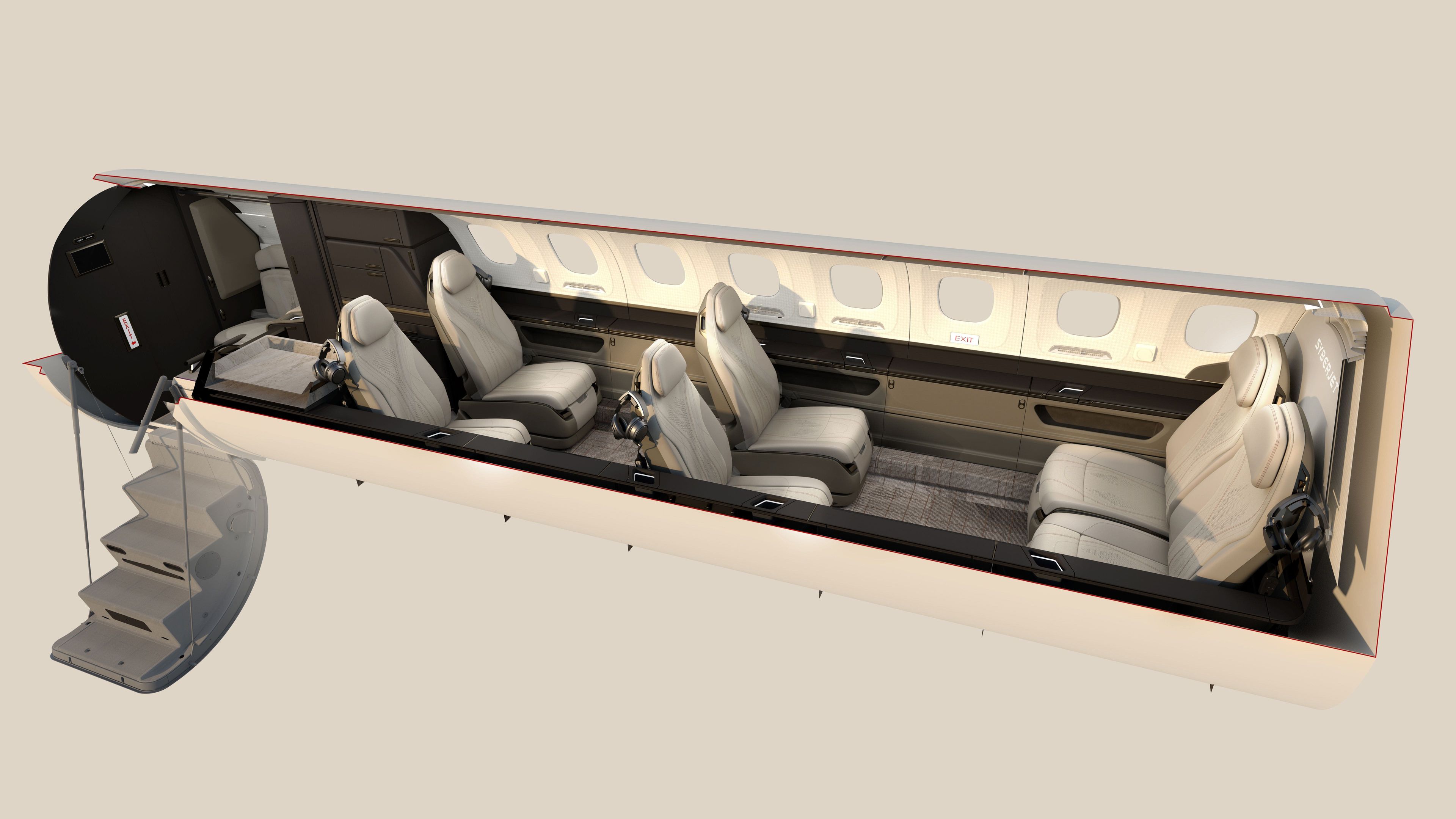
The proposed cabin adds capacity to the earlier SJ30 family while retaining a compact business-jet layout. The extra passenger places are part of SyberJet’s attempt to expand the platform’s appeal beyond its original configuration.
See the BizJet Journal SJ36 profile for the aircraft’s place in the manufacturer’s lineup.
SJ34 targets an earlier return to deliveries
The SJ34 is intended to update the SJ30-2 with new avionics, revised propulsion and a redesigned interior. SyberJet’s target is deliveries beginning in 2029, three years ahead of the SJ36.
Its projected layout accommodates one pilot and six passengers. The company lists Mach 0.83, up to 2,500 nautical miles of range and a 49,000-foot operating altitude, with sea-level cabin pressure through 41,000 feet.
The SJ30-2’s existing FAA approval is an important part of the program’s foundation. It should not be taken to mean that the newly announced SJ34 configuration is already certified.
SyberVision remains in research and development
Both programs are being promoted around SyberVision, a proprietary flight deck planned to use six 4K touchscreens, integrated flight management, an autopilot and autothrottle.
The company also describes smartphone connectivity and secure over-the-air software updates. For the SJ36, it plans to integrate electronic flight controls into the broader system architecture.
SyberJet’s own avionics page explicitly says SyberVision is in research and development, that certification takes years and that features may change. The launch presentation therefore provides a view of the intended system rather than an approved equipment specification.
For an aircraft designed around single-pilot operation, the final arrangement of displays, controls and automation will be central to what the pilot can manage in service. The announced feature list is only one stage in that process.
Limited SJ36 launch offer quotes $14 million
SyberJet announced its Passage One offer for the first 250 customers, quoting an SJ36 launch price of $14 million against a stated $16 million price. The corresponding SJ34 figures are $10 million and $12 million.
The launch package also promises aircraft coverage, Williams engine support, a fuel benefit and pilot training, subject to limits and final terms.
The detailed Passage One page was still marked “Coming soon” when checked. The announcement is not a substitute for the eventual purchase and support agreements.
Reservations are expressions of interest
The current SJ36 reservation form expressly describes submissions as non-binding requests, followed by a conversation with the sales team. The company’s website invites prospective SJ34 customers to register interest.
That distinction matters when assessing demand. A reservation request is not a completed aircraft sale, an assured delivery position or recognized revenue. The online request form does not specify a deposit.
Milton leads the company as CEO. Its published leadership roster identifies Chuck Taylor as president and David “Heavy D” Sparks as vice president. Sparks has featured SyberJet on his HeavyDSparks YouTube channel.
The event gives SyberJet a physical presentation of the product it wants to sell. The next steps are development and approval of the proposed aircraft, followed by the production and support capability needed to deliver them.