Events Articles · guide
Singapore Grand Prix by Private Jet: Complete Airport, Hotel and VIP Travel Guide
Airports, race access and a complete Marina Bay weekend.

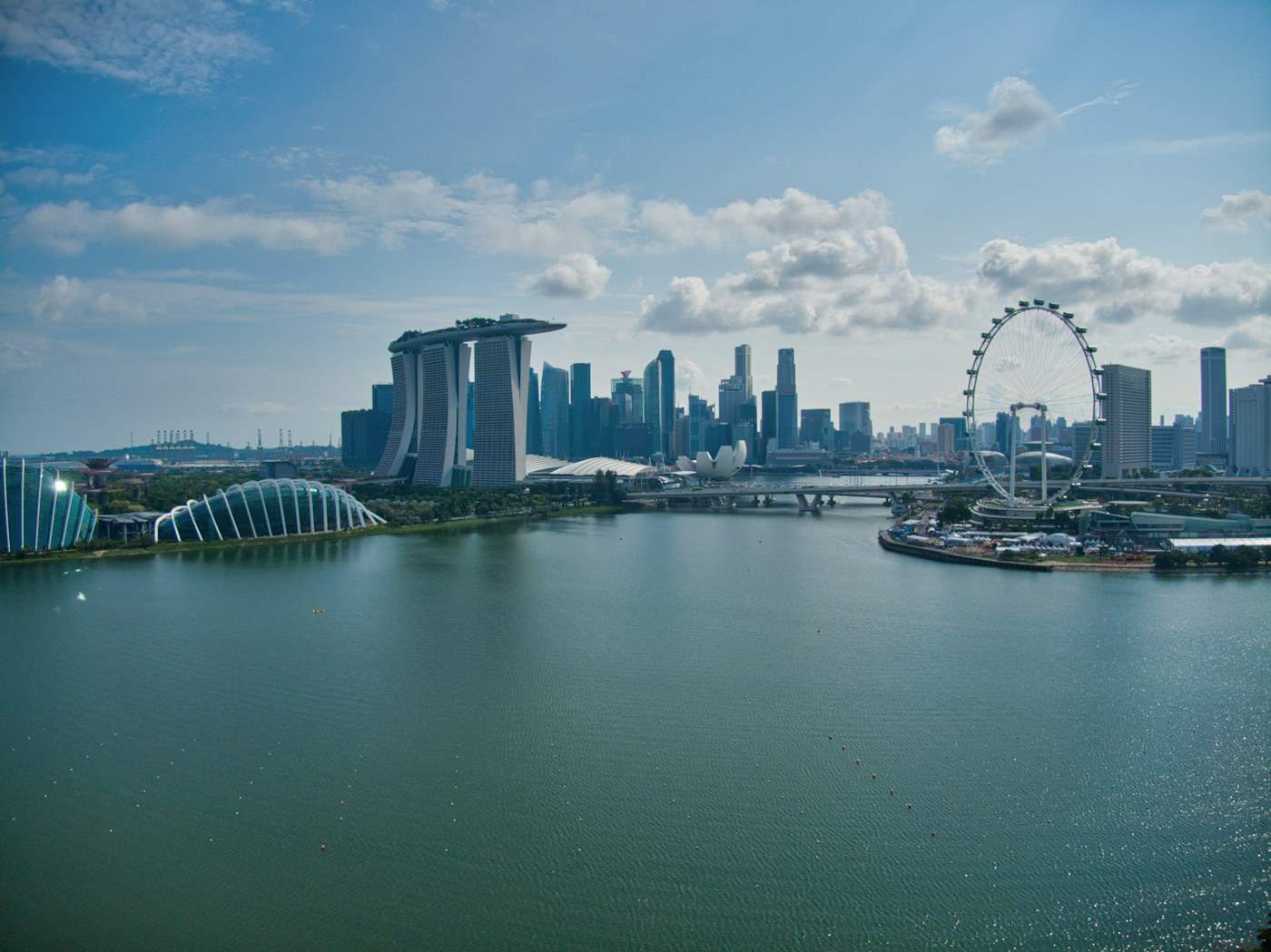
The Singapore Grand Prix is a city weekend as much as a race. Marina Bay’s waterfront, restaurants and hotels sit around a temporary circuit that becomes the focus of the evening. For private aviation travelers, the appeal is a schedule built around the days they want to attend, with a comfortable cabin for the regional or intercontinental journey and a coordinated arrival into the city.
The next confirmed edition is 8–10 October 2027, as listed by Formula 1. The 2026 weekend has already taken place. The 2027 session start times were still marked to be confirmed when this guide was checked on 14 October 2026, so a final departure should follow the published timetable when it becomes available.
The central planning choice is between Seletar Airport (XSP / WSSL) and Singapore Changi Airport (SIN / WSSS). Both require a proper airport-access plan. The best result also depends on the hotel entrance, ticket zone, luggage and time available after the final session. This guide connects those details with hospitality, accommodation, budget scenarios and an example race-week itinerary.
Singapore Grand Prix at a glance
| Item | Planning detail |
|---|---|
| Next confirmed race weekend | 8–10 October 2027 |
| Circuit | Marina Bay Street Circuit |
| City and time zone | Singapore; Singapore Standard Time, UTC+8 |
| Private aviation gateways | XSP / WSSL and SIN / WSSS |
| Event character | Night racing in a central waterfront setting |
| Main timing decision | Whether to depart after the race or the following day |
| Ticket decision | Exact grandstand, walkabout zone or hospitality product |
Use the Singapore GP organizer’s website for the circuit map, ticket entitlements, entertainment and access instructions. The airport schedule, race program and chauffeur itinerary should use the same local dates. A flight that leaves after midnight belongs on the following calendar day.
Why private aviation can suit the weekend
For a regional group, a private jet can keep arrival and departure aligned with a short race stay. The passengers can use a single aircraft and a shared itinerary instead of arranging several separate connections. The value is especially clear when the group has business meetings before the race or needs to continue to another Asian city.
An intercontinental arrival has different priorities. Rest, cabin layout, baggage and the time needed to recover before an evening program deserve attention. Ask how many seats become genuinely usable sleeping positions and what happens to dining or work areas when the cabin is prepared for sleep. Those details matter more than a broad claim that an aircraft carries a certain maximum number of passengers.
For either mission, consider the last mile before deciding the flight time. An early arrival can leave room for immigration, the hotel and a relaxed first evening. An arrival close to the start of a session places greater dependence on airport processing and access around a street circuit. A well-chosen schedule reduces that pressure.
Seletar or Changi: compare the actual airport proposal
| Airport code | Directory runway context | Principal planning role |
|---|---|---|
| XSP / WSSL | Longest reported paved runway: 1,836 m | Dedicated business aviation passenger environment |
| SIN / WSSS | Longest reported paved runway: 4,000 m | Major international gateway and alternative aircraft assessment |
The runway figures are reference context from the Journal’s directory. Aircraft performance, declared distances, current procedures and the operating conditions determine suitability. Review the Seletar profile and Changi profile alongside the operator’s proposal, rather than using runway length as a passenger-made approval decision.
Seletar Airport and the business aviation arrival
Seletar Airport has a dedicated Business Aviation Centre. The airport describes private drop-off, lounge facilities and dedicated immigration and security processing, with non-scheduled flights facilitated through the centre. That is a useful starting point for understanding the passenger journey.
Ask the provider to name the handling agent and where the driver meets the passengers. Confirm parking for the entire stay, rather than only arrival acceptance. If the aircraft must leave after dropping off the group, its repositioning destination and planned return should be visible in the quote.
An aircraft arriving from farther away may need a different runway, payload or fuel assessment from a short regional flight. Treat the airport and aircraft as a pair. The operating team should explain why the proposed combination fits the route and departure load, including the flight home.
Changi Airport for the wider international plan
Singapore Changi Airport offers another international gateway to compare, particularly when the aircraft, services or onward journey point toward a larger airport environment. Specify private-flight handling when arranging the ground transfer. A commercial-terminal collection address can be unsuitable for a business aviation arrival.
The larger runway infrastructure does not settle every practical question. Ask about accepted slots, private handling, aircraft parking and service arrangements for the chosen date. A convenient airport remains dependent on the reservation actually held, especially when many travelers are targeting similar event arrival and departure windows.
Compare complete quotes. A higher handling cost may be offset by an aircraft remaining locally, while a seemingly lower-cost arrival can create extra repositioning. The useful comparison is the agreed aircraft-and-ground journey for the full stay.
Slots, permits and parking: three separate confirmations
CAAS guidance states that both airports require slot approval. For private and non-scheduled flights at Seletar, it describes a submission window from seven calendar days before the planned operation until 14:00 UTC on the preceding day. CAAS asks for Changi slot requests at least 72 hours before the flight, with a separate process for urgent operations. The operating team must check the current applicable process for its flight.
That formal submission window should be distinguished from commercial planning. You can choose the aircraft, handler, hotel and tickets well before the airport request is submitted. Record what is secured, what is pending and which change would require your approval. This keeps an early booking from being misunderstood as a confirmed airport schedule.
Parking needs an explicit answer. May the aircraft remain for the race weekend, is only a turn permitted, or will it park elsewhere? Ask how a late passenger departure affects the return aircraft, crew and airport request. The answer should reach the chauffeur and traveler as well as the flight-planning team.
Keep the same discipline for permits and passenger entry documents. The provider should establish the operating requirements applicable to its flight, while passengers should check entry requirements for their nationality and itinerary. A race ticket and hotel confirmation do not replace those separate preparations.
Tickets and VIP hospitality: choose the experience first
Grandstands and walkabout access
A reserved grandstand suits a traveler who values a defined view and an assigned seat. A walkabout product can offer a more flexible circuit experience, but its access zones and available viewing positions must be understood. Check the exact product description and map before deciding which hotel and drop-off point fit the day.
Circuit access can also affect entertainment plans. A concert, fan zone or hospitality venue may be reached through a different part of the event footprint. Confirm the places included in your ticket and the reentry conditions. A broad weekend description is less useful than knowing exactly where you can enter and move.
Hospitality for entertaining guests
For a corporate or private-hosting trip, compare the actual lounge or suite location, seating, food and beverage arrangements and access days. The host should understand whether the product includes reserved race viewing, a shared hospitality space or a particular suite. Ask about guest-name deadlines and how companions are handled.
Treat driver appearances, special access and private events as described benefits that need confirmation for the specific package. Plan the day around the access that is included in the written offer. The organizer’s current ticketing and hospitality information is the first reference when products and prices change between editions.
Hotel views and private events
A room or restaurant view over part of Marina Bay can add atmosphere, but sightlines depend on the precise building, floor and orientation. Ask for the exact description if the view is a reason for paying a premium. A waterfront location alone does not identify the part of the racing circuit visible from a room.
Keep private restaurant events and nightlife bookings on the itinerary with their own addresses and access terms. That is particularly useful for a group whose guests have different tickets during the day and reunite for dinner after the track program.
Where to stay around Marina Bay
Marina Bay Sands is one major waterfront property to compare. Its location can suit travelers who want a wider Marina Bay stay with dining, shopping and leisure alongside the race. Assess the actual journey to your ticket gate, rather than assuming the hotel name establishes direct entry to every circuit zone.
A hotel nearer the Promenade or City Hall side may suit a different grandstand or hospitality location. Build the shortlist around the event map and your evening plans. A slightly longer airport transfer can be a worthwhile trade if the hotel reduces several repeated journeys during the weekend.
For a broader city itinerary, an Orchard Road stay can make sense when shopping, meetings and restaurants there are a substantial part of the trip. The tradeoff is the commute into the race area. Choose that deliberately and arrange a driver who understands the current event access routes.
Ask each property to confirm the room type, minimum stay, cancellation terms, taxes and any event-period vehicle entrance. If arriving early after an overnight flight, discuss whether the room is available before normal check-in. A guaranteed early room can be more useful than an unneeded upgrade after a long journey.
Transfers into the race area
For an initial planning allowance, consider roughly 35–60 minutes from Seletar and 25–45 minutes from Changi to a Marina Bay hotel in ordinary traffic. These are broad editorial allowances for planning, not event-week transfer promises. Congestion, checkpoints and the approved hotel entrance can extend the journey substantially.
Give the driver the private terminal, hotel vehicle entrance and the ticket gate. For the evening, arrange an exact collection point and a way to contact the driver without relying on an improvised pickup beside the circuit. A hotel lobby can be a more comfortable regrouping point if several guests finish at different locations.
Walking may be the practical final segment, even for guests using a chauffeur. Include time for the walk, security and finding the seat or hospitality suite. Tell the provider about mobility assistance requirements in advance so the itinerary can use the appropriate entrance and arrangements.
Do not build the baseline around a helicopter transfer into Marina Bay. A proposed flight needs an authorized operator, an accepted route and an approved landing point with a workable onward journey. The road plan should remain usable if no such service has been confirmed.
Aircraft, baggage and long-haul comfort
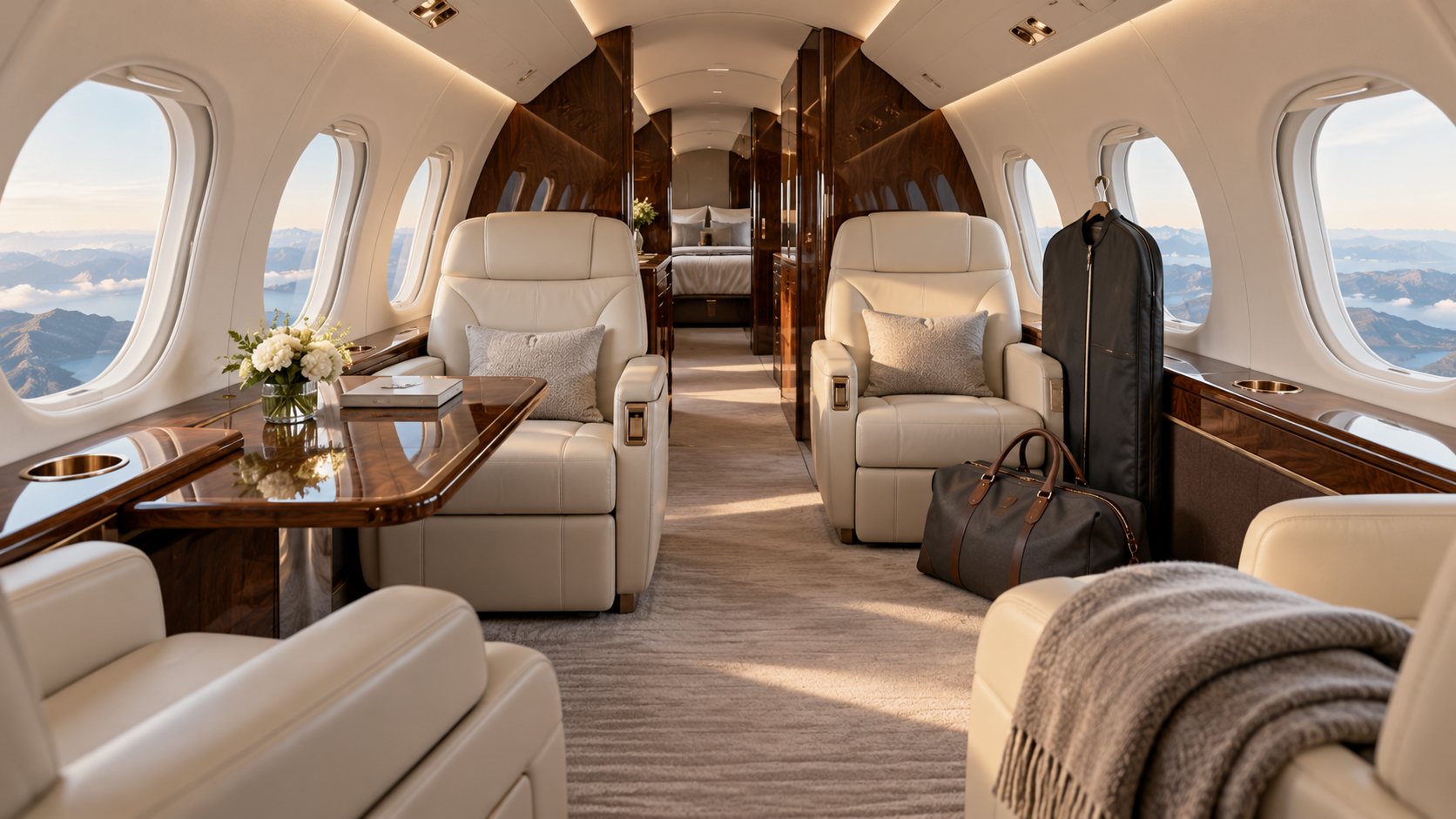
A regional trip with a modest group may be served by several jet categories, depending on the route and baggage. A longer flight places greater emphasis on cabin space, sleeping arrangements, galley capability and onboard connectivity. Ask for the actual aircraft configuration and cabin photographs rather than choosing from a model name alone.
Business visitors may carry presentation cases alongside weekend luggage. Fashion or hospitality guests may have bulky garment bags. Send the dimensions and weights to the provider so the baggage assessment reflects the complete load. Keep a plan for any items that will be shipped separately.
For a group continuing elsewhere in Asia, compare an aircraft staying with the itinerary against independently sourced legs. Parking, minimum utilization, crew accommodation and repositioning change that comparison. A single aircraft can simplify continuity, but its total cost should be evaluated against the actual schedule.
Sample Thursday-to-Monday race itinerary
| Day | Suggested program | Planning detail |
|---|---|---|
| Thursday, 7 October | Arrive, hotel check-in and a relaxed waterfront dinner | Allow recovery time after a long-haul flight |
| Friday, 8 October | City meetings or leisure, then the track program | Confirm the actual session and entertainment timetable |
| Saturday, 9 October | Flexible daytime plans and qualifying-day attendance | Keep dinner compatible with the evening program |
| Sunday, 10 October | Race day and hospitality | Agree the post-event collection point |
| Monday, 11 October | Breakfast and departure | Creates room for a late Sunday circuit exit |
The Monday departure is a planning choice, not an airport requirement. It can remove the pressure of making a tight same-night flight after an extended event exit. If returning on Sunday night is essential, build the schedule backwards from the accepted airport departure, including hotel access, luggage collection and passenger formalities.
Singapore Grand Prix costs: an illustrative group budget
This scenario covers four travelers, four nights, two hotel rooms and a regional private-jet journey modeled at 2.5 passenger flying hours each way. The assumed flight rate is US$8,000 per hour. Hospitality and room costs below are planning allowances, rather than advertised 2027 prices.
| Cost item | Scenario basis | US$ |
|---|---|---|
| Passenger flight component | 5 total flying hours × 8,000 | 40,000 |
| Hotel accommodation | 2 rooms × 4 nights × 700 | 5,600 |
| Race admission / hospitality | 4 guests × assumed 2,000 | 8,000 |
| Chauffeur coverage | Assumed airport and event allowance | 1,600 |
| Meals and city activities | Assumed group allowance | 2,000 |
| Subtotal | Before aviation extras and taxes | 57,200 |
| Planning reserve | 10% | 5,720 |
| Scenario total | Subtotal plus reserve | 62,920 |
The aircraft quote must also address positioning, handling, parking, permits, crew costs, taxes and any minimum utilization. A longer intercontinental mission can dominate the budget, while a shared regional aircraft produces a very different per-person allocation. Use the Journal’s charter-cost section to review the pricing components before comparing offers.
Compare ticket choices against the experience you want. Four guests using reserved grandstands can have a different event budget from four guests in premium hospitality, even on the same aircraft and in the same hotel. Keep those choices visible instead of reducing the trip to one opaque package total.
Packing and booking timeline
Reserve the accommodation and the desired ticket product as soon as the relevant inventory is available. At the same time, brief the aviation provider on passengers, origin, dates, baggage and flexibility. Formal airport requests may follow nearer operation, but the handler should already understand the intended trip.
Before travel, check the current circuit map, hotel entrance and ticket delivery method. Pack comfortable walking shoes, clothing suited to warm humid evenings, a light layer for air-conditioned spaces and weather protection for outdoor movement. Check the package’s actual bag and dress requirements rather than assuming one rule covers every viewing product.
In the final itinerary, include the handler, driver, hotel and event host contacts. Agree who can change the departure if a race-day exit takes longer than expected. A shared plan with realistic margins is the most useful tool for keeping the weekend relaxed.
Frequently asked questions
Which airport is best for a private jet to the Singapore Grand Prix?
Is the next Singapore Grand Prix in October 2027?
Formula 1 lists 8–10 October 2027. Confirm the individual session start times and your ticketed day when the final program is available.
Can the aircraft remain at the airport during the race?
It depends on the parking reservation accepted for the aircraft and dates. Request the confirmed stay or repositioning plan in writing, including how the aircraft returns for departure.
Does a Marina Bay hotel room include race access?
Access follows the ticket or hospitality product explicitly included in the booking. Ask the hotel to identify any bundled event entitlement, viewing location and access conditions.
Can I fly home immediately after the race?
A same-night return may be possible when the accepted airport schedule, crew and ground transfer support it. Include the circuit exit and terminal formalities before choosing a departure time; a Monday flight gives more room for a late finish.
How far ahead should I organize the trip?
Start when the desired accommodation and ticket inventory become available. Give the provider the aviation brief early, while allowing the formal airport application to follow the current applicable submission process.
More planning references
Use the Singapore event guide, the airport directory and the private jet charter section alongside the linked official event, airport and CAAS information. Recheck the 2027 timetable and accepted flight arrangements before committing to a tight final-day return.