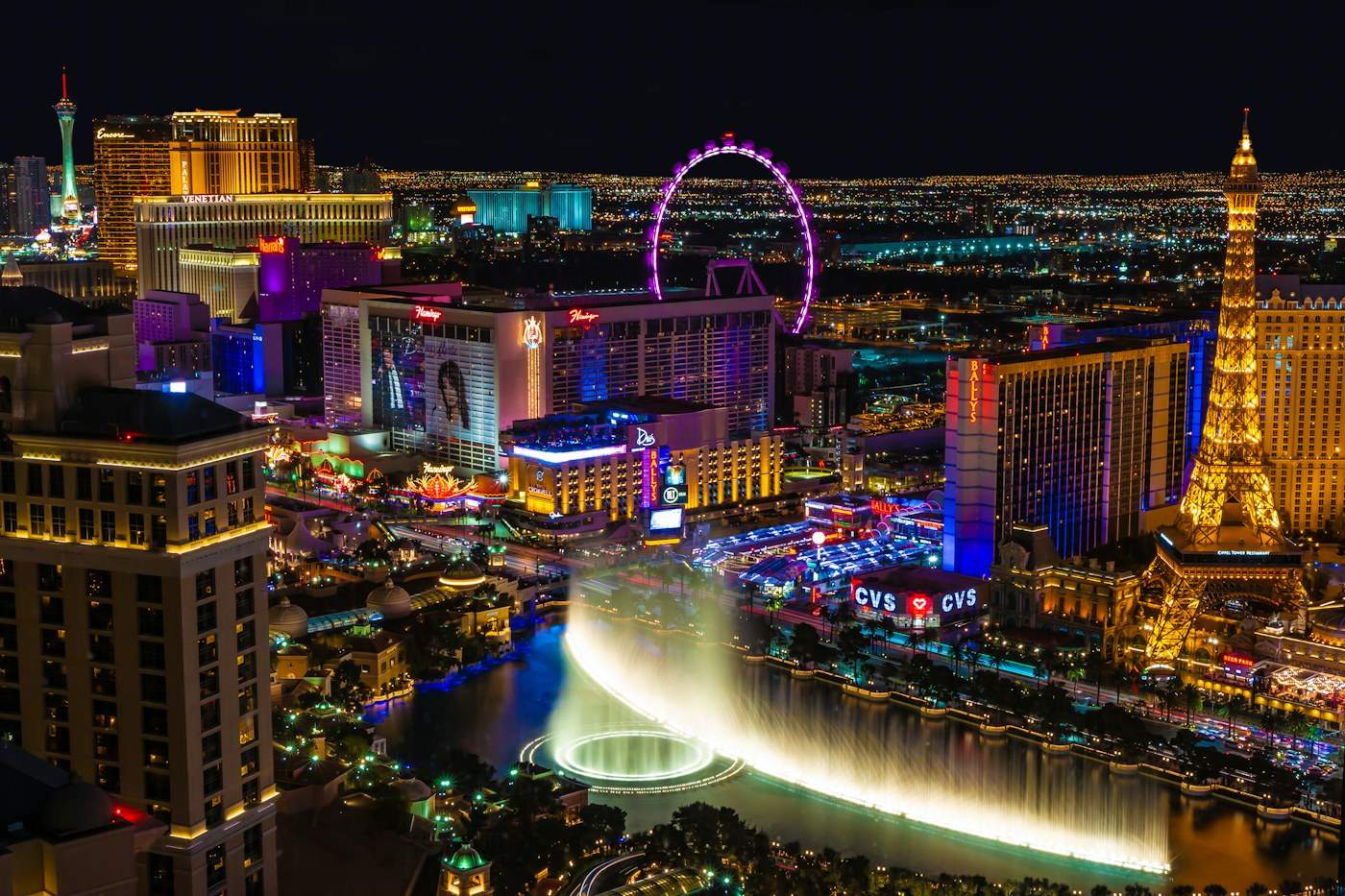
Business aviation travel brings aircraft, operators and decision makers together.. Illustration: BizJet Journal
NBAA-BACE is a working event for an industry whose decisions rarely fit into a quick sales conversation. An aircraft buyer needs to understand the cabin and the mission. A flight department needs reliable suppliers. A technology team needs to see how a product behaves when an itinerary changes. The exhibition brings those conversations together, but the value comes from choosing the right ones.
The 2026 edition takes place in Las Vegas on 20–22 October, with indoor exhibits at the Las Vegas Convention Center’s West Hall and the Aircraft Connection at Henderson Executive Airport on 20–21 October. That split matters: an afternoon aircraft appointment and a convention-center meeting require a transfer between two venues, rather than a short walk across an exhibition hall. The official event website confirms the dates and locations.
For visitors arriving by private jet, the trip should join three plans: the aircraft’s accepted airport arrangements, a practical Las Vegas stay, and a meeting agenda with time to follow useful leads. This guide covers each part, with verified event hours, airport-directory links, registration options, a sample itinerary and a transparent budget example.
Plan Samedan arrivals, winter events and alpine alternatives.
Oct 3, 202613 min read
Planning item
2026 detail
Main exhibition
20–22 October, LVCC West Hall
Aircraft Connection
20–21 October, Henderson Executive Airport
Indoor hours, Tuesday
10:00–17:00
Indoor hours, Wednesday
09:00–17:00
Indoor hours, Thursday
09:00–15:00
Aircraft hours, Tuesday
13:00–17:00
Aircraft hours, Wednesday
09:00–17:00
Time zone
Las Vegas local time, Pacific Daylight Time during these dates
Best agenda structure
Separate convention-center and aircraft-display blocks
The official program is the controlling reference for those exhibit hours. Individual education sessions, receptions and exhibitor appointments may have different schedules. Save the final version of your itinerary in local time, particularly when colleagues are traveling from Europe, the Gulf or Asia.
What to prioritize: aircraft, suppliers or industry knowledge
An owner considering an upgrade should start with the missions that make the current aircraft feel inadequate. Is the issue nonstop range, sleeping space, baggage, maintenance downtime or the runway at a frequently used destination? A cabin inspection becomes much more useful when it answers a defined question. Ask the manufacturer or sales representative to explain the assumptions behind any performance comparison.
A charter operator or management company may have a different purpose. Its highest-value meetings could involve maintenance capacity, training availability, insurance, dispatch systems, flight support or fleet financing. Choose a small number of problems that the event could realistically move forward. The result might be a demonstration, an introduction or a proposal rather than a signed agreement.
For someone entering business aviation, use the event to compare roles and organizations. A conversation with a maintenance specialist answers a different career question from a meeting with a charter salesperson or flight department manager. Prepare a concise introduction and ask about actual responsibilities, qualifications and the next step in learning more.
Write a one-page agenda brief before filling the calendar. Include the decision, the information you need, the people worth meeting and the evidence you want to bring home. Leave space for an unexpected useful conversation. A schedule that is fully booked from opening to closing can make the trip busy while reducing its value.
Registration, badge access and current prices
As checked on 14 October, NBAA lists the following full-registration rates. The current regular phase ends on 19 October; the higher late or onsite rates follow. Confirm your eligibility and purchase conditions through the official registration page.
Registration product
NBAA member
Non-member
Regular full registration
US$580
US$900
Late / onsite full registration
US$710
US$1,030
Thursday-only badge
US$170
US$170
Full registration covers the main exhibition and the Aircraft Connection within their published schedules, alongside included program elements. The Thursday-only product is a materially different visit: the aircraft display finishes on Wednesday. Choose it for the final-day convention-center agenda, rather than an aircraft inspection.
Some activities and courses have separate registration arrangements. Exhibitors should use their own badge process. Media and content-creator applicants should also review the current deadline and eligibility instructions; a publication or social profile does not automatically create an event credential. Keep each attendee’s name consistent across the badge, travel documents and appointment list.
Is the private handling and parking proposal suitable for the full stay?
HSH / KHND
Business aviation airport and Aircraft Connection location
How do event operations affect passenger arrival and aircraft parking?
VGT / KVGT
Additional general aviation gateway
Does the aircraft and handling plan fit the runway and services?
Harry Reid International: the Strip-oriented arrival
Harry Reid International Airport may make sense for a hotel-led itinerary, particularly when the aircraft arrives internationally or the passengers value a central Las Vegas arrival. Ask the provider to identify the private terminal, handler and customs arrangements. An airline-terminal address is not a useful instruction for a chauffeur collecting passengers from an FBO.
For a longer stay, clarify whether the aircraft remains, repositions or is replaced for the return. Those choices change costs and the response to a delayed final meeting. The airport proposal should show how the return is protected, rather than simply where the passengers land on Monday.
Henderson Executive: valuable proximity to aircraft visits
Henderson Executive Airport places the aviation plan near the Aircraft Connection, but an event-display location does not itself establish an arrival or parking reservation for a visitor’s aircraft. The airport publishes PPR for 16–23 October 2026 in connection with NBAA-BACE. The airport’s event notice should be checked by the handler for the proposed operation.
Aircraft displayed at the event have their own exhibitor arrival arrangements. A passenger charter should follow the visitor operation accepted by the airport and FBO. Keep those separate when talking to the provider. The distinction is especially useful if someone assumes that an invitation from an aircraft manufacturer includes permission for another jet to park nearby.
North Las Vegas: compare the complete operating proposal
North Las Vegas Airport provides another airport to assess where the aircraft is suitable. Its published special-event information also identifies the NBAA-BACE PPR period. A reservation inquiry should cover handling hours, fuel, parking duration and the return departure, as well as the arrival time.
The longest reported runway in the Journal’s directory is shorter than at the other two airports. That is useful context for the comparison, not an aircraft acceptance rule. Leave the aircraft-specific runway and performance assessment to the operating team. A provider should explain why its proposed airport works for your actual payload and mission.
The airport-to-hotel connection is part of the event itinerary. · Illustration: BizJet Journal
Moving between West Hall, Henderson and the hotel
NBAA’s transportation page lists an Aircraft Connection shuttle between LVCC and Henderson on Tuesday and Wednesday, with pickups at the Diamond 1 Lot across from the W4 exhibit entrance. The published departure frequency is approximately every 20–25 minutes, subject to traffic. That frequency is a departure interval, rather than the total transfer time.
Build appointments around venue blocks. Tuesday morning could cover indoor meetings, with the afternoon reserved for aircraft visits. Wednesday can support a longer aircraft assessment if a cabin tour or technical discussion needs more time. Avoid a tightly timed return to West Hall that assumes a shuttle is waiting when the aircraft conversation ends.
A dedicated chauffeur can be useful for a group with several offsite meetings or a private terminal arrival. Give the driver the correct hall entrance, the event’s actual aircraft-access location and the hotel’s vehicle instructions. Decide whether the vehicle waits, returns on request or works against fixed pickup times.
For a short personal meeting, allow a margin before and after the appointment. A late demonstration, queue at the shuttle or misplaced badge can consume a tightly planned gap. A realistic transfer allowance protects the meeting you care about most and makes the day more comfortable.
Where to stay: choose the hotel around the working day
For an exhibition-led visit, consider the northern Strip and convention-center corridor. Fontainebleau Las Vegas is one property to compare in that area. Its location makes it worth assessing alongside the actual route to West Hall, room arrangements and meeting spaces. Check the entrance your driver will use, rather than treating a hotel’s postal address as the complete route.
A hotel farther along the Strip can work well when evening meetings, dinners and client entertainment are concentrated there. The tradeoff is the daily journey back to the event. Compare that routine with a hotel nearer the convention center before prioritizing a familiar brand or room upgrade.
For a Henderson-led aircraft agenda, a local stay may reduce the aircraft-day transfer while increasing the journey to indoor exhibits. That can suit a technical team spending a substantial portion of its visit at the display. It is less attractive if most appointments are in West Hall and the display is only a brief visit.
Request an itemized lodging proposal: room category, nights, taxes, resort charges, breakfast, cancellation terms and any meeting-room commitment. If colleagues share a hotel but arrive on different flights, identify who holds the group reservation and how late arrival is handled. The hotel and flight should follow the same local dates.
How to evaluate an aircraft at the display
Bring a mission brief covering normal routes, passenger numbers, baggage, cabin priorities and the occasional trip that stretches the requirement. Include the airports that matter to your operation. A generic maximum-range figure is less useful than a mission discussion with the payload and operating assumptions stated.
Use the cabin visit to assess practical space. Sit in the seats the principal passengers would use. Consider whether a dining arrangement still leaves room for work, whether the proposed sleeping layout supports the overnight mission, and where bags fit. Look at the relationship between the lavatory, galley and passenger zones rather than treating cabin finish as the whole decision.
Ask which features belong to the displayed aircraft and which are optional or configuration-dependent. Record the completion, delivery and support assumptions attached to a proposal. A demonstration aircraft can show the experience well while differing from the exact aircraft or cabin that is being offered.
After the tour, write down the unresolved questions. Those might involve actual mission analysis, maintenance history, inspection scope, availability or acquisition cost. Assign each question to the person best placed to answer it. The display visit should advance an evaluation that continues with proper technical and commercial review.
Cabin selection should reflect how the passengers will work, rest and carry baggage. · Illustration: BizJet Journal
Supplier meetings that produce usable answers
For a software demonstration, give each provider the same operating case. Explain the fleet, geography, users and systems already in place. Ask the demonstrator to follow an ordinary schedule change through crew, handling, maintenance and finance. This makes it easier to see how information moves and where manual work remains.
For a maintenance or support provider, discuss the dates, aircraft types and locations that matter to your team. Capacity, response and subcontracting are more useful topics than a broad promise of global coverage. Ask what the organization performs itself, what a partner provides and who remains accountable for the customer relationship.
For a charter or management conversation, distinguish a broad capability presentation from a proposed solution. Request the actual scope, assumptions, fee structure and operating responsibilities in the follow-up. If a quote is preliminary, label it that way in your notes so it does not become an unintended commitment in a later internal discussion.
Take notes immediately after the meeting. Capture what was agreed, what is still unanswered and who will provide the next item. A contact and brochure do not preserve the difference between a promised proposal and a casual suggestion. Clear notes are also useful when colleagues divide the exhibition agenda.
A practical four-night visitor itinerary
Day
Suggested focus
Travel implication
Monday, 19 October
Arrival, hotel check-in, agenda review and prearranged dinner
Keep the evening light after a long flight
Tuesday, 20 October
Indoor meetings in the morning; selected aircraft appointments after 13:00
Reserve a full transfer block to Henderson
Wednesday, 21 October
Deeper aircraft assessments or supplier demonstrations
Final aircraft-display day
Thursday, 22 October
Follow-up discussions, education and remaining indoor appointments
Indoor exhibits finish at 15:00
Friday, 23 October
Departure or a separate business day
More room for delayed Thursday conversations
This is an editorial itinerary, not the organizer’s full session timetable. Adjust it around the confirmed meeting list. A buyer may spend more of Wednesday at the aircraft display; a supplier team may keep most of the day in West Hall. Choose the structure that supports the reason for attending.
Budgeting for NBAA-BACE: a worked example
The following scenario is for three NBAA-member attendees, four hotel nights, two rooms, and a private jet round trip modeled at two passenger flying hours in each direction. The assumed flight rate is US$7,000 per hour. That rate and the lodging, ground-service and meal allowances are editorial inputs for arithmetic; obtain an aircraft-specific quote for the real trip.
Cost item
Scenario calculation
US$
Passenger flight component
4 total hours × 7,000
28,000
Three regular member registrations
3 × 580
1,740
Hotel rooms
2 rooms × 4 nights × 450
3,600
Chauffeur allowance
Assumed trip allowance
1,200
Meals and working dinners
Assumed group allowance
1,800
Subtotal
Before aviation extras and taxes
36,340
Planning reserve
10% of subtotal
3,634
Scenario total
Subtotal plus reserve
39,974
Positioning flights, airport and FBO charges, parking, crew accommodation, taxes and any applicable minimum utilization are additional unless the actual supplier quote includes them. The purpose of the example is to show where the trip budget accumulates. A locally positioned jet, airline arrival or different room arrangement produces a different total.
For a team evaluating the expense, connect the budget to outcomes. Which supplier comparison, aircraft evaluation or business opportunity justifies sending the group? A smaller delegation with a clear purpose can achieve more than a larger one without a coordinated agenda. Review the cost alongside the work the trip is intended to complete.
Packing, documents and the final departure plan
Carry the badge confirmation, appointment list and hotel details in an accessible format, with a backup that does not depend on mobile connectivity. Comfortable shoes matter across exhibition halls and the aircraft display. Prepare clothing for indoor air-conditioning and outdoor aircraft visits, as well as any evening meeting with a different dress expectation.
Send the aviation provider the final passenger names and baggage details early. Samples, presentation equipment and trade-show materials can change the return load. A seat count does not establish that the baggage compartment can accept every case. If materials will be shipped, arrange that separately from the passenger flight.
Agree the latest workable departure after the final meeting. The airport, crew and driver need the same update if the day runs late. Identify who can authorize a change and what it means for the quote. Leaving the exhibition early can be a deliberate choice; discovering an unexpected departure constraint during an important discussion is avoidable.
Frequently asked questions
Which airport is best for NBAA-BACE?
Compare Harry Reid, Henderson Executive and North Las Vegas against the aircraft, accepted parking, hotel and meeting list. Henderson is the aircraft-display venue, while an itinerary focused on Strip accommodation and indoor exhibits may favor a different arrival plan.
Can I visit the aircraft display on Thursday?
The published 2026 Aircraft Connection schedule covers Tuesday and Wednesday. Build the aircraft visit into one of those days and use Thursday for the indoor exhibition and relevant program.
Does a visitor badge reserve parking for my jet?
Event admission and airport acceptance are separate arrangements. The operating team and selected FBO must confirm the aircraft’s arrival, stay and departure for the actual itinerary.
Should I book every hour with meetings?
Leave time for transfers, notes, meals and useful follow-up. A small number of focused appointments with a clear next step is more valuable than a crowded calendar that gives no conversation enough attention.
What should an aircraft buyer bring?
Bring a concise mission brief, a short comparison list and the questions that require in-person inspection. Use the display to assess the cabin and clarify assumptions, then continue the technical and commercial review afterwards.
How do I make the visit worthwhile after returning?
Within a few days, review notes, assign follow-up actions and request the promised documents or demonstrations. Measure the trip by the decisions it advances, then carry those lessons into the next industry event.