Charter · guide
Private Jet Repositioning Fees: Why the Nearest Aircraft Can Cost Less
A jet with the higher hourly rate can produce the lower charter quote. The difference lies in where each aircraft starts and where it has to fly next.

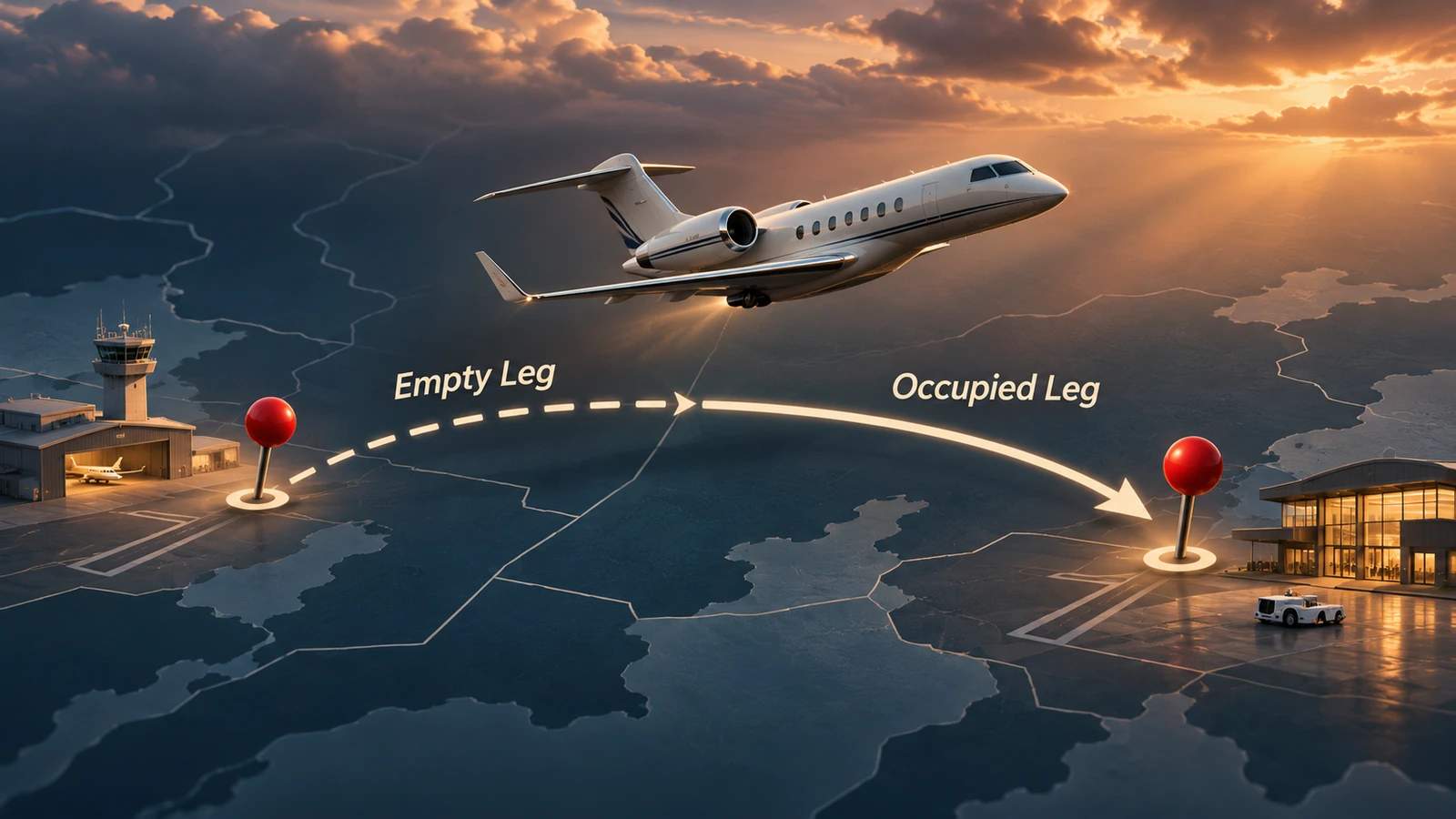
One aircraft costs $6,000 an hour and another costs $6,400. For a two-hour charter, the first appears to have an $800 advantage. It can lose that advantage before the passengers board. If the crew has to fly an hour to collect them, someone has to cover the cost of moving the aircraft. The more expensive jet might already be a short hop from the departure airport.
Private jet repositioning fees pay for some or all of that empty flying. There can be a second movement after the passengers get out, and it can change which offer wins. A comparison based on the distance from the operator’s headquarters misses both the aircraft’s actual starting point and the place the operator needs it afterward.
Where private jet repositioning fees enter the quote
Picture a Monday charter from a regional airport to a major city. The passenger sees one flight. On the operator’s schedule there may be three. The aircraft flies empty from Sunday night’s parking spot to the regional airport, carries the passengers to the city, then flies to another airport for Tuesday morning’s departure. Fuel, flight time and aircraft use accrue on all three legs.
The operator can quote a separate positioning charge, incorporate it in a fixed trip price or absorb part of it to win a trip that suits the schedule. Two operators can therefore account for the same movement differently. A zero beside “repositioning” has limited meaning if the trip price is fixed. An explicit charge, meanwhile, gives the buyer a figure to test against a competing offer.
The important geography is where the aircraft will be available when the trip starts. A locally based aircraft can finish the previous day hundreds of miles away. A visiting jet can land at the requested airport with another party the night before and be ready in the morning. Its registration, home airport and location on the day the buyer requests pricing all tell less about Monday’s pickup than its expected position on Sunday night.
Two aircraft and a $4,400 difference
Take an illustrative two-hour occupied flight with the same airports, passenger count and departure time. Both aircraft can perform the trip. Operator A offers the lower occupied rate but charges for a longer empty flight to the passengers and another movement afterward. Operator B charges more per occupied hour and less total positioning time. These are hypothetical flight charges before taxes and other trip expenses, with no minimum hours and no rounding.