Regulation · guide
Type Certificates vs Supplemental Type Certificates: What an Aircraft Buyer Gets
The base design, the approval for a modification and the evidence that a particular jet received it answer three different questions at closing.

A cabin-connectivity antenna is visible on the roof of a jet for sale. The seller supplies an FAA approval number for that antenna installation, and the aircraft model appears on the approval. What still needs explaining is how the installation got onto this particular airplane, who signed for the work and what the next owner must do to keep it in service.
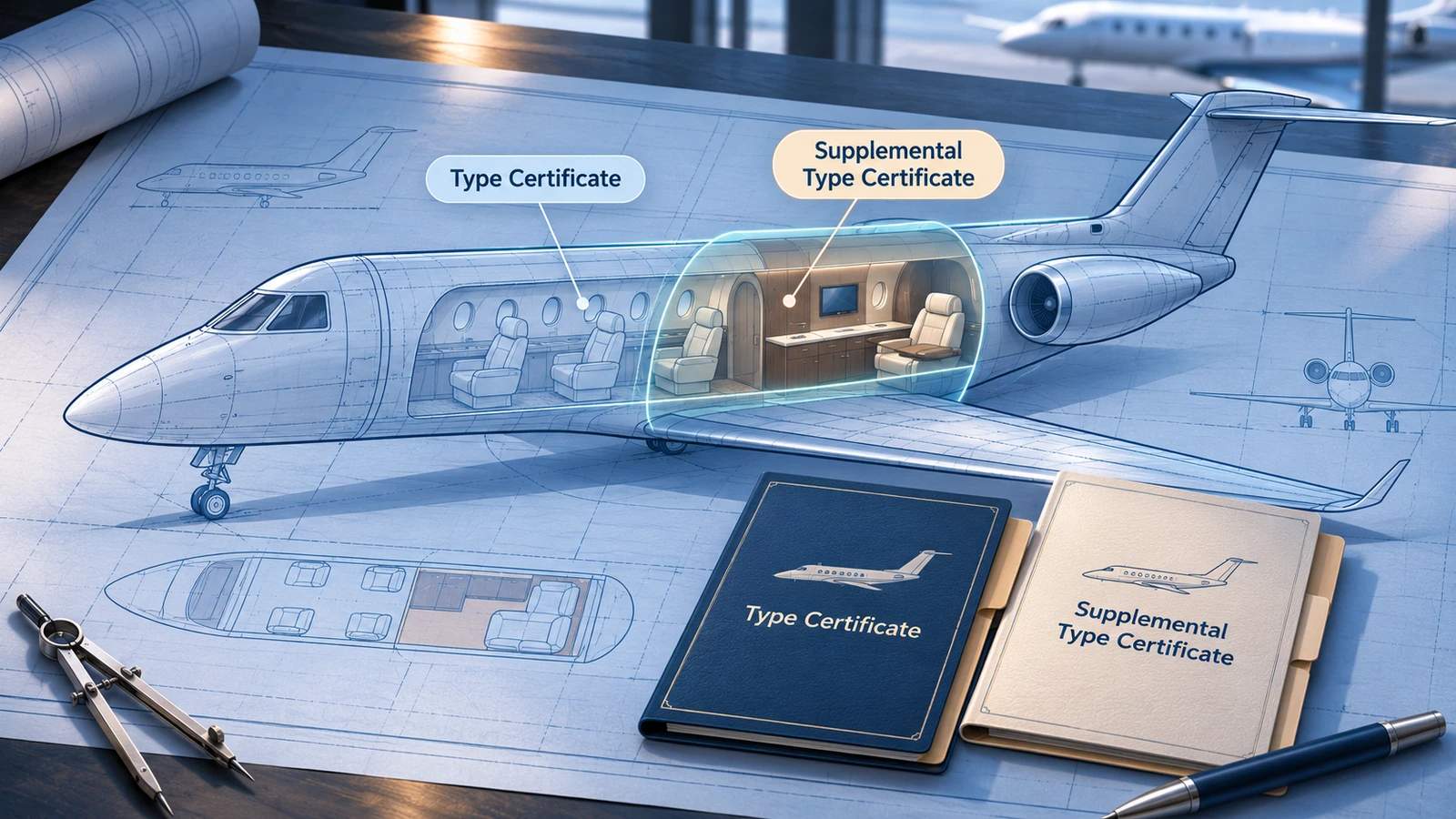
A type certificate establishes the approved design for an aircraft model. A supplemental type certificate, usually shortened to STC, approves a defined change to an existing type design. The buyer takes delivery of a physical aircraft in a particular configuration. Connecting those three things is one of the most productive uses of a prebuy records review. It can uncover a missing manual supplement before the crew needs it, or establish that a useful and expensive modification is already properly documented.
Type certificates vs supplemental type certificates at delivery
The base type certificate provides the starting point. Under the FAA regulation defining a type certificate, it incorporates the approved design, operating limitations, the certificate data sheet, the relevant certification rules and other applicable conditions. The public type certificate data sheet identifies models and lists important specifications and limitations. A commercial family name used in the sales listing can cover several models, so the regulatory model designation and the aircraft serial number matter.
An STC builds on an existing type certificate. The FAA’s description of supplemental type certificates explains that the approval covers both the modification and its effect on the original design. The change might involve an antenna installation, a new cockpit system or a cabin reconfiguration. Some STCs apply to one aircraft. Others cover specified models or an approved model list, sometimes with additional conditions on serial number, equipment configuration or the installation itself.
A newly delivered airplane can have changes already incorporated under the original manufacturer’s approved design. A previously owned airplane can have an approved alteration supported through another route. An unfamiliar piece of equipment does not, by itself, establish that an STC should exist. The engineering question is what approved or acceptable data applied to the particular work and what record the work required.
| Document or observation | What it establishes for a buyer |
|---|---|
| Type certificate data sheet | The starting design and relevant limitations for the named aircraft model |
| STC and its applicability information | Which design change was approved and which aircraft or configurations it can cover |
| Installation and return-to-service records | What work was performed on the particular jet, when, by whom and against what data |
| Manual supplements and maintenance instructions | How the change affects operation, limitations and continuing upkeep |
| Physical inspection and equipment identification | Whether the hardware now aboard agrees with the records being offered |
How the approval connects to one serial number
In the antenna example, the raised fairing on the fuselage is easy to photograph. The mounting provisions and penetrations beneath it are harder to see. Installation data can describe structural reinforcement, bonding, cable routing and electrical protection. Some of that work can still matter after the cabin electronics inside the airplane have been replaced.
The maintenance entry identifies the work and its return to service. For major alterations the package may also include FAA Form 337, as applicable to the work and recording method. The paperwork can refer to separate drawings, revisions and instructions. A records specialist following that trail should be able to distinguish the initial installation from later equipment swaps or repairs. A certificate number copied from a similar airplane’s sales brochure supplies none of those connections.
Suppose the original installation occurred eight years ago and the current equipment list carries a different cabin router. That difference could reflect an approved later upgrade that is easy to document. It could also mean that an otherwise complete packet stops one work order short of the present configuration. The useful finding is which change is unaccounted for and whether it affects anything else. Describing the entire system as “uncertified” on the strength of a mismatched part number would go well beyond the evidence.
Two individually approved changes can also meet in the same part of the airplane. An antenna installed above the cabin can affect the space available for a second antenna. An interior alteration may change the routing or access for wiring associated with an earlier installation. A separate approval for each design does not automatically explain how they coexist on this configuration. Drawings, conformity evidence or an engineering determination can settle a question that neither certificate’s first page answers.
What the buyer needs after the aircraft leaves the shop
The paper trail earns its place on ordinary operating days. An applicable flight manual supplement can add a system limitation or change a crew procedure. A revised weight-and-balance report records the effect on the airplane’s empty weight and center of gravity. Instructions for continued airworthiness can give maintenance personnel inspection points, access instructions or servicing information that the unmodified aircraft manual does not contain.
Imagine that a maintenance visit coincides with the proposed closing. The shop has removed the cabin headliner for unrelated work. If the prebuy team identifies a missing antenna installation reference now, the seller may be able to obtain the records or arrange an inspection while access is open. Discover the same gap after a fresh interior goes in and the cost of answering exactly the same engineering question can change. The sale agreement determines who bears that expense and whether the discrepancy affects acceptance.
U.S. rules specify which maintenance records the owner or operator keeps and which records transfer at an aircraft sale. A purchaser can also negotiate delivery of useful records, manuals, data access and support contacts beyond the regulatory minimum. A document that exists only in the seller’s subscription portal can be difficult to retrieve after account access changes. Access to the current revision and possession of a dated installation record are two separate deliverables.
Who owns the STC after the aircraft is sold?
Buying the modified aircraft generally delivers the installed equipment and its associated records. Ownership of the engineering approval is a different transaction. A buyer acquiring one modified jet should not assume it can use that STC to duplicate the installation on a second aircraft. The FAA explains the written permission required to install another party’s STC.
There is an important difference between documenting an already completed installation and commissioning a new one. The ownership change alone does not repeat the original installation. On the other hand, a buyer planning a substantial redesign, an equipment migration or a fleetwide retrofit needs to know who controls the necessary installation data and on what terms it is available. That question can matter more to the buyer’s plans than the resale value of the existing equipment.
Frequently asked questions
Is an airworthiness certificate the same as a type certificate?
No. A type certificate concerns an approved design. An airworthiness certificate is issued for an individual aircraft. A buyer reviewing a modification still needs the installation history and applicable operating and maintenance documents for that particular aircraft.
Does a published STC prove the equipment was installed correctly?
A published approval establishes that the design change was approved within its scope. The connection to one aircraft comes from its installation data, records of the completed work and evidence that the configuration matches. A physical inspection can help resolve inconsistencies between the documents and the aircraft.
Does every cabin refurbishment need a supplemental type certificate?
The answer depends on what changed and which approval route applies. Replacing an item with an eligible like-for-like component raises different questions from changing the seating layout or attaching new equipment to primary structure. The shop’s classification of the work and the data supporting it determine the records the buyer should expect.
Can the new owner move the equipment to a sister aircraft?
Sharing a model designation can help establish potential eligibility. It does not establish that the second installation is authorized or compatible. The second aircraft’s configuration, approved installation data, permission to use the STC where required, and completion of the work on that aircraft all matter.