
News · news
NTSB Recovers Learjet 60 Cockpit Voice Recorder From Greenacres Crash
The recorder was found at the initial impact site and is being evaluated in Washington. Its recovery also highlights how crash-protected memory is built to withstand extreme forces.

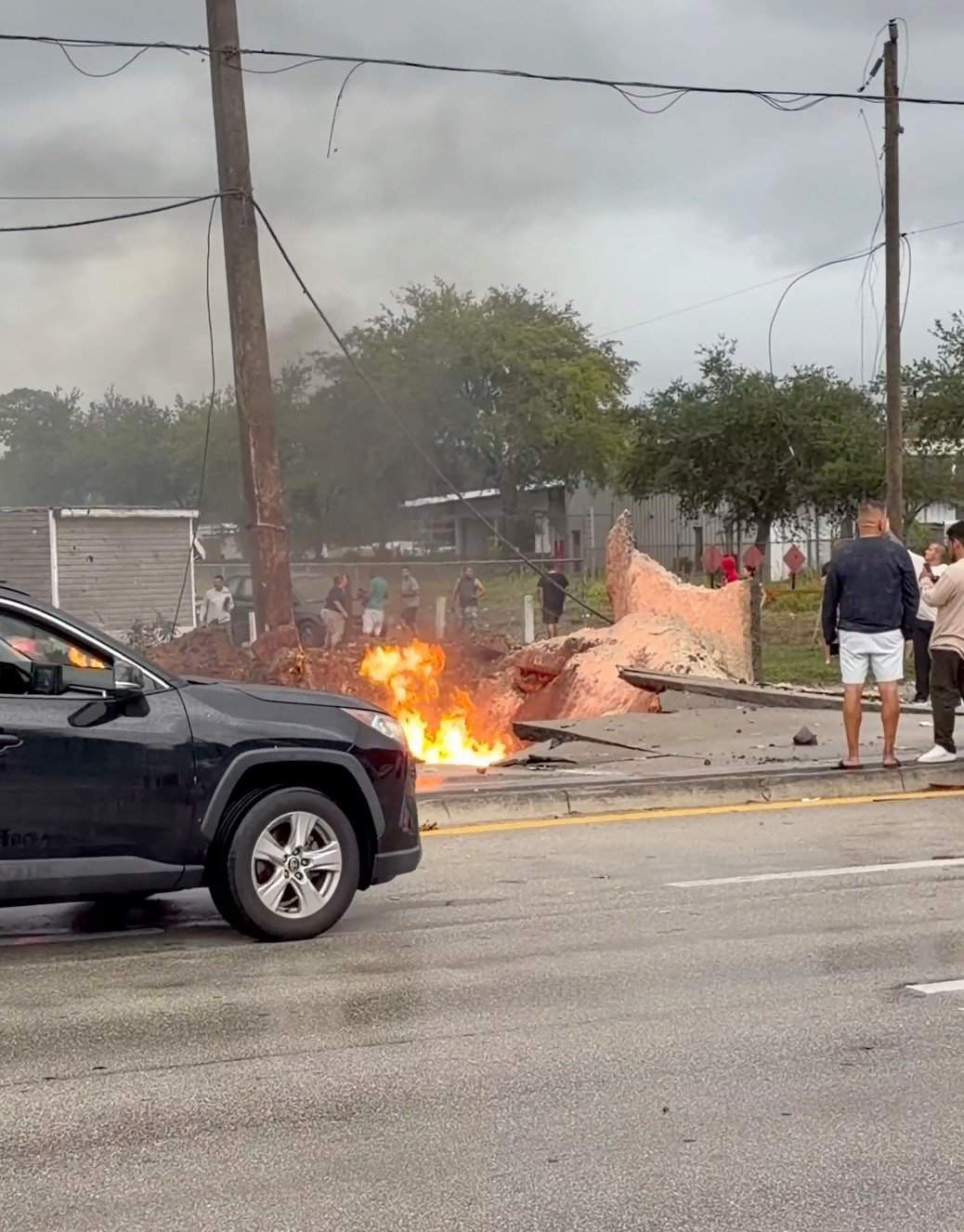
The National Transportation Safety Board has recovered the cockpit voice recorder from the Learjet 60 that crashed near Greenacres, Florida, on November 1, giving investigators a potential source of evidence from inside the cockpit during the accident flight.
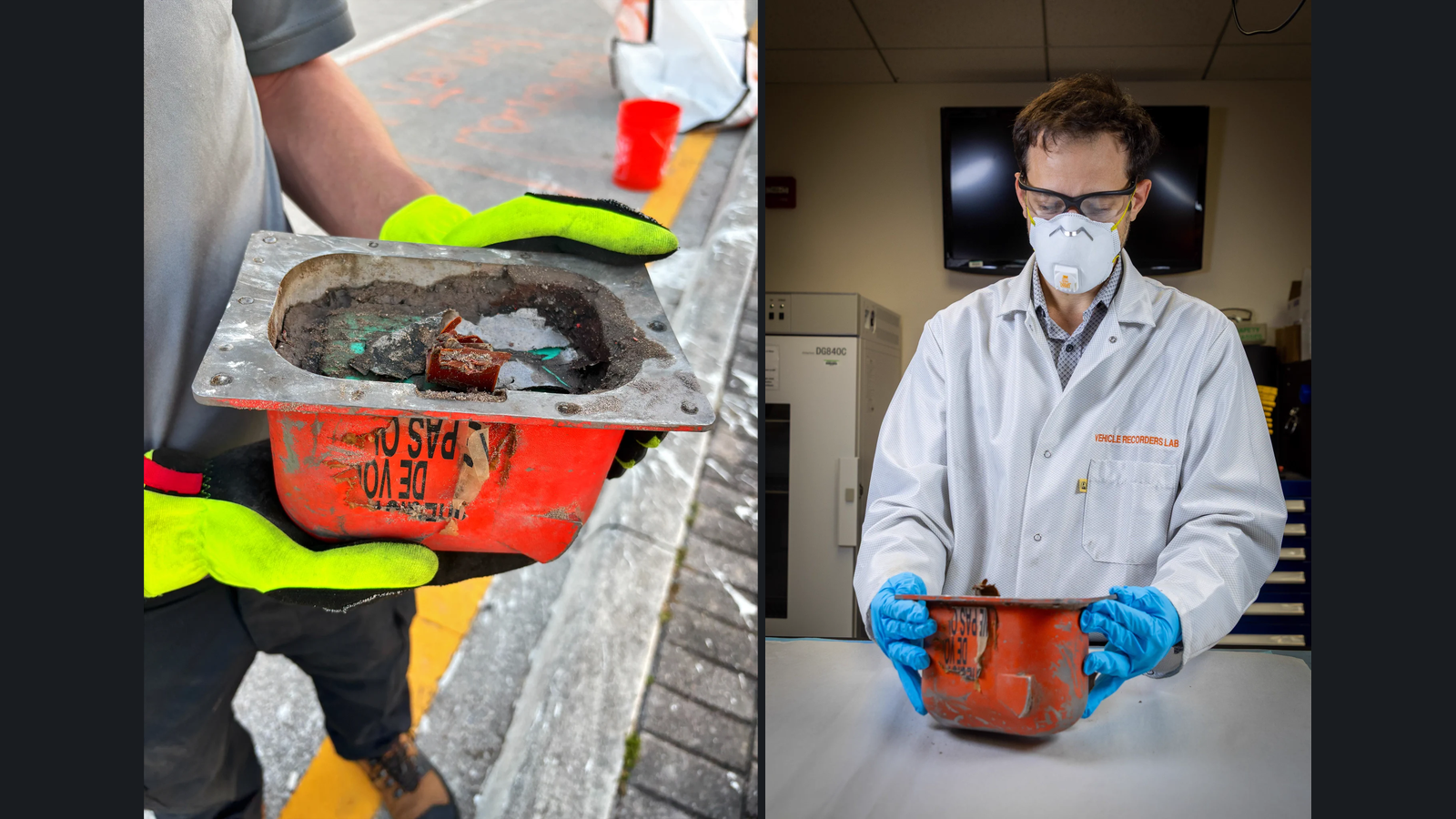
In its November 9 update, the NTSB said the recorder was found at the initial impact site and was being evaluated at its Vehicle Recorders Laboratory in Washington, D.C. Excavation at the impact site has also been completed.
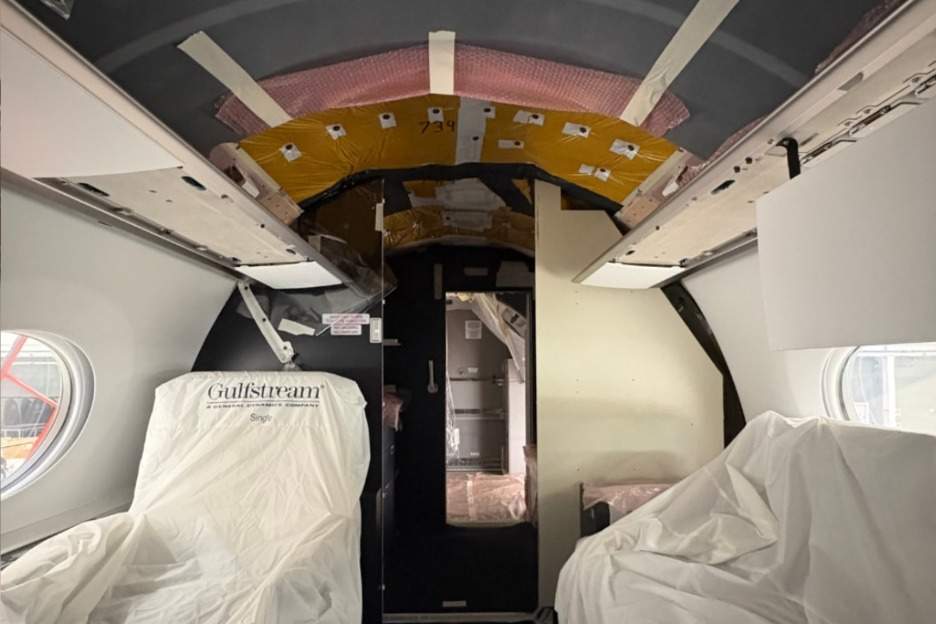
The recovery is an important development in the investigation into the crash of N722BD, which killed all nine people aboard during a flight from Austin, Texas, to North Eleuthera in the Bahamas. The NTSB identifies the operator as Aurora Aviation, doing business as Upper Jet.
The agency has not announced whether investigators have recovered usable audio, how much of the flight was recorded or what the recording contains. Its investigation remains ongoing.
From the impact site to the laboratory
The NTSB’s photographs show the damaged orange recorder housing after recovery and during examination in Washington. Its recognizable shape has drawn attention in discussions on X and Reddit, where readers questioned how a recorder could survive such a destructive crash and whether the recording medium was tape or solid-state memory.
The NTSB’s recovery announcement did not identify the recorder’s make, model or storage technology.
The update follows the agency’s November 8 announcement that its on-scene investigative work was complete apart from excavation. Investigators had identified components from both wings and both engines, the flight deck, the vertical and horizontal stabilizers, the left elevator, aileron sections and flap-track assemblies. Some parts had already been sent to Washington for closer inspection.
What a cockpit voice recorder can reveal
A cockpit voice recorder captures more than conversation. Depending on the installation and recording quality, it can preserve radio calls, warning tones, engine sounds and other cockpit noises. Investigators can compare those sounds with air traffic control recordings and other evidence to establish when events occurred.
A flight data recorder serves a different purpose, recording parameters such as altitude, airspeed and heading. The NTSB’s latest announcement concerns the cockpit voice recorder; it does not announce recovery of a flight data recorder.
If usable audio is recovered, it could help investigators understand the crew’s observations and actions before impact. Any interpretation would still need to be assessed alongside wreckage examinations, weather information, aircraft records and the rest of the investigation.
How a flight recorder protects its memory
The protection is concentrated around the recording medium. Older recorders used magnetic tape, while modern solid-state units store information in memory chips. An impact-resistant enclosure and thermal protection are intended to preserve that information even if other parts of the recorder are badly damaged.
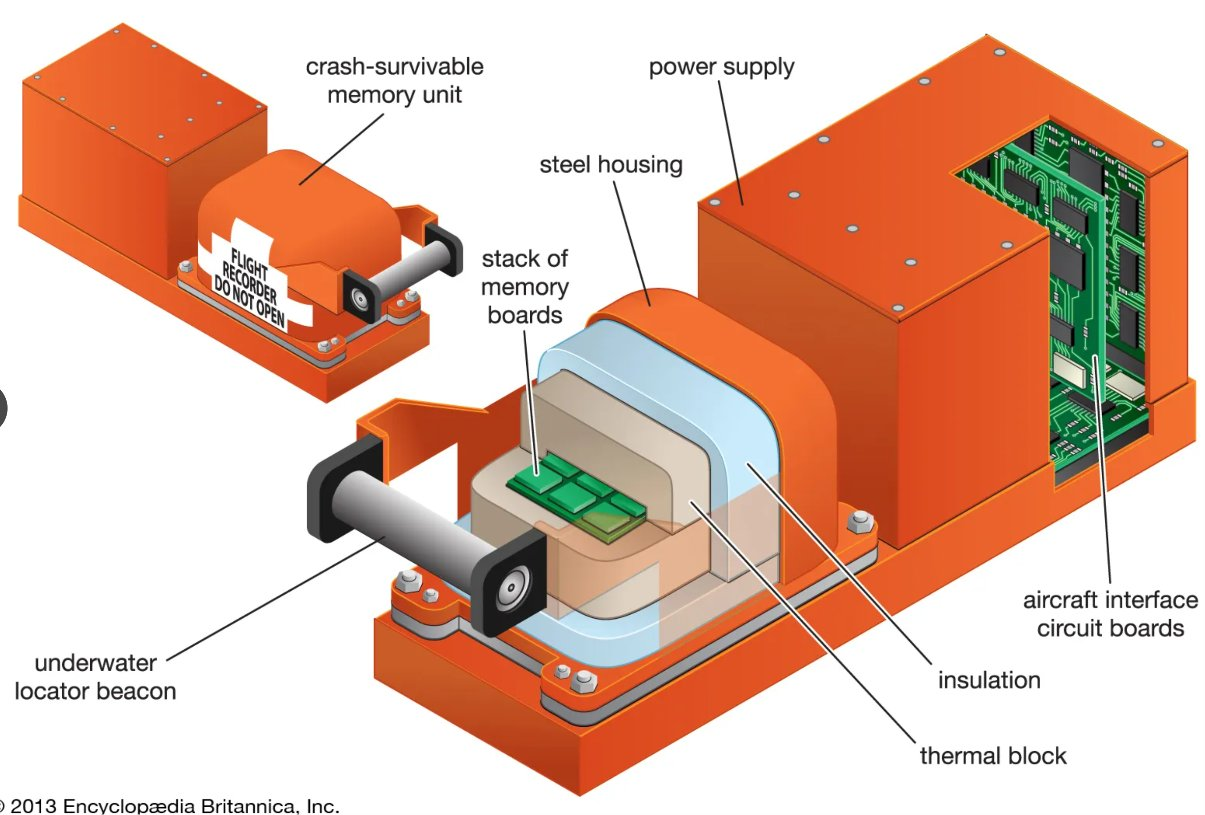
As the Australian Transport Safety Bureau explains, the design objective is survival of the data. The complete recorder does not have to emerge ready to operate again. That is why a damaged housing can still be worth examining, although its appearance alone cannot establish whether the contents are readable.
What 3,400 g actually means
The NTSB lists an impact tolerance of 3,400 g over 6.5 milliseconds for cockpit voice and flight data recorders. More precisely, the familiar crash-protection test is characterized by a half-sine shock pulse with a peak acceleration of 3,400 times normal gravity, approximately 33,000 metres per second squared.
The pulse lasts just 0.0065 seconds. The acceleration rises to that peak and then falls, rather than remaining at 3,400 g for the whole interval.
For an idealized object brought to rest under that pulse, the figures correspond to slowing from roughly 270 knots, or 310 mph (500 km/h), over about 45 centimetres (18 inches). The ATSB uses the same speed-and-distance comparison to explain the severity of the test.
This is a comparison for a specified laboratory shock, not an estimate of this Learjet’s impact speed or stopping distance. It is also not a universal speed below which a recorder is guaranteed to survive. The surface struck, impact direction, deformation and subsequent fire can all affect the outcome.
Crash protection also involves tests beyond impact. The ATSB describes penetration and static-crush testing, along with exposure to a 1,100°C fire for 60 minutes. Requirements depend on the equipment and its approval basis; the NTSB has not yet identified the recovered unit sufficiently to assign it a particular certification standard.
What happens next
The immediate question is whether the recovered recorder contains usable audio from the accident flight. The NTSB has given no timetable for an announcement on that assessment.
Even if a recording is recovered, the public should not expect the NTSB to release the cockpit audio. Federal law restricts its release. Pertinent portions of a written transcript may become public at the appropriate stage of the investigation.
The cause of the crash has not been determined.