


Key facts
Area, population and GDP figures describe the named country or territory, not the city or resort. Airport names are relevant gateways; heliport figures identify the stated inventory area.
- Capital
- Zimbabwe: Harare Zambia: Lusaka
- Time zone
- Africa/Lusaka — UTC+02:00
- Telephone code
- Zimbabwe: +263 Zambia: +260
- Total area
- Zimbabwe: 390,757 sq km Zambia: 752,618 sq km
- Population
- Zimbabwe: 16,950,795 (2025, World Bank) Zambia: 21,913,874 (2025, World Bank)
- Currency
- Zimbabwe: Zimbabwe Gold / ZiG (ZWG); US dollar (USD) within a multicurrency system Zambia: Zambian kwacha (ZMW)
- GDP per capita
- Zimbabwe: US$3,021 (nominal, 2025, World Bank) Zambia: US$1,318 (nominal, 2025, World Bank)
- Airports
- Victoria Falls Airport; Harry Mwaanga Nkumbula International Airport
- Heliports
- Zimbabwe: 5 heliport records in the OurAirports inventory (2026-10-07) Zambia: 4 heliport records in the OurAirports inventory (2026-10-07)
OurAirports is a community-maintained inventory. A zero means no heliport record in this snapshot, not proof that no landing site exists. Listings may include private sites and do not establish passenger access or current operating availability.
Fact sources
- Country codes, capitals, calling codes and currencies — Countries dataset (ODbL)
- Zimbabwe — archived CIA World Factbook (final pre-closure snapshot)
- Zimbabwe population — World Bank
- Zimbabwe GDP per capita, current US dollars — World Bank
- OurAirports open airport/heliport inventory
- Zimbabwe Gold currency code ZWG — Reserve Bank of Zimbabwe
- Zimbabwe currency framework — Reserve Bank 2026-2030 strategy
- Zimbabwe cultural etiquette and food — Wikivoyage
- Zambia — archived CIA World Factbook (final pre-closure snapshot)
- Zambia population — World Bank
- Zambia GDP per capita, current US dollars — World Bank
- Zambia cultural etiquette and food — Wikivoyage
- Civil time rules — IANA time zone database 2026e
Travel information
Country and territory context for Zimbabwe, Zambia. Communities, customs and food vary locally; the local travel-season note is specific to Victoria Falls.
- Climate
- Zimbabwe: tropical; moderated by altitude; rainy season (November to March) Zambia: tropical; modified by altitude; rainy season (October to April) Local travel season: February–May often brings dramatic high water and heavy spray. June–August can balance visibility and flow; lower water later in the year changes the view and available river activities.
- Ethnic groups and communities
- Zimbabwe: The archived source records a predominantly African population. Shona, Ndebele and many other communities contribute to the country's varied cultural traditions. Zambia: Bemba, Tonga, Chewa, Lozi, Nsenga, Tumbuka, Ngoni, Lala, Kaonde, Namwanga, Lunda, Mambwe, Luvale, Lamba, Ushi, Lenje, Bisa, Mbunda
- Main languages
- Zimbabwe: Shona, Ndebele and English are widely used; Zimbabwe recognises sixteen official languages, including several minority languages and sign language. Zambia: Bemba, Nyanja, Tonga, Lozi, Chewa, Nsenga, Tumbuka, Lunda (North Western), Kaonde, Lala, Lamba, English (official), Luvale, Mambwe, Namwanga, Lenje, Bisa
- Cultural practices
- Zimbabwe: Courteous greetings and respect for hosts are valued. Music, community gatherings and local traditions vary among Zimbabwe's communities. Zambia: Greetings and respect for older people are important. Practices differ among communities, so follow hosts' lead at meals and visits.
- Traditional cuisine
- Zimbabwe: Sadza, a maize staple, is served with greens, meat or other relishes. Zambia: Nshima, a maize staple, accompanies vegetables, fish or meat relishes; regional cooking varies.
- National economy
- Zimbabwe: The national economy includes mining , steel, wood products, cement, chemicals, fertilizer, clothing and footwear, foodstuffs. Zambia: The national economy includes copper mining and processing, emerald mining, construction, foodstuffs, beverages, chemicals, textiles, fertilizer.
Fact sources
- Country codes, capitals, calling codes and currencies — Countries dataset (ODbL)
- Zimbabwe — archived CIA World Factbook (final pre-closure snapshot)
- Zimbabwe population — World Bank
- Zimbabwe GDP per capita, current US dollars — World Bank
- Zimbabwe Gold currency code ZWG — Reserve Bank of Zimbabwe
- Zimbabwe currency framework — Reserve Bank 2026-2030 strategy
- Zimbabwe cultural etiquette and food — Wikivoyage
- Zambia — archived CIA World Factbook (final pre-closure snapshot)
- Zambia population — World Bank
- Zambia GDP per capita, current US dollars — World Bank
- Zambia cultural etiquette and food — Wikivoyage
- Civil time rules — IANA time zone database 2026e
Your journey
Private jet to Victoria Falls
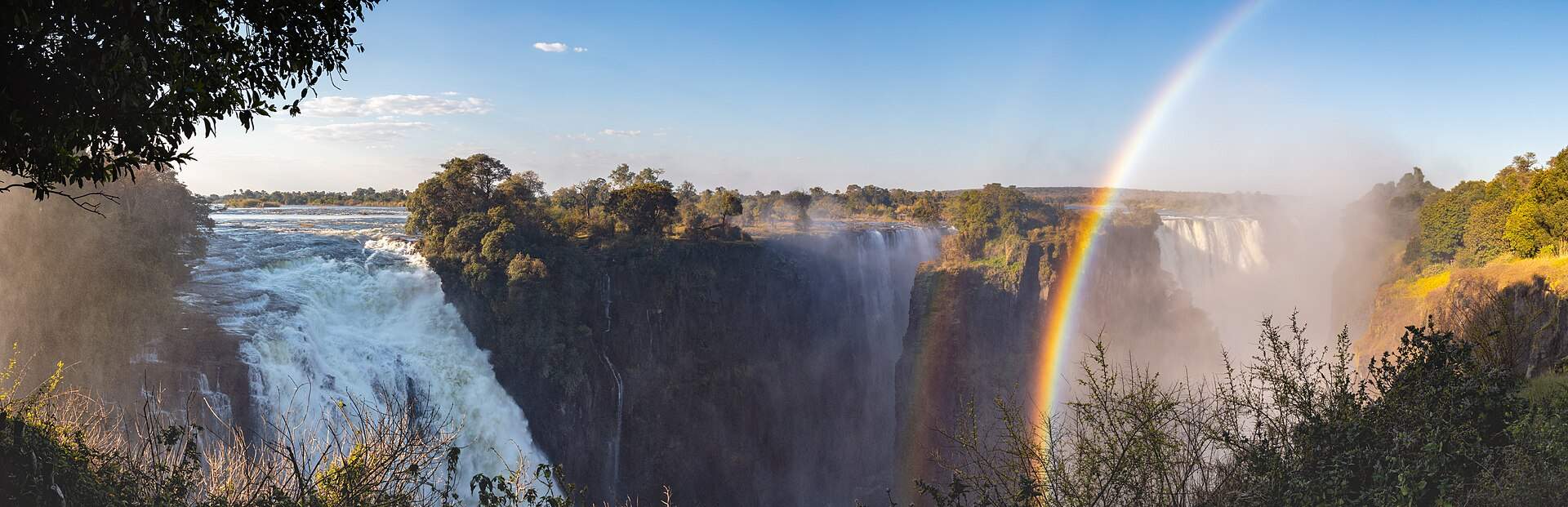
Victoria Falls spans two countries. Choose the Zimbabwean or Zambian base before arranging flights, and treat any cross-border sightseeing as a separate immigration and transfer step. The falls' viewpoints change with water levels, spray and the side you visit. A Zambezi river excursion can add a different perspective, while nearby wildlife areas extend the stay. Activities should be chosen for the current conditions rather than assumed available in every season.
Victoria Falls at a glance
- Suggested stay
- Three nights
- Best suited to
- Waterfalls, river and regional safari
Three-day weather forecast
Victoria Falls
Loading the three-day forecast…
Weather data: MET Norway · CC BY 4.0. Forecast samples summarised by BizJet Journal for the guide’s reference location; conditions vary across larger destinations. For trip planning; flight crews use aviation weather briefings.
Where to land for Victoria Falls
Victoria Falls Airport serves the Zimbabwean side, while Harry Mwaanga Nkumbula International serves Livingstone in Zambia. Choose the country and accommodation first; crossing between the two sides requires separate border and transfer planning.
| Airport | Location and access | Private aviation planning |
|---|---|---|
| Victoria Falls AirportVFA / FVFA | Zimbabwe, south of Victoria Falls town | A gateway for Zimbabwe-side accommodation and park visits. |
| Harry Mwaanga Nkumbula International AirportLVI / FLHN | Livingstone, Zambia | Choose for Zambia-side stays; cross-border transfers require separate entry planning. |
Private terminals and arrival experience
A fixed-base operator (FBO) provides ground services for private aircraft and their passengers. The handling team coordinates your arrival; airport opening hours alone do not establish terminal or border-service availability.
Victoria Falls Airport
Arrange the arrival
Book the airport in the same country as the intended base where practical, and coordinate any border-crossing transfer explicitly.
Airport transfers and getting around
Victoria Falls
Match transport to the itinerary
The falls have two national approaches. Boat activities, hotels and airports must be matched to the correct country and river collection point.
Ask the operating carrier to confirm aircraft suitability, handling and permissions for the actual itinerary. For budgeting, see our private jet charter cost guide.
Where to stay in Victoria Falls
Zimbabwe side
The Victoria Falls Hotel
A heritage base convenient for the town and falls area.
Zambia side
Royal Livingstone Hotel
A riverside alternative for a Zambia-centred stay.
Zimbabwe, upstream
Matetsi Victoria Falls
A safari-and-river retreat requiring more travel to the falls themselves.
Where to eat
The Victoria Falls Hotel
Livingstone Room
A formal dining occasion; confirm the current service and dress guidance.
Royal Livingstone Hotel
Old Drift Restaurant
A hotel dinner that pairs naturally with the riverside setting.
Matetsi Victoria Falls
Matetsi dining
Guest meals support a lodge-based programme; confirm outside access separately.
What to do in Victoria Falls
Victoria Falls
Falls viewpoints
Allow a half day with rain protection appropriate to water levels.
Victoria Falls
Zambezi cruise
Reserve a separate river outing with confirmed collection and return.
Victoria Falls
Lodge wildlife
Choose permitted guided activities according to the property and season.
History of Victoria Falls
Victoria Falls was formed through the Zambezi's erosion of a basalt landscape and has long been known to local communities as Mosi-oa-Tunya. Later colonial travel, railways and conservation brought international attention. The river connects distinct visitor areas in Zambia and Zimbabwe.
Local communities knew the waterfall as Mosi-oa-Tunya long before David Livingstone's visit in 1855. The Zambezi region supported travel, exchange and settlement on both sides of what later became an international border.
Railways and the bridge completed in 1905 encouraged colonial tourism. Later national parks and visitor infrastructure developed in both Zambia and Zimbabwe, creating different gateway towns around one shared natural landmark.
Interesting facts
- Mosi-oa-Tunya is commonly translated as 'the smoke that thunders'.
- The waterfall spans the Zambezi between Zambia and Zimbabwe.
Best time to visit Victoria Falls
February–May often brings dramatic high water and heavy spray. June–August can balance visibility and flow; lower water later in the year changes the view and available river activities.
| When | Conditions and activities | Planning considerations |
|---|---|---|
| February–May | Often higher water and heavier spray. | Views and some activities can be affected. |
| August–November | Typically lower water later in the dry season. | Compare both sides’ viewing conditions. |
Plan your stay
Before you travel
Victoria Falls
Local planning
Check entry requirements for every country crossed. Water levels change the experience; photographs from another season may look very different.
Suggested itinerary
An editorial starting point. Suggested visit lengths and transfer allowances are planning estimates, not service guarantees.
Victoria Falls
A suggested short stay
Visit the falls on the first full morning, then reserve a river evening. Use another day for lodge activities or a second viewpoint, leaving border transfers clear of flight time.
Questions about visiting Victoria Falls
Which airport should I discuss with the flight operator?
Victoria Falls Airport (VFA / FVFA). Victoria Falls Airport serves the Zimbabwean side, while Harry Mwaanga Nkumbula International serves Livingstone in Zambia. Choose the country and accommodation first; crossing between the two sides requires separate border and transfer planning.
When is a good time to visit?
February–May often brings dramatic high water and heavy spray. June–August can balance visibility and flow; lower water later in the year changes the view and available river activities.
What should I allow for after landing?
The falls have two national approaches. Boat activities, hotels and airports must be matched to the correct country and river collection point.
How can I extend the trip?
Consider Okavango Delta: Add a contrasting wetland safari.
Nearby destinations and onward journeys
Okavango Delta
Add a contrasting wetland safari.
Cape Town
Combine natural scenery with a city and coast stay.