Your journey
Private jet to Okavango Delta
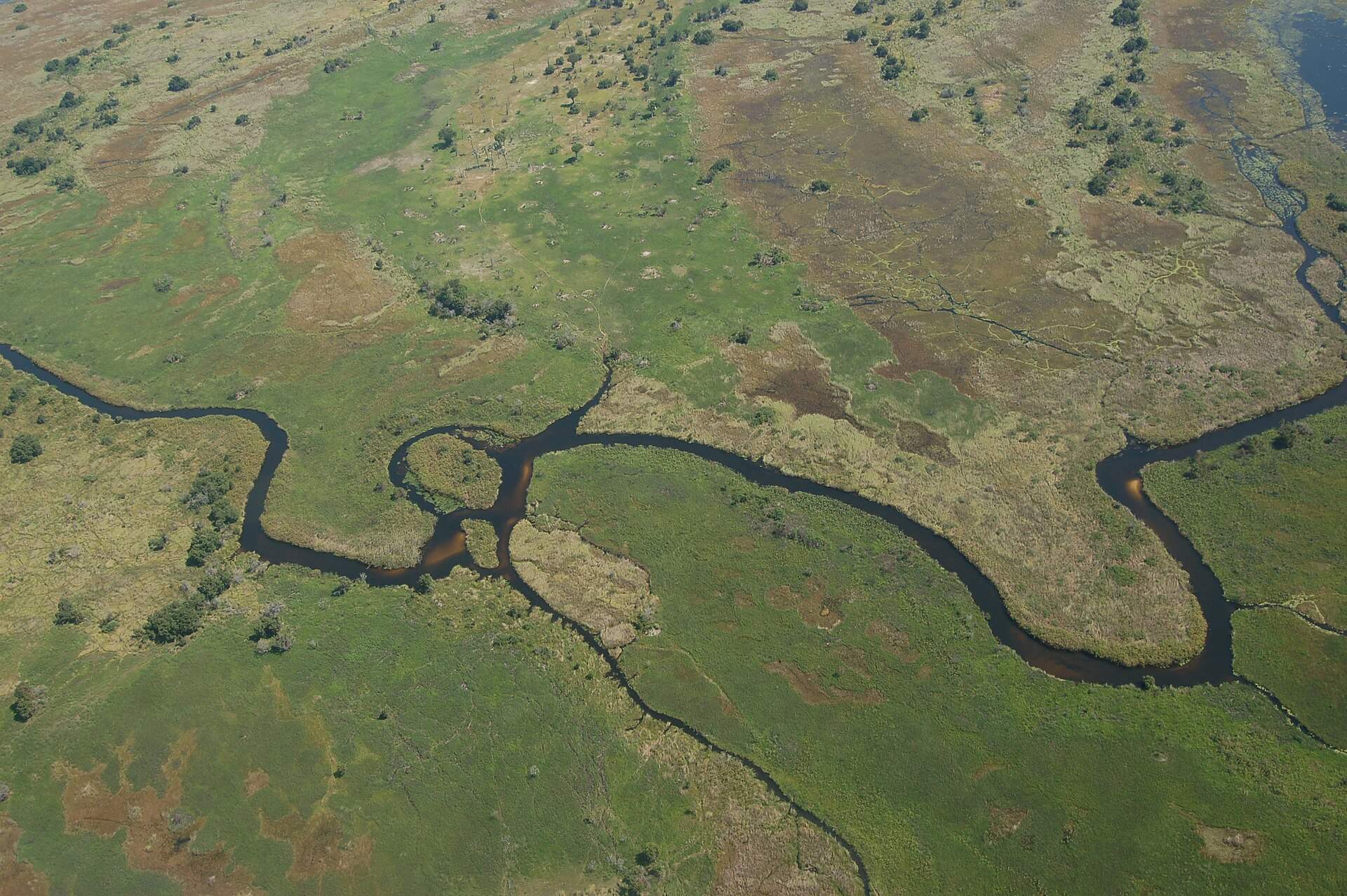
The Okavango is a network of remote camps rather than a single arrival point. Match the camp, season and permitted activities first, then coordinate the gateway and onward light-aircraft transfer. The experience depends on the camp's location, water levels and permitted activities. Vehicle-based drives, guided mokoro outings and birdwatching are different possibilities rather than universal inclusions. Choose the accommodation around the balance you want, with time to appreciate the Delta's quieter rhythms.
Okavango Delta at a glance
- Suggested stay
- Four to six nights
- Best suited to
- Wetland safari and remote camps
Where to land for Okavango Delta
Maun is the practical gateway for many Delta camps. Gaborone's Sir Seretse Khama International is a separate national gateway farther away; either itinerary must include the correct onward flight to the selected camp's airstrip.
Airport options and trade-offs| Airport | Location and access | Private aviation planning |
|---|
| Maun AirportMUB / FBMN | Maun | The main regional gateway for lodge-arranged Delta flights. |
|---|
| Sir Seretse Khama International AirportGBE / FBSK | Gaborone | A national international gateway requiring an additional regional connection. |
|---|
Private terminals and arrival experience
A fixed-base operator (FBO) provides ground services for private aircraft and their passengers. The handling team coordinates your arrival; airport opening hours alone do not establish terminal or border-service availability.
Maun Airport
Arrange the arrival
The camp must nominate its airstrip and aircraft requirements. International jet baggage and safari-aircraft baggage need separate planning.
Airport transfers and getting around
Okavango Delta
Match transport to the itinerary
Final travel is by camp-arranged aircraft and vehicles or boats. Water access varies with flood levels and the specific concession.
Ask the operating carrier to confirm aircraft suitability, handling and permissions for the actual itinerary. For budgeting, see our private jet charter cost guide.
History of Okavango Delta
The Okavango Delta is an inland wetland shaped by a river that disperses into the Kalahari rather than reaching the sea. Local communities have longstanding connections with its waterways and seasonal resources. Modern conservation and safari tourism developed around that changing flood landscape.
Communities around the Okavango have long used fishing, farming, hunting and seasonal movement to live with changing water levels. Their histories precede the designation of wildlife reserves and the growth of international safari travel.
The establishment of Moremi Game Reserve in 1963 reflected local conservation action. Later tourism and management arrangements introduced new livelihoods and pressures within a wetland dependent on water arriving from far beyond Botswana's borders.
Interesting facts
- The Okavango is an inland delta whose waters disperse without reaching the sea.
- Its flood pulse can arrive during Botswana's dry season because the water travels from distant catchments.