

The Bombardier Global 8000 is the fastest private jet in service in 2026 by published maximum operating speed, at Mach 0.95. The Cessna Citation X+, Gulfstream G700 and Gulfstream G800 share the next position at Mach 0.935. That is the straightforward answer. The more interesting question is what those numbers mean for the person paying for the flight.
A few hundredths of Mach can matter across an ocean. So can an extra fuel stop, the airport you land at, and whether your aircraft can carry everyone and their luggage while flying the route nonstop. Speed deserves attention, but it makes more sense when you read it alongside range and the mission.
We checked manufacturer specifications, certification announcements and original product literature to build this ranking. The figures below were reviewed on 15 October 2026. They include aircraft already in service, even where the model is now a pre-owned purchase.
The 10 fastest private jets in 2026, ranked
This list ranks maximum operating Mach number, commonly written as MMO. It counts distinct marketed models and variants separately, including the G650 and G650ER, and the Citation X and X+. Equal speeds receive equal ranks; the order within a tied group does not imply that one aircraft is faster.
| Speed rank | Aircraft | Maximum operating speed |
|---|---|---|
| 1 | Bombardier Global 8000 | Mach 0.950 |
| 2= | Cessna Citation X+ | Mach 0.935 |
| 2= | Gulfstream G700 | Mach 0.935 |
| 2= | Gulfstream G800 | Mach 0.935 |
| 5= | Bombardier Global 7500 | Mach 0.925 |
| 5= | Gulfstream G650ER | Mach 0.925 |
| 5= | Gulfstream G650 | Mach 0.925 |
| 5= | Gulfstream G600 | Mach 0.925 |
| 5= | Gulfstream G500 | Mach 0.925 |
| 10 | Cessna Citation X | Mach 0.920 |
The ranking covers purpose-built business jets that have entered service; experimental aircraft, proposed supersonic designs and airliner-derived VIP aircraft are outside its scope.
1. Bombardier Global 8000 — Mach 0.95
The Bombardier Global 8000 takes first place with a maximum operating speed of Mach 0.95. Bombardier announced its entry into service on 8 December 2025, so its position in a 2026 ranking is based on a delivered aircraft, rather than a development target.
The attraction extends well beyond the top-speed figure. Bombardier publishes an 8,000-nautical-mile maximum range and a cabin arranged around four living spaces, with separate crew accommodation.
Its entry-into-service announcement also specifies a cabin altitude of 2,691 feet while flying at 41,000 feet. On a very long trip, the space to sleep and the cabin environment are part of the aircraft's appeal.
The crucial qualification is that 8,000 nm and Mach 0.95 describe different performance measures. You should not read them as “8,000 nm at Mach 0.95.” An operator must plan the actual route, payload, reserves and cruise profile.
For a traveler who wants the highest published speed ceiling in an in-service business jet, this is the answer. For a specific intercontinental journey, ask how much of that speed advantage the flight plan can use.
2 (tie). Cessna Citation X+ — Mach 0.935
The Cessna Citation X+ remains one of aviation's most striking examples of a smaller business jet keeping pace with much larger aircraft. Its Mach 0.935 maximum operating speed puts it alongside the G700 and G800, even though their cabins and long-range missions are quite different.

Textron's 2016 Citation X+ specification summary lists a maximum range of 3,460 nm, Rolls-Royce AE3007C2 engines and a Garmin G5000 flight deck with integrated autothrottles. That range is a separate maximum-range claim, not a range at MMO.
The X+ also brought a 15-inch cabin stretch over the original Citation X, as described in Cessna's certification announcement. It is an evolution of the original aircraft, with changes to its engines, wing configuration, cabin and cockpit.
Its place here is a useful reminder that maximum speed and maximum luxury-cabin volume are separate questions. If your regular trips fit its range and cabin, the X+ offers exceptional speed without requiring an ultra-long-range aircraft. When assessing one today, the individual aircraft's condition and equipment deserve just as much attention as the famous Mach number.
2 (tie). Gulfstream G700 — Mach 0.935
The Gulfstream G700 combines a Mach 0.935 operating limit with Gulfstream's largest cabin. It shares second place on speed, while making a particularly strong case for passengers who want several distinct spaces to work, dine and sleep during a long flight.
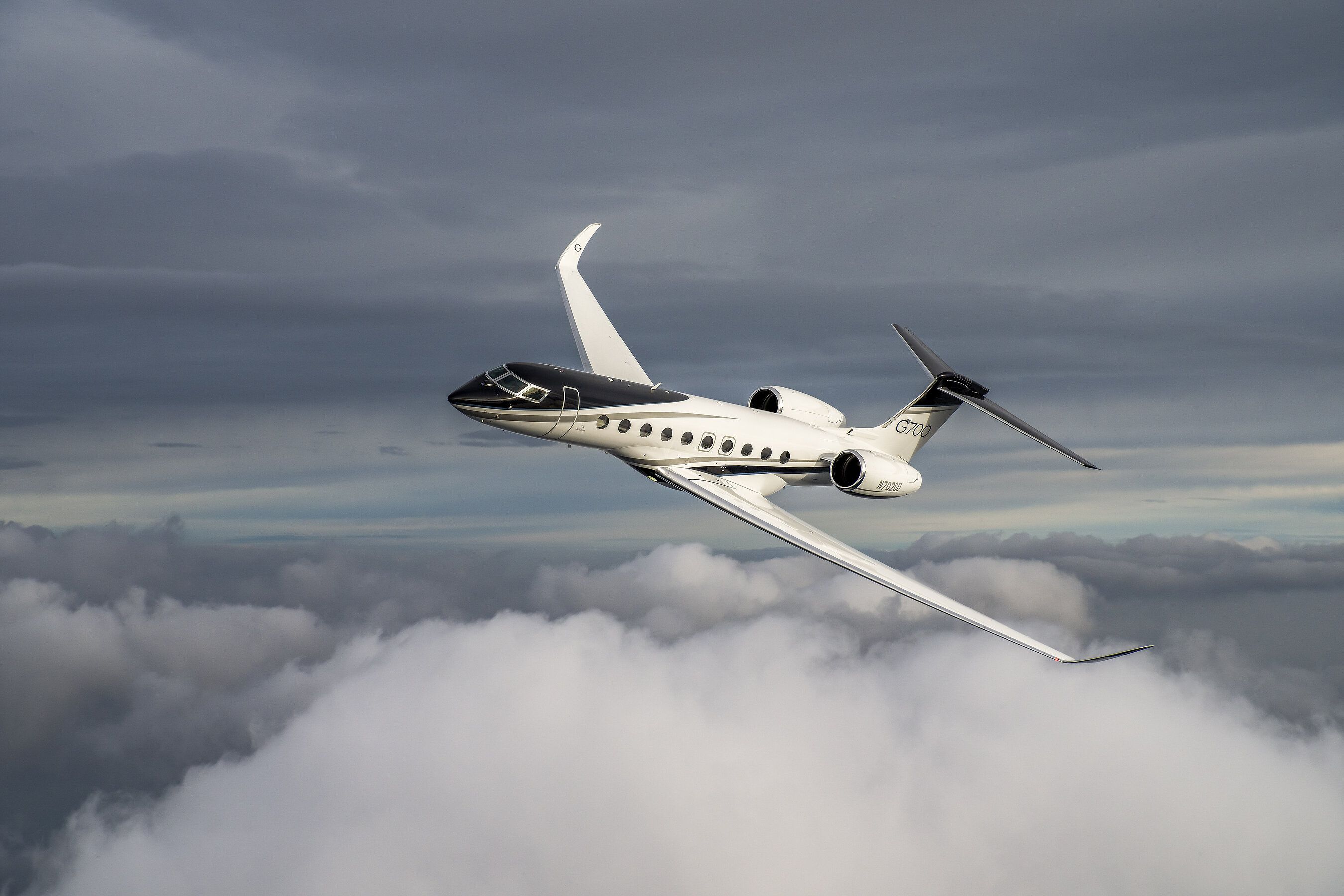
Gulfstream's current G700 specifications give it a range of 7,750 nm at Mach 0.85, or 6,650 nm at Mach 0.90. Both figures use the manufacturer's theoretical NBAA IFR mission assumptions, including eight passengers and four crew.
The cabin can have up to five living areas and has 20 panoramic oval windows. Available layouts include a dedicated bedroom and shower, although the exact arrangement depends on the aircraft.
The G700 is therefore more than a fast way across the Atlantic or Pacific. Its distinguishing feature within the Mach 0.935 group is the amount of cabin it carries with that performance. If several passengers need privacy or proper sleeping arrangements, the floor plan may decide the comparison long before the last decimal place of speed does.
2 (tie). Gulfstream G800 — Mach 0.935
The Gulfstream G800 is the aircraft most likely to be understated in a speed chart. Its current maximum operating speed is Mach 0.935, and its advertised maximum range is 8,200 nm at Mach 0.85.
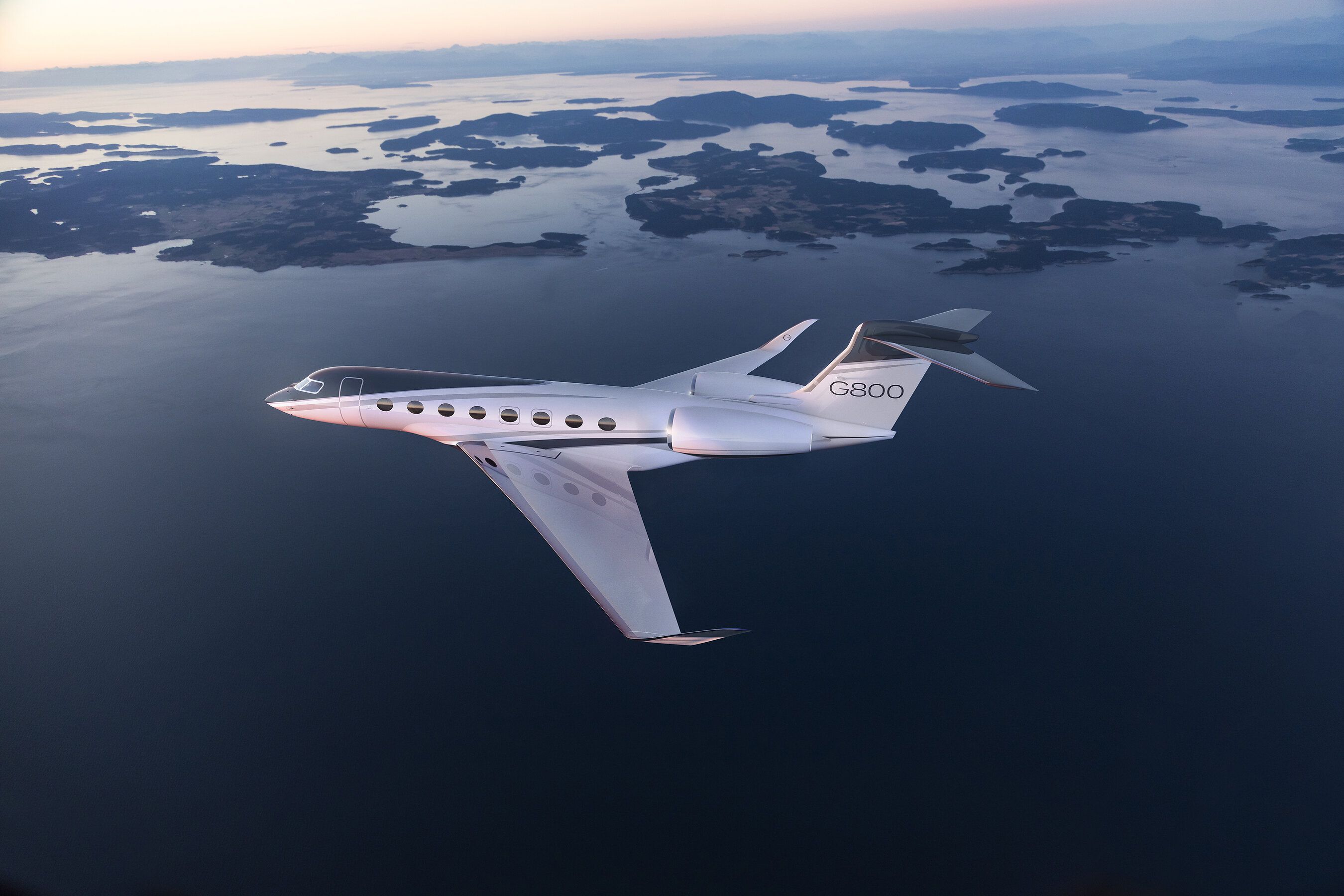
Gulfstream announced the improved figures with FAA and EASA certification in April 2025. Its current model page also lists 7,000 nm at Mach 0.90. That second figure is especially useful when comparing how far an aircraft can travel at a genuinely fast cruise setting.
The G800 offers up to four living areas and uses Rolls-Royce Pearl 700 engines. Against the G700, the choice is not which has the higher MMO: they are tied. The G800 favors maximum reach, while the G700 offers a longer cabin with additional layout possibilities.
Against the Global 8000, the distinction is equally clear. Bombardier has the higher operating Mach limit; Gulfstream publishes the longer maximum range. Neither number, on its own, establishes which aircraft will complete your particular journey sooner.
5 (tie). Bombardier Global 7500 — Mach 0.925
The Bombardier Global 7500 has a published maximum operating speed of Mach 0.925. The arrival of the Global 8000 changes its position at the top of the range, but it does not diminish the capabilities of the many Global 7500s already flying.
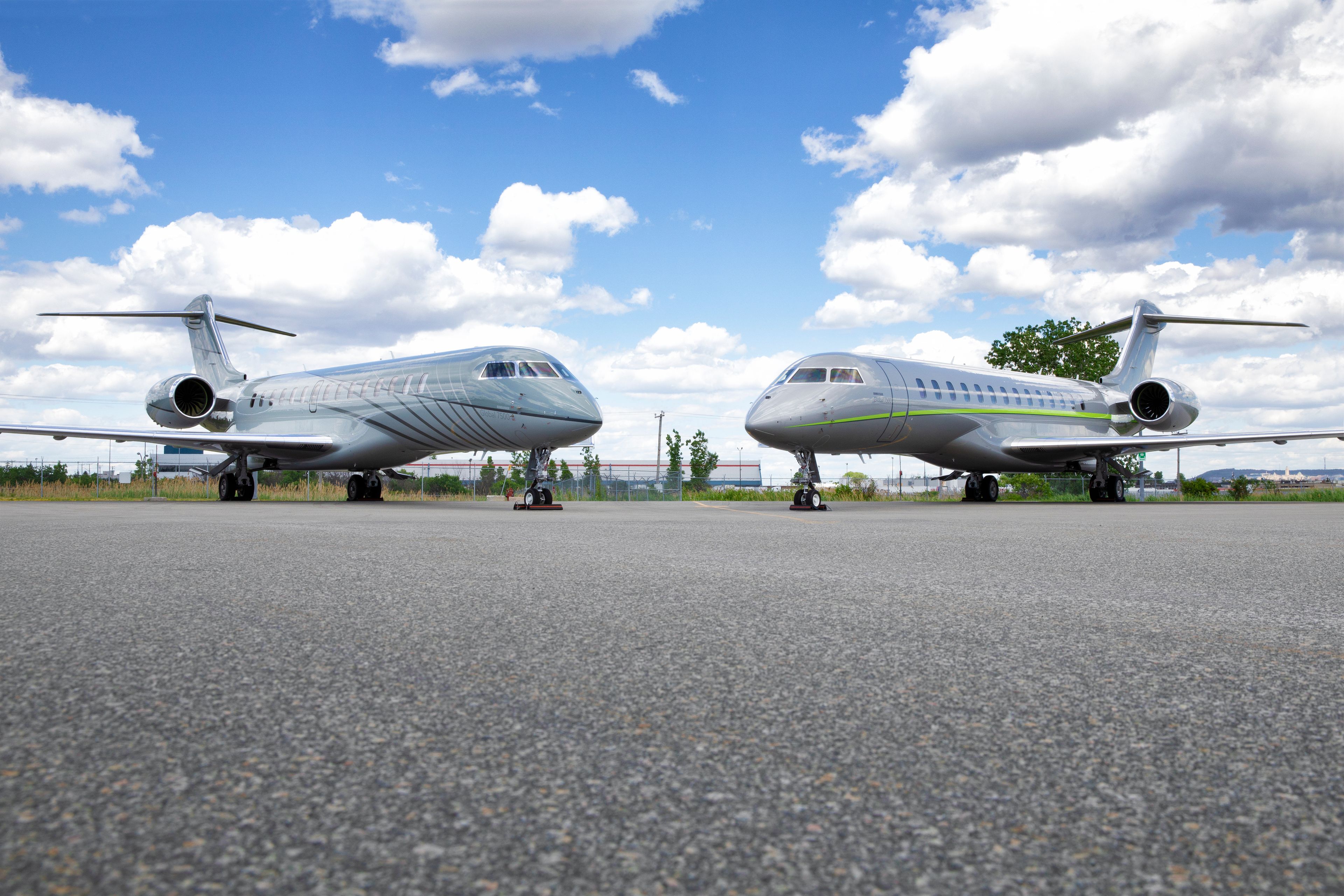
Bombardier's published performance and cabin description pairs that speed limit with a 7,700 nm baseline range, four living spaces, a full-size kitchen and dedicated crew accommodation.
The manufacturer's aircraft factsheet distinguishes Mach 0.85 typical cruise from Mach 0.90 high-speed cruise; the 7,700 nm range uses long-range mission assumptions.
For passengers, the appeal is the combination of reach and a cabin that allows different activities to happen at once. A meeting need not occupy the same space as someone trying to sleep.
This ranking refers to the standard Global 7500 specification. Aircraft upgraded to Global 8000 capability need to be assessed in their actual approved configuration.
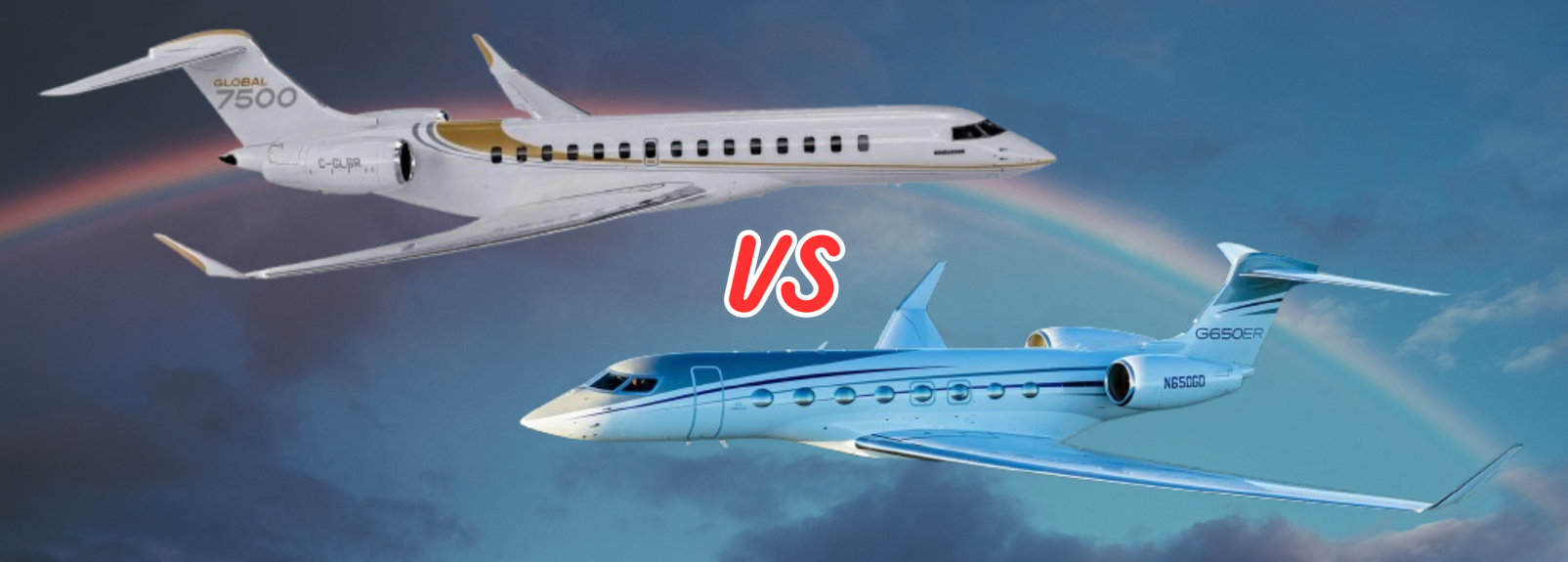
For a closer look at its most established rival, see our Global 7500 versus Gulfstream G650ER comparison.
5 (tie). Gulfstream G650ER — Mach 0.925
The Gulfstream G650ER earns its place with a maximum operating speed of Mach 0.925. The “ER” designation means extended range.
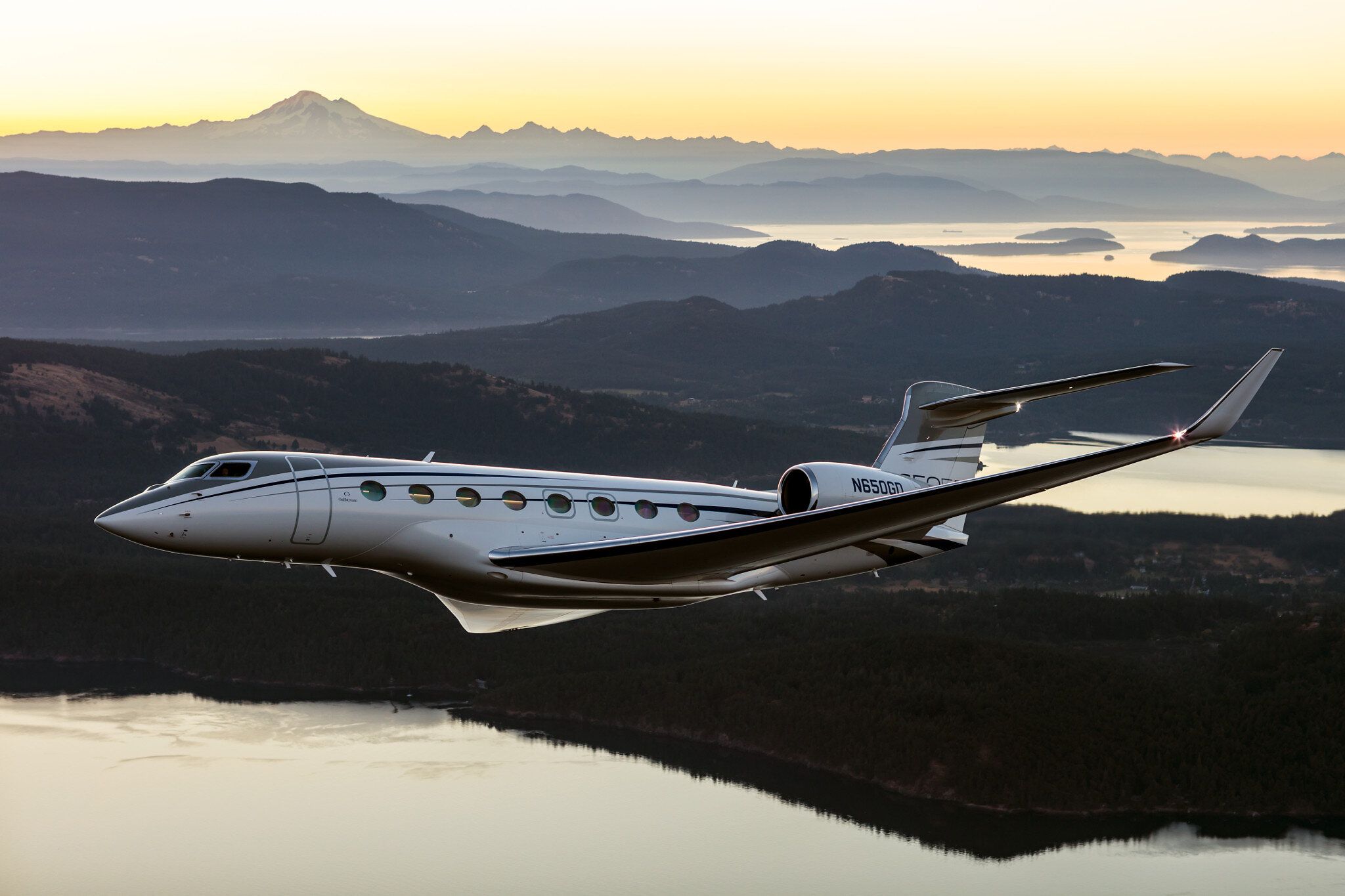
Gulfstream's G650ER product sheet lists 7,500 nm at Mach 0.85, with eight passengers, four crew and NBAA IFR reserves. It identifies Mach 0.90 as high-speed cruise and offers layouts with up to four living areas.
Those figures explain why the G650ER remains relevant even as newer flagships attract the headlines. It combines a fast cruise profile with a substantial cabin and long nonstop reach. The published cabin is 6 feet 3 inches high and 8 feet 2 inches wide, with 16 large oval windows.
For buyers or charter customers, the useful question is how a particular G650ER is configured and maintained. Its position in a speed table tells you about the design; it does not tell you the condition of the cabin, the availability of suitable beds or the equipment fitted to that aircraft.
5 (tie). Gulfstream G650 — Mach 0.925
The original Gulfstream G650 also has a Mach 0.925 maximum operating speed, confirmed in its type-certification announcement. Leaving it out while including the G650ER creates a misleading top ten if other distinct variants, such as the Citation X and X+, are being counted separately.
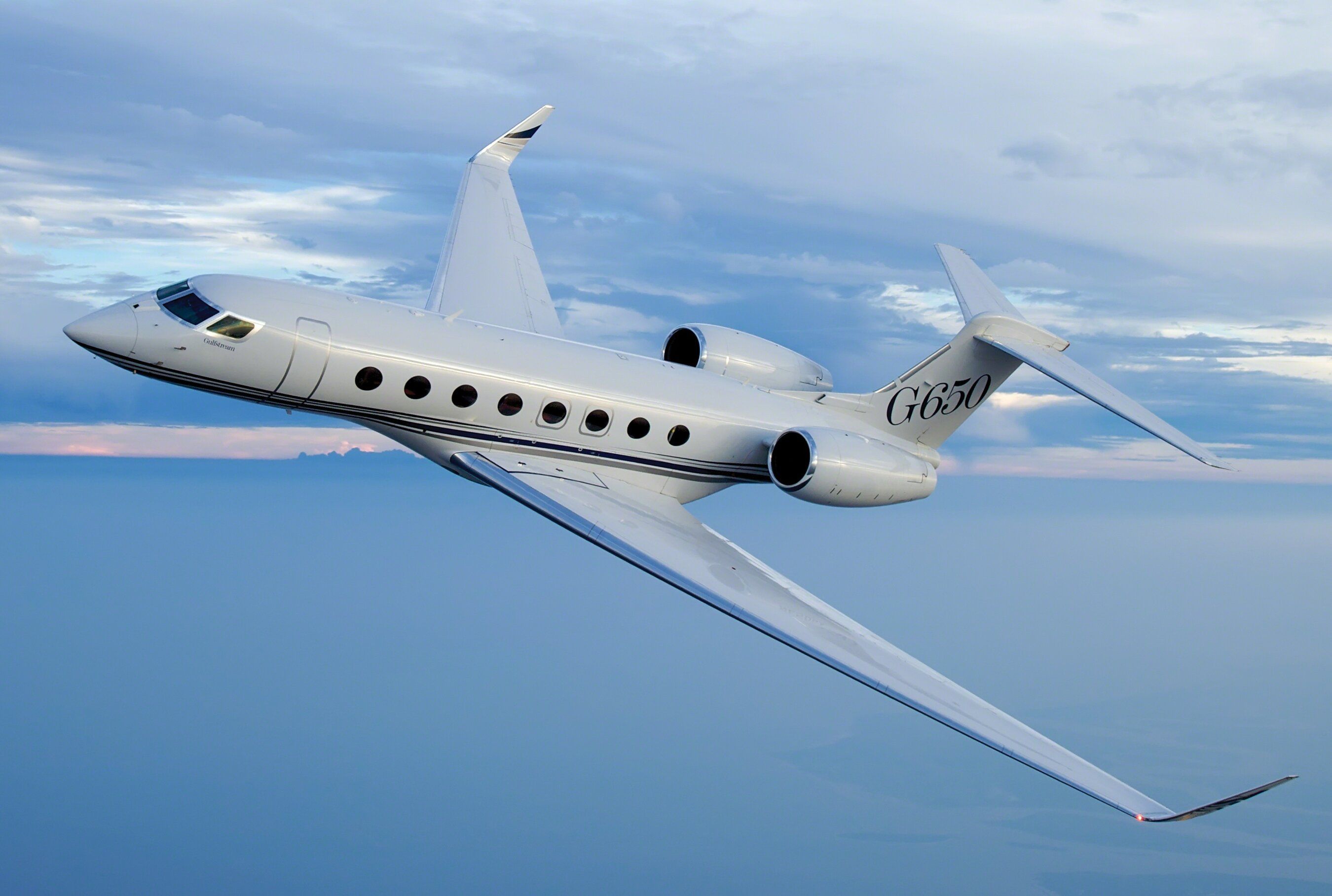
Gulfstream's retrospective on the G650 program records its entry into service in December 2012 and its 7,000 nm range at Mach 0.85. The ER subsequently extended the family's advertised reach by 500 nm, while retaining the same maximum operating Mach number.
That distinction is useful in a purchase or charter discussion. An ER designation can matter considerably on a route near the original aircraft's range limit. It does not provide a higher speed ceiling on a shorter route that both can comfortably operate.
5 (tie). Gulfstream G600 — Mach 0.925
The Gulfstream G600 matches the G650 family and Global 7500 at Mach 0.925. Its strongest argument is the balance between a large cabin, substantial range and a high-speed cruise capability that is useful on long international sectors.
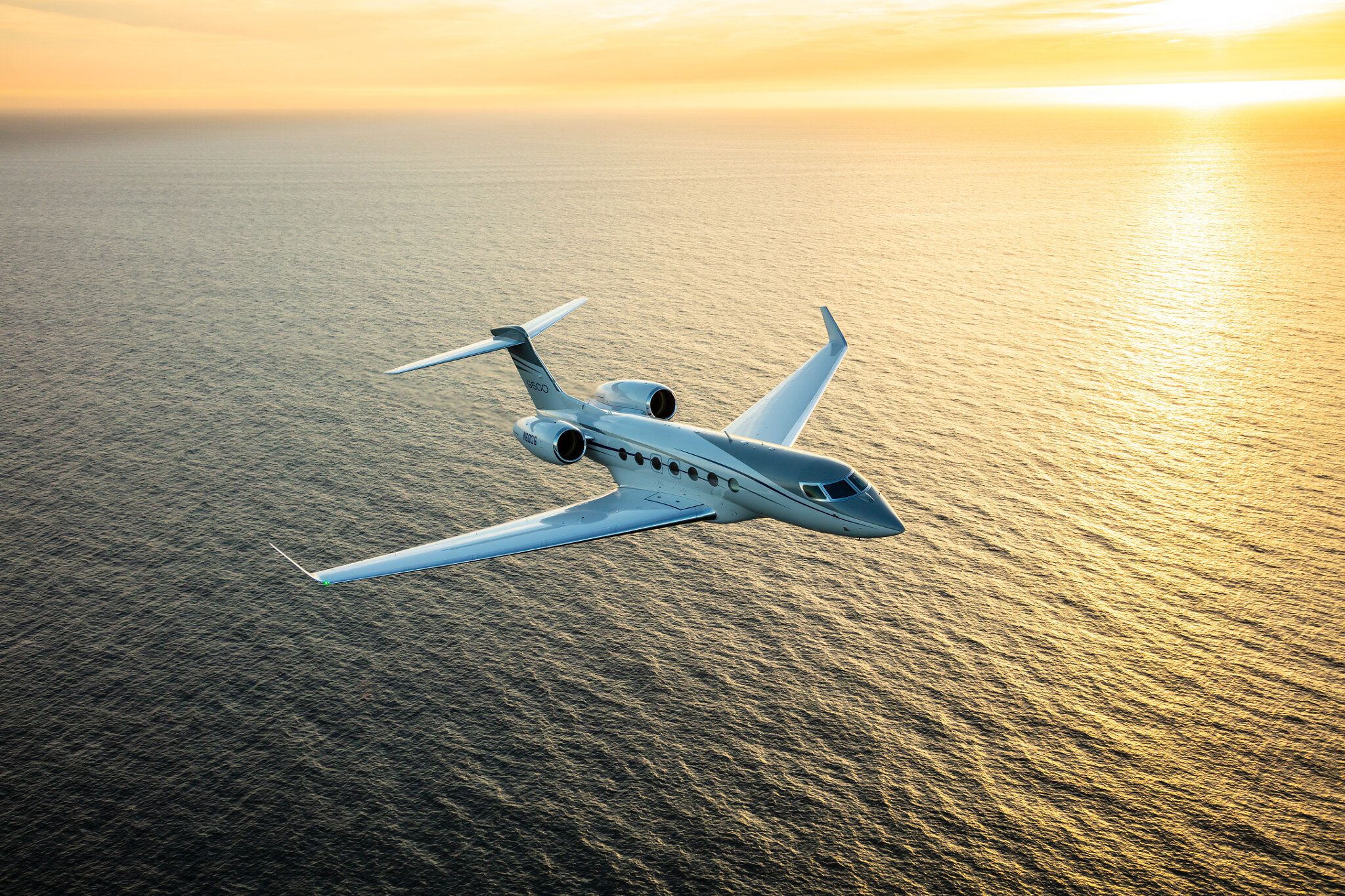
According to Gulfstream's current specifications, the G600 can cover 6,600 nm at Mach 0.85 or 5,600 nm at Mach 0.90 under the stated NBAA IFR assumptions.
The aircraft uses Pratt & Whitney Canada PW815GA engines and Gulfstream's Symmetry Flight Deck. Cabin configurations offer up to four living areas, giving travelers more separation than a single shared seating space.
For an operator whose regular trips fall within the G600's capabilities, buying additional maximum range may not add much practical value. The relevant comparison is whether a larger aircraft would eliminate a stop on the routes actually flown. If it would not, cabin suitability, availability and the complete ownership or charter proposition become more important.
5 (tie). Gulfstream G500 — Mach 0.925
The current-generation Gulfstream G500 also reaches a maximum operating Mach number of 0.925. This is the modern G500 with the Symmetry Flight Deck, rather than the earlier Gulfstream aircraft that used the same name.
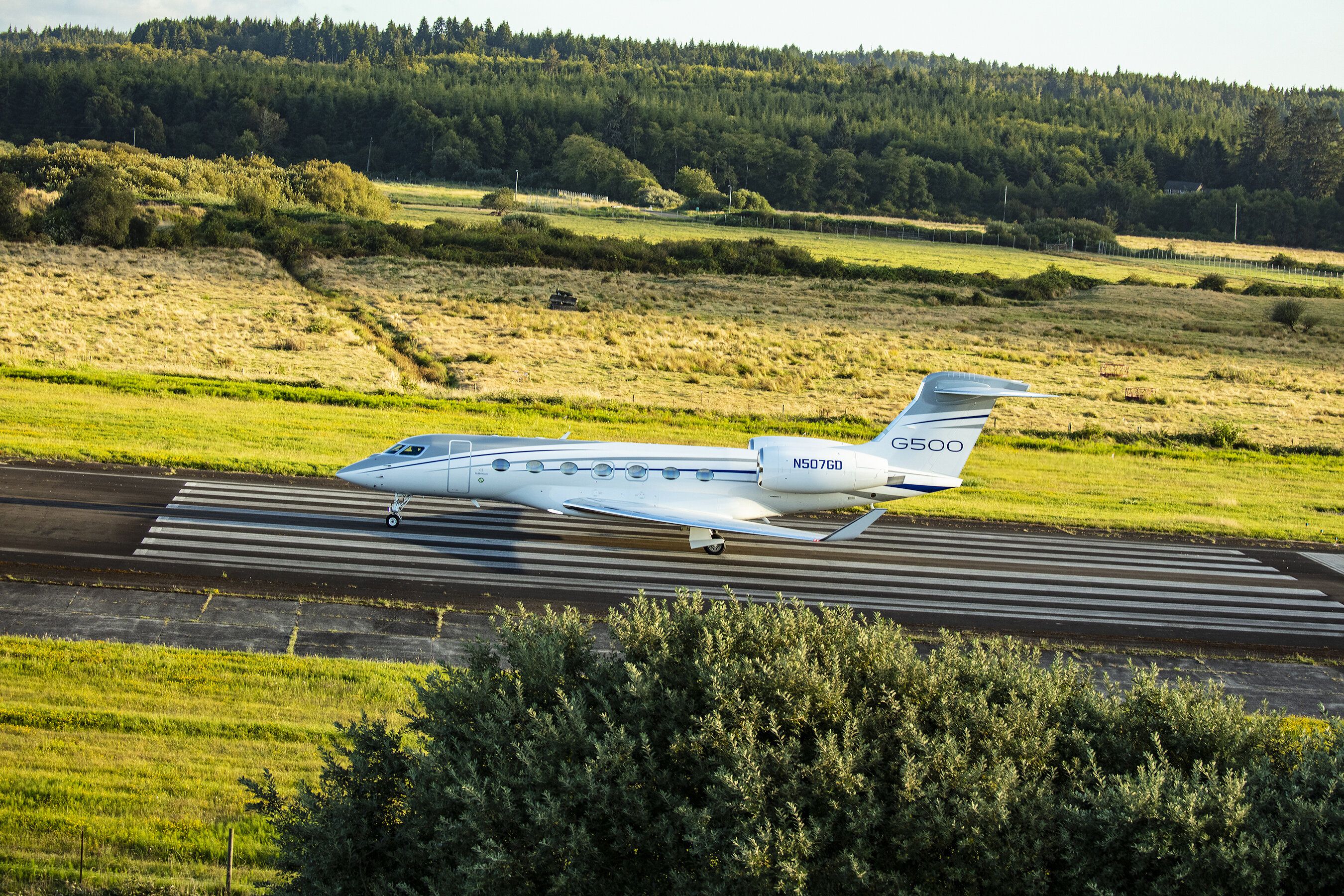
Gulfstream's published G500 figures are 5,300 nm at Mach 0.85 and 4,500 nm at Mach 0.90, using eight passengers, three crew and NBAA IFR reserves. It offers up to three living areas and uses Pratt & Whitney Canada PW814GA engines.
The G500 is a good illustration of why speed rankings should not become size rankings. It has less maximum range than the G600 and a shorter cabin, but the two share the same operating Mach limit and published high-speed cruise setting.
For travelers whose trips fit comfortably within its range, that can be a compelling combination. The right comparison starts with passenger count, luggage and the route in the conditions expected on the travel date. Only then does it make sense to decide whether the additional space or reach of a larger Gulfstream is worth choosing.
10. Cessna Citation X — Mach 0.92
The original Cessna Citation X completes the list at Mach 0.92. It is slower than the later X+ by operating limit, but still faster on this measure than the Mach 0.90 aircraft frequently included in top-ten list.
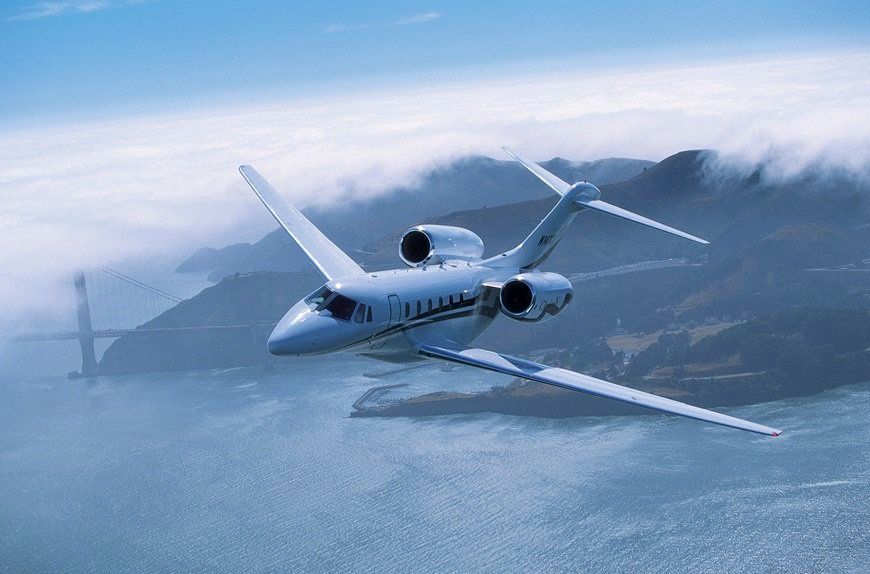
Engine manufacturer Rolls-Royce documented the Citation X's Mach 0.92 capability, while NASA's account of its aerodynamic development explains the highly swept supercritical wing that helped make that performance possible.
This is a legacy aircraft, so it should be approached as an individual airframe rather than a uniform product. Production version, upgrades, maintenance history and cabin refurbishment can materially change the ownership or passenger experience.
Textron's 2005 Fact Book listed a 3,070 nm IFR range with NBAA reserves for the Citation X then offered. Check the specific aircraft's approved data rather than substituting the X+'s 3,460 nm figure.
The program still benefits from manufacturer support. Textron announced Starlink installation availability for both the Citation X and X+ in 2025. An older design can therefore combine its original speed capability with newer cabin connectivity, where the relevant upgrade is installed.
Maximum speed, cruise speed and groundspeed explained
Maximum operating speed is a limit within the aircraft's approved operating envelope. It is not a standard setting for an entire journey. Weight, altitude, turbulence, fuel planning and other operating limitations still apply.
Cruise speed is the speed selected for the mission. Long-range cruise favors reach; a higher cruise setting trades some of that reach for time. Gulfstream's current data makes the trade-off easy to see:
| Aircraft | Range at Mach 0.85 | Range at Mach 0.90 |
|---|---|---|
| G800 | 8,200 nm | 7,000 nm |
| G700 | 7,750 nm | 6,650 nm |
| G600 | 6,600 nm | 5,600 nm |
| G500 | 5,300 nm | 4,500 nm |
These are manufacturer theoretical NBAA IFR ranges. The first three use eight passengers and four crew; the G500 uses eight passengers and three crew. Weather, routing, aircraft configuration and other factors affect actual capability.
Groundspeed is how quickly the aircraft moves over the earth. A strong tailwind can produce an impressive tracking-app number without changing the aircraft's Mach limit. It is not a sound basis for ranking aircraft designs.
Mach also has no single, universal conversion to miles per hour. As NASA explains, it compares aircraft speed with the local speed of sound, which depends on temperature. At a representative standard-atmosphere cruise temperature of −56.5°C, Mach 0.95 is approximately 627 mph true airspeed; Mach 0.90 is about 594 mph. That is a spread of roughly 33 mph. The ten aircraft in this ranking run from Mach 0.95 to Mach 0.92, a spread of about 20 mph under the same assumptions. Neither is a guaranteed groundspeed difference.
How much time does a faster private jet really save?
Consider an illustrative 3,000 nm cruise segment with no wind, constant speeds and the same −56.5°C air temperature. Mach 0.85 works out to roughly 488 knots true airspeed and takes about 6 hours 9 minutes. Mach 0.90 is roughly 516 knots and takes about 5 hours 49 minutes: a saving of approximately 20 minutes.
That is a calculation, not a flight-plan estimate. It excludes taxi, climb, descent, routing changes and delays. It shows why sustained cruise performance is often more useful than comparing the last few thousandths of MMO.
For an actual trip, ask the operator for expected block time, whether a fuel stop is likely, the payload assumed and the destination airport. A jet with a slightly lower speed ceiling can deliver the shorter total journey if it avoids a stop or lands closer to where you need to be.
Our guide to comparing business jets fairly covers the wider questions around range, cabin, payload and cost.
Frequently asked questions
What is the fastest private jet in the world in 2026?
Among purpose-built business jets in service, the Bombardier Global 8000 has the highest published maximum operating speed at Mach 0.95. That is the measure used for this ranking.
Is the Citation X+ still the fastest private jet?
No. Its Mach 0.935 operating limit is below the Global 8000's Mach 0.95. It remains tied with the Gulfstream G700 and G800 on published maximum operating Mach number.
Is the Gulfstream G800 faster than the G700?
Their published maximum operating speeds are the same: Mach 0.935. Both list Mach 0.90 high-speed cruise. The G800's principal advantage in this comparison is range, while the G700 offers Gulfstream's largest cabin.
Can the Global 8000 fly supersonically with passengers?
Its published maximum operating speed is Mach 0.95, below Mach 1. A development or flight-test demonstration above the speed of sound does not establish an approved supersonic passenger operating capability.
Why is the Dassault Falcon 10X not included?
The Falcon 10X has not entered service. Dassault's first-half 2026 financial release places service entry in 2029. Development targets belong in a future-aircraft comparison, not an in-service ranking.
Does the fastest private jet always make the quickest trip?
No. Actual journey time depends on cruise speed, winds, routing, fuel stops, airport access and time on the ground. Ask for a mission-specific flight plan when comparing aircraft for a real trip.
Sources and methodology
Specifications were checked against current OEM model pages, manufacturer product literature and manufacturer-issued announcements, with historical material used for legacy aircraft. Relevant sources are linked beside the claims they support. The ranking uses standard published model specifications; an individual aircraft's approved flight manual and modification status govern its operation.
Ranges are manufacturer-published planning figures with differing assumptions, not guarantees of nonstop performance or range at maximum speed. Time and mph examples are BizJet Journal calculations using the stated atmospheric assumptions. Images are manufacturer-supplied editorial assets, credited individually with links to their original source pages.