Where to land for Seville
Seville Airport (SVQ / LEZL) is a gateway to consider for Seville. The selected gateway is about 10 km in a straight line from the guide's reference location. The road or onward-air journey will be longer and depends on the final address. Choose the airport together with the hotel, lodge or meeting location, rather than simply selecting the closest name on a map.
Airport options and trade-offs| Airport | Location and access | Private aviation planning |
|---|
| Seville AirportSVQ / LEZL | The selected gateway is about 10 km in a straight line from the guide's reference location. The road or onward-air journey will be longer and depends on the final address. | For an international arrival, have the operator coordinate border clearance, handling and the approved passenger entry point before departure. Ask the operator to confirm runway performance for the aircraft, payload and weather, together with parking, handling and any operating permissions. Airport listings describe the location; they do not establish a live slot or aircraft acceptance. |
|---|
Airport transfers and getting around
From the airport to your stay
Arrange the final transfer before the flight is confirmed. Give the driver or onward operator the handling location, flight details and actual property address. Leave room between landing and a timed tour or meeting, especially when arrival includes border formalities.
Ask the operating carrier to confirm aircraft suitability, handling and permissions for the actual itinerary. For budgeting, see our private jet charter cost guide.
History of Seville
Seville's history includes Roman Hispalis and a major Islamic-period city before Christian conquest in the thirteenth century. Atlantic trade later brought enormous wealth, alongside colonial exploitation. Its palaces, churches and riverfront reflect those successive periods.
Roman Hispalis preceded the Islamic city that later became an important Almohad centre. The Castilian conquest in 1248 introduced major changes while reusing parts of the existing urban and architectural landscape.
Atlantic colonial trade brought exceptional wealth and connections with the Americas, including involvement in slavery. Later cultural and industrial change, followed by major international exhibitions, reshaped areas beyond the historic centre.
Interesting facts
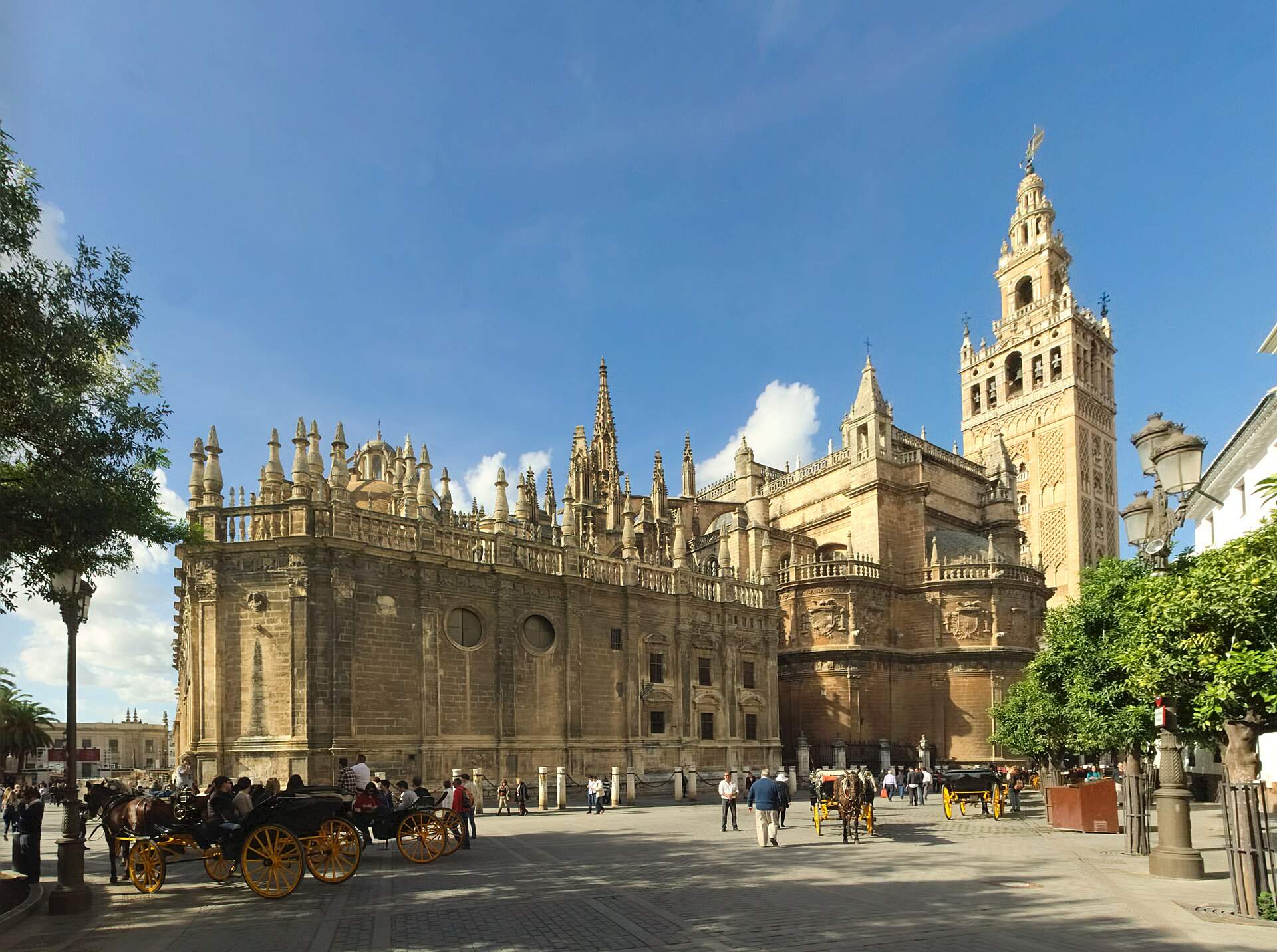
- The Giralda began as a mosque minaret before becoming the cathedral's bell tower.
- The Plaza de España was built for the 1929 Ibero-American Exposition.