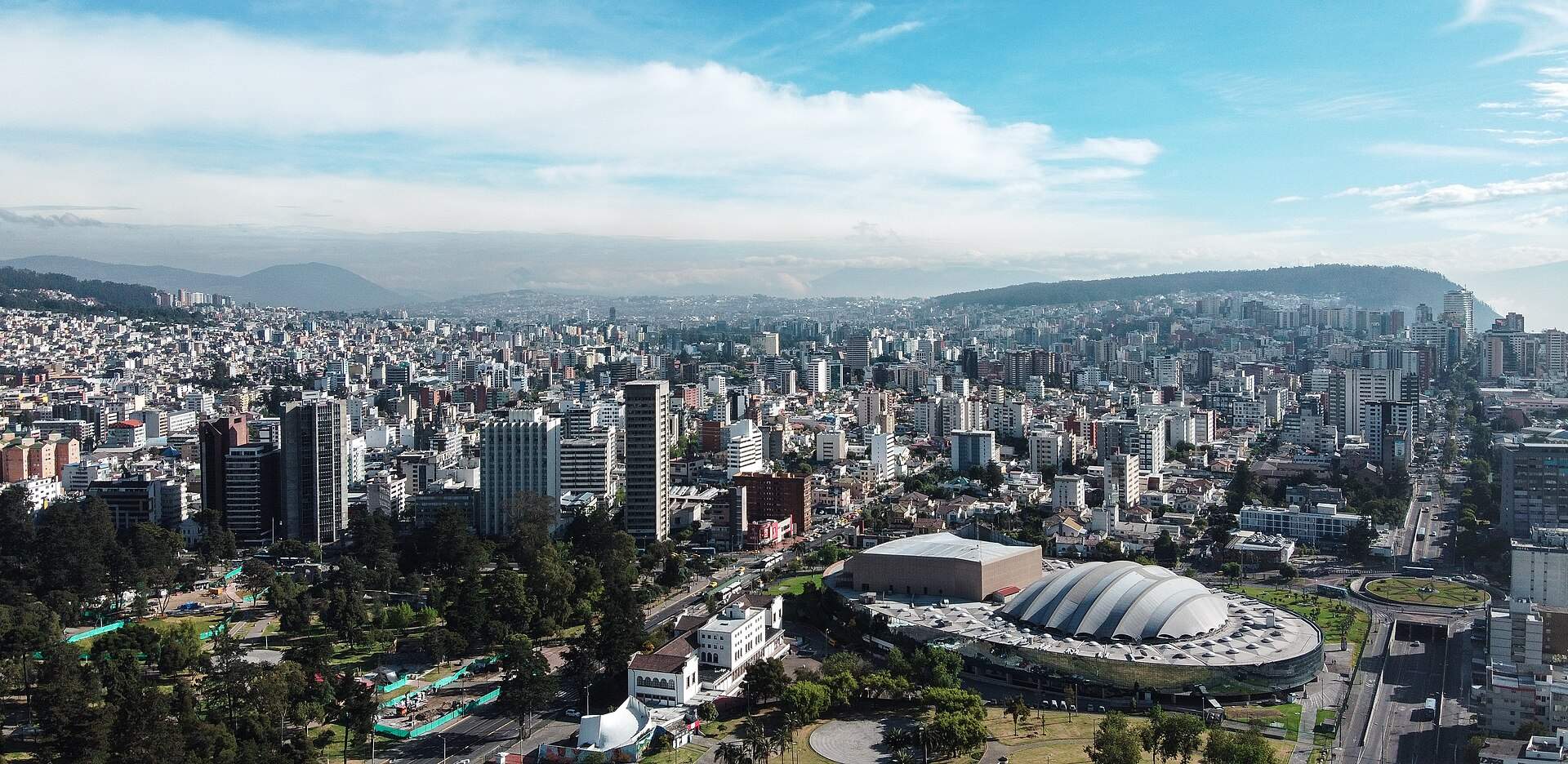
Where to land for Quito
Mariscal Sucre International Airport (UIO / SEQM) is a gateway to consider for Quito. The selected gateway is about 20 km in a straight line from the guide's reference location. The road or onward-air journey will be longer and depends on the final address. Choose the airport together with the hotel, lodge or meeting location, rather than simply selecting the closest name on a map.
Airport options and trade-offs| Airport | Location and access | Private aviation planning |
|---|
| Mariscal Sucre International AirportUIO / SEQM | The selected gateway is about 20 km in a straight line from the guide's reference location. The road or onward-air journey will be longer and depends on the final address. | For an international arrival, have the operator coordinate border clearance, handling and the approved passenger entry point before departure. Ask the operator to confirm runway performance for the aircraft, payload and weather, together with parking, handling and any operating permissions. Airport listings describe the location; they do not establish a live slot or aircraft acceptance. |
|---|
Airport transfers and getting around
From the airport to your stay
Arrange the final transfer before the flight is confirmed. Give the driver or onward operator the handling location, flight details and actual property address. Leave room between landing and a timed tour or meeting, especially when arrival includes border formalities.
Ask the operating carrier to confirm aircraft suitability, handling and permissions for the actual itinerary. For budgeting, see our private jet charter cost guide.
History of Quito
Quito occupies a high Andean setting with a long Indigenous history and later Inca importance. The Spanish colonial city was established in the sixteenth century, leaving a substantial religious and civic architectural legacy. Its altitude and steep geography remain central to the visitor experience.
Indigenous and Inca histories preceded the Spanish foundation of Quito in 1534. Colonial religious orders and local artisans developed churches, convents and houses within a high Andean setting.
Independence struggles culminated locally in the Battle of Pichincha in 1822. Later expansion extended the city along its narrow valley, while conservation retained a historic centre whose art reflects both European and Indigenous contributions.
Interesting facts
- The equatorial monuments are outside the historic centre.
- Quito's colonial architecture includes important work by Indigenous and mestizo craftspeople.