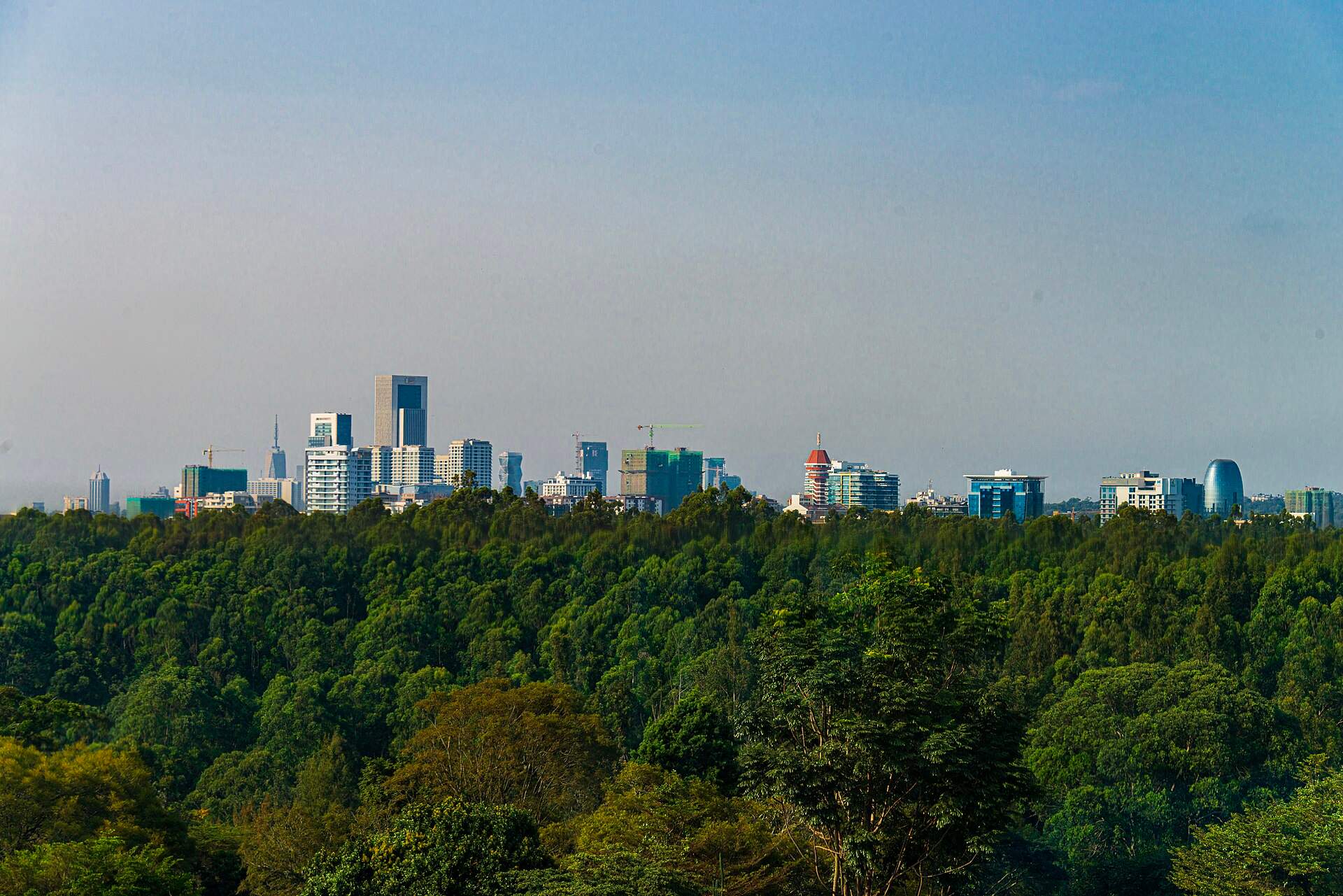
Where to land for Nairobi
Jomo Kenyatta International is the principal international jet gateway. Wilson handles many regional and safari connections; changing airports requires a separate road transfer, and the onward aircraft may have different luggage and operating requirements.
Airport options and trade-offs| Airport | Location and access | Private aviation planning |
|---|
| Jomo Kenyatta International AirportNBO / HKJK | East of central Nairobi; the main international gateway. | Suitable to investigate for the international jet leg. Ask the handler to confirm the private-flight meeting location and border formalities. A subsequent Wilson flight requires a separate road transfer. |
|---|
| Wilson AirportWIL / HKNW | On the southern side of Nairobi, off Lang’ata Road. | An important base for domestic, regional and safari flying. Choose the exact carrier terminal and destination airstrip; a booking simply labelled Nairobi is not enough to identify the airport. |
|---|
Private terminals and arrival experience
A fixed-base operator (FBO) provides ground services for private aircraft and their passengers. The handling team coordinates your arrival; airport opening hours alone do not establish terminal or border-service availability.
Wilson Airport
Carrier-specific facilities at Wilson
AirKenya confirms its own passenger terminal at Wilson. If using its safari service, follow that carrier’s reporting instructions; another charter may use a different facility. Obtain the exact building, baggage allowance and ground-contact details before leaving the hotel.
Airport transfers and getting around
JKIA to Karen or Westlands
International arrival to your hotel
For initial planning, allow roughly 45–90 minutes of driving to either district, with more margin at busy times. This is an editorial allowance for cross-city traffic, not a quoted service time. Ask the hotel to price the exact route and confirm whether expressway tolls are included.
Hotel or JKIA to Wilson
A safari connection
Do not treat Wilson as another JKIA terminal. A prearranged vehicle and a generous connection buffer reduce pressure from city traffic; an overnight before an early safari departure may be the better choice. Confirm the smaller aircraft’s luggage rules before packing for the international leg.
Ask the operating carrier to confirm aircraft suitability, handling and permissions for the actual itinerary. For budgeting, see our private jet charter cost guide.
History of Nairobi
Nairobi grew as a railway depot in 1899 in an area used by Maasai, Kikuyu and Kamba communities. It became a colonial administrative centre and later Kenya's capital. Its modern diplomatic and commercial role developed alongside a distinctive proximity to protected wildlife habitat.
Railway construction established Nairobi as a depot in 1899 within a landscape used by Maasai and other communities. Colonial administration and commerce then expanded a town divided by racial planning and unequal access to land.
Independence in 1963 made it Kenya's national capital. Education, diplomacy, business and migration subsequently transformed its scale, while railway landmarks and memorial sites preserve different parts of its relatively recent urban history.
Interesting facts
- The name Nairobi derives from a Maasai expression associated with cool water.
- Nairobi National Park was established in 1946, before Kenya's independence.