


Key facts
Area, population and GDP figures describe the named country or territory, not the city or resort. Airport names are relevant gateways; heliport figures identify the stated inventory area.
- Capital
- Canada: Ottawa
- Time zone
- America/Toronto — UTC−05:00 standard time; UTC−04:00 during daylight saving
- Telephone code
- Canada: +1
- Total area
- Canada: 9,984,670 sq km
- Population
- Canada: 41,651,653 (2025, World Bank)
- Currency
- Canada: Canadian dollar (CAD)
- GDP per capita
- Canada: US$55,698 (nominal, 2025, World Bank)
- Airports
- Montreal / Pierre Elliott Trudeau International Airport
- Heliports
- Canada: 525 heliport records in the OurAirports inventory (2026-10-07)
OurAirports is a community-maintained inventory. A zero means no heliport record in this snapshot, not proof that no landing site exists. Listings may include private sites and do not establish passenger access or current operating availability.
Fact sources
- Country codes, capitals, calling codes and currencies — Countries dataset (ODbL)
- Canada — archived CIA World Factbook (final pre-closure snapshot)
- Canada population — World Bank
- Canada GDP per capita, current US dollars — World Bank
- OurAirports open airport/heliport inventory
- Canada cultural etiquette and food — Wikivoyage
- Civil time rules — IANA time zone database 2026e
Travel information
Country and territory context for Canada. Communities, customs and food vary locally; the local travel-season note is specific to Montreal.
- Climate
- Canada: varies from temperate in south to subarctic and arctic in north Local travel season: June–September is attractive for outdoor events and walking. Autumn colours add interest; winter visits need warm clothing and flexible ground transfers.
- Ethnic groups and communities
- Canada: Canadian, English, Scottish, French, Irish, German, Chinese, Italian, First Nations, Indian, Ukrainian, Metis
- Main languages
- Canada: English (official), French (official), Chinese languages, Spanish, Punjabi, Arabic, Tagalog, Italian
- Cultural practices
- Canada: Social customs differ across English-speaking, French-speaking and Indigenous communities. Follow local protocols when visiting Indigenous cultural places.
- Traditional cuisine
- Canada: Regional foods include poutine, maple products and seafood; Canadian cooking also reflects many immigrant traditions.
- National economy
- Canada: The national economy includes transportation equipment, chemicals, processed and unprocessed minerals, food products, wood and paper products, fish products, petroleum, natural gas.
Fact sources
- Country codes, capitals, calling codes and currencies — Countries dataset (ODbL)
- Canada — archived CIA World Factbook (final pre-closure snapshot)
- Canada population — World Bank
- Canada GDP per capita, current US dollars — World Bank
- Canada cultural etiquette and food — Wikivoyage
- Civil time rules — IANA time zone database 2026e
Your journey
Private jet to Montreal
Plan a private flight to Montreal around the time you want to spend on the ground. Start with Old Montreal and the Old Port, then leave time for the paths and city views of Mount Royal. The right arrival plan connects a suitable airport with that itinerary, whether the visit is a short stay or one stop in a wider journey.
Three-day weather forecast
Montreal
Loading the three-day forecast…
Weather data: MET Norway · CC BY 4.0. Forecast samples summarised by BizJet Journal for the guide’s reference location; conditions vary across larger destinations. For trip planning; flight crews use aviation weather briefings.
Where to land for Montreal
Montreal / Pierre Elliott Trudeau International Airport (YUL / CYUL) is a gateway to consider for Montreal. The selected gateway is about 15 km in a straight line from the guide's reference location. The road or onward-air journey will be longer and depends on the final address. Choose the airport together with the hotel, lodge or meeting location, rather than simply selecting the closest name on a map.
| Airport | Location and access | Private aviation planning |
|---|---|---|
| Montreal / Pierre Elliott Trudeau International AirportYUL / CYUL | The selected gateway is about 15 km in a straight line from the guide's reference location. The road or onward-air journey will be longer and depends on the final address. | For an international arrival, have the operator coordinate border clearance, handling and the approved passenger entry point before departure. Ask the operator to confirm runway performance for the aircraft, payload and weather, together with parking, handling and any operating permissions. Airport listings describe the location; they do not establish a live slot or aircraft acceptance. |
Airport transfers and getting around
From the airport to your stay
Arrange the final transfer before the flight is confirmed. Give the driver or onward operator the handling location, flight details and actual property address. Leave room between landing and a timed tour or meeting, especially when arrival includes border formalities.
Ask the operating carrier to confirm aircraft suitability, handling and permissions for the actual itinerary. For budgeting, see our private jet charter cost guide.
What to do in Montreal
Exploring Montreal
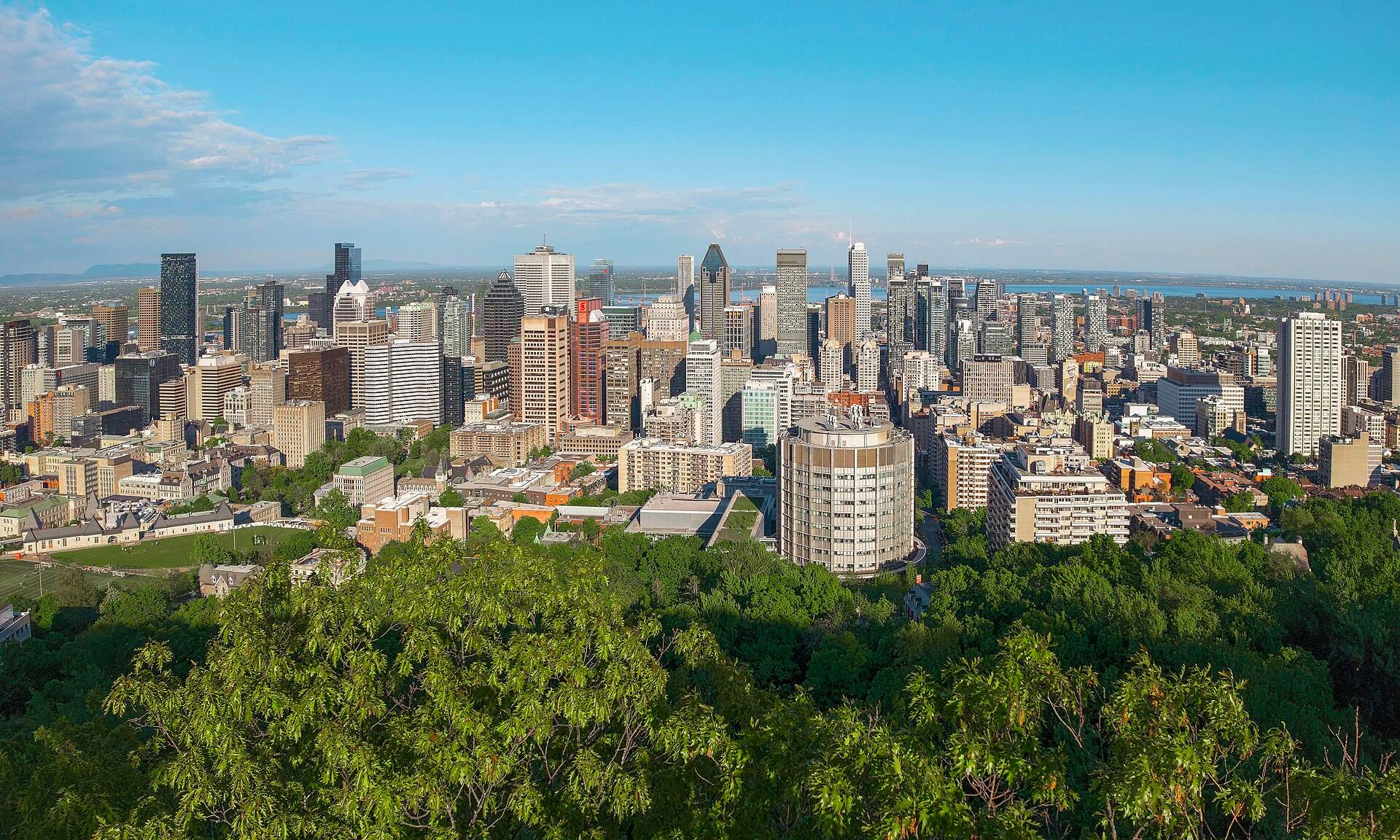
Start with Old Montreal and the Old Port, then leave time for the paths and city views of Mount Royal. The Plateau offers a different experience through residential streets, cafes and small restaurants. A stay combining business with food and culture benefits from evenings left open for neighbourhood exploration.
History of Montreal
Montreal developed around a French settlement established in 1642 on an island with a much longer Indigenous history. Its position on the St. Lawrence helped it become a trading and industrial centre. French and English influences remain visible in its institutions, architecture and neighbourhoods.
Indigenous communities used the St Lawrence corridor long before the French settlement of Ville-Marie in 1642. Fur trading, missionary activity and later port commerce shaped the early town.
British rule, industrialisation and immigration created a major Canadian commercial city. French-language culture and political movements remained influential, while modern infrastructure and the 1967 Expo added another layer to the island's urban landscape.
Interesting facts
- Montreal takes its name from Mount Royal.
- The Lachine Canal helped industrial development by improving navigation around river rapids.
Best time to visit Montreal
June–September is attractive for outdoor events and walking. Autumn colours add interest; winter visits need warm clothing and flexible ground transfers.
| When | Conditions and activities | Planning considerations |
|---|---|---|
| Choosing your travel dates | June–September is attractive for outdoor events and walking. Autumn colours add interest; winter visits need warm clothing and flexible ground transfers. | Match the season to your activities and consult the live forecast near departure. For event-led travel, confirm the programme and accommodation before fixing the flight. |
Plan your stay
Before you travel
A useful arrival plan
For Montreal, organise the first day around the final transfer and one nearby activity. Keep passports and essential items accessible; if continuing beyond the arrival airport, agree how checked or bulky baggage will travel with you. A private flight changes the schedule you can request, while local operating hours still shape the day.
Suggested itinerary
An editorial starting point. Suggested visit lengths and transfer allowances are planning estimates, not service guarantees.
Arrival day
Complete the transfer and settle into your chosen base. A short local walk or an unhurried meal is a better first commitment than an excursion whose departure leaves no margin after landing.
Your main day
Give the main Montreal experience a dedicated part of the day, with transport and any admission arranged beforehand. Leave time between visits for a meal and the journey back to the base. A weather-dependent outing benefits from an alternative indoor or local plan.
Departure day
Keep the final activity near the base and reconfirm the collection time with the handling team. If continuing to another destination, compare the whole journey, including the onward transfer, rather than airborne time alone.
Questions about visiting Montreal
Which airport should I consider for Montreal?
Montreal / Pierre Elliott Trudeau International Airport (YUL / CYUL) is the gateway used in this guide. The operator should compare it with any suitable alternatives for your exact itinerary and confirm acceptance of the proposed aircraft.
When is a good time to visit Montreal?
June–September is attractive for outdoor events and walking. Autumn colours add interest; winter visits need warm clothing and flexible ground transfers.
Does the private flight include the final transfer?
The aircraft charter and the road, boat or onward-air transfer are separate arrangements unless the written proposal specifically combines them. Confirm the final address, handling point and any connection before accepting the itinerary.
How should I plan a short stay?
Allow an arrival period, one full day for the main Montreal programme and a departure buffer. Longer excursions or several bases need additional days; the flight schedule should follow the stay you want rather than forcing every activity into a short gap.
Nearby destinations and onward journeys
Ottawa
Explore the Ottawa guide when planning another stop in North America. Compare the airport choices, season and onward transfer before combining the visits.
Quebec City
Explore the Quebec City guide when planning another stop in North America. Compare the airport choices, season and onward transfer before combining the visits.