


Key facts
Area, population and GDP figures describe the named country or territory, not the city or resort. Airport names are relevant gateways; heliport figures identify the stated inventory area.
- Capital
- Australia: Canberra
- Time zone
- Australia/Melbourne — UTC+10:00 standard time; UTC+11:00 during daylight saving
- Telephone code
- Australia: +61
- Total area
- Australia: 7,741,220 sq km
- Population
- Australia: 27,614,411 (2025, World Bank)
- Currency
- Australia: Australian dollar (AUD)
- GDP per capita
- Australia: US$65,130 (nominal, 2025, World Bank)
- Airports
- Melbourne Airport
- Heliports
- Australia: 400 heliport records in the OurAirports inventory (2026-10-07)
OurAirports is a community-maintained inventory. A zero means no heliport record in this snapshot, not proof that no landing site exists. Listings may include private sites and do not establish passenger access or current operating availability.
Fact sources
- Country codes, capitals, calling codes and currencies — Countries dataset (ODbL)
- Australia — archived CIA World Factbook (final pre-closure snapshot)
- Australia population — World Bank
- Australia GDP per capita, current US dollars — World Bank
- OurAirports open airport/heliport inventory
- Australia cultural etiquette and food — Wikivoyage
- Civil time rules — IANA time zone database 2026e
Travel information
Country and territory context for Australia. Communities, customs and food vary locally; the local travel-season note is specific to Melbourne.
- Climate
- Australia: generally arid to semiarid; temperate in south and east; tropical in north Local travel season: March–May and September–November often suit mixed visits. Weather can change quickly in any season, including during summer.
- Ethnic groups and communities
- Australia: English, Australian, Irish, Scottish, Chinese, Italian, German, Indian, Australian Aboriginal, Greek
- Main languages
- Australia: English, Mandarin, Arabic, Vietnamese, Cantonese
- Cultural practices
- Australia: Informal greetings and first names are common. Aboriginal and Torres Strait Islander sites have community-specific visiting protocols.
- Traditional cuisine
- Australia: Barbecues, seafood and meat pies coexist with many immigrant cuisines; regional produce shapes contemporary Australian cooking.
- National economy
- Australia: The national economy includes mining, industrial and transportation equipment, food processing, chemicals, steel.
Fact sources
- Country codes, capitals, calling codes and currencies — Countries dataset (ODbL)
- Australia — archived CIA World Factbook (final pre-closure snapshot)
- Australia population — World Bank
- Australia GDP per capita, current US dollars — World Bank
- Australia cultural etiquette and food — Wikivoyage
- Civil time rules — IANA time zone database 2026e
Your journey
Private jet to Melbourne
Plan a private flight to Melbourne around the time you want to spend on the ground. Combine central lanes and galleries with a separate neighbourhood or sporting visit. The right arrival plan connects a suitable airport with that itinerary, whether the visit is a short stay or one stop in a wider journey.
Three-day weather forecast
Melbourne
Loading the three-day forecast…
Weather data: MET Norway · CC BY 4.0. Forecast samples summarised by BizJet Journal for the guide’s reference location; conditions vary across larger destinations. For trip planning; flight crews use aviation weather briefings.
Where to land for Melbourne
Melbourne Airport (MEL / YMML) is a gateway to consider for Melbourne. The selected gateway is about 19 km in a straight line from the guide's reference location. The road or onward-air journey will be longer and depends on the final address. Choose the airport together with the hotel, lodge or meeting location, rather than simply selecting the closest name on a map.
| Airport | Location and access | Private aviation planning |
|---|---|---|
| Melbourne AirportMEL / YMML | The selected gateway is about 19 km in a straight line from the guide's reference location. The road or onward-air journey will be longer and depends on the final address. | For an international arrival, have the operator coordinate border clearance, handling and the approved passenger entry point before departure. Ask the operator to confirm runway performance for the aircraft, payload and weather, together with parking, handling and any operating permissions. Airport listings describe the location; they do not establish a live slot or aircraft acceptance. |
Airport transfers and getting around
From the airport to your stay
Arrange the final transfer before the flight is confirmed. Give the driver or onward operator the handling location, flight details and actual property address. Leave room between landing and a timed tour or meeting, especially when arrival includes border formalities.
Ask the operating carrier to confirm aircraft suitability, handling and permissions for the actual itinerary. For budgeting, see our private jet charter cost guide.
What to do in Melbourne
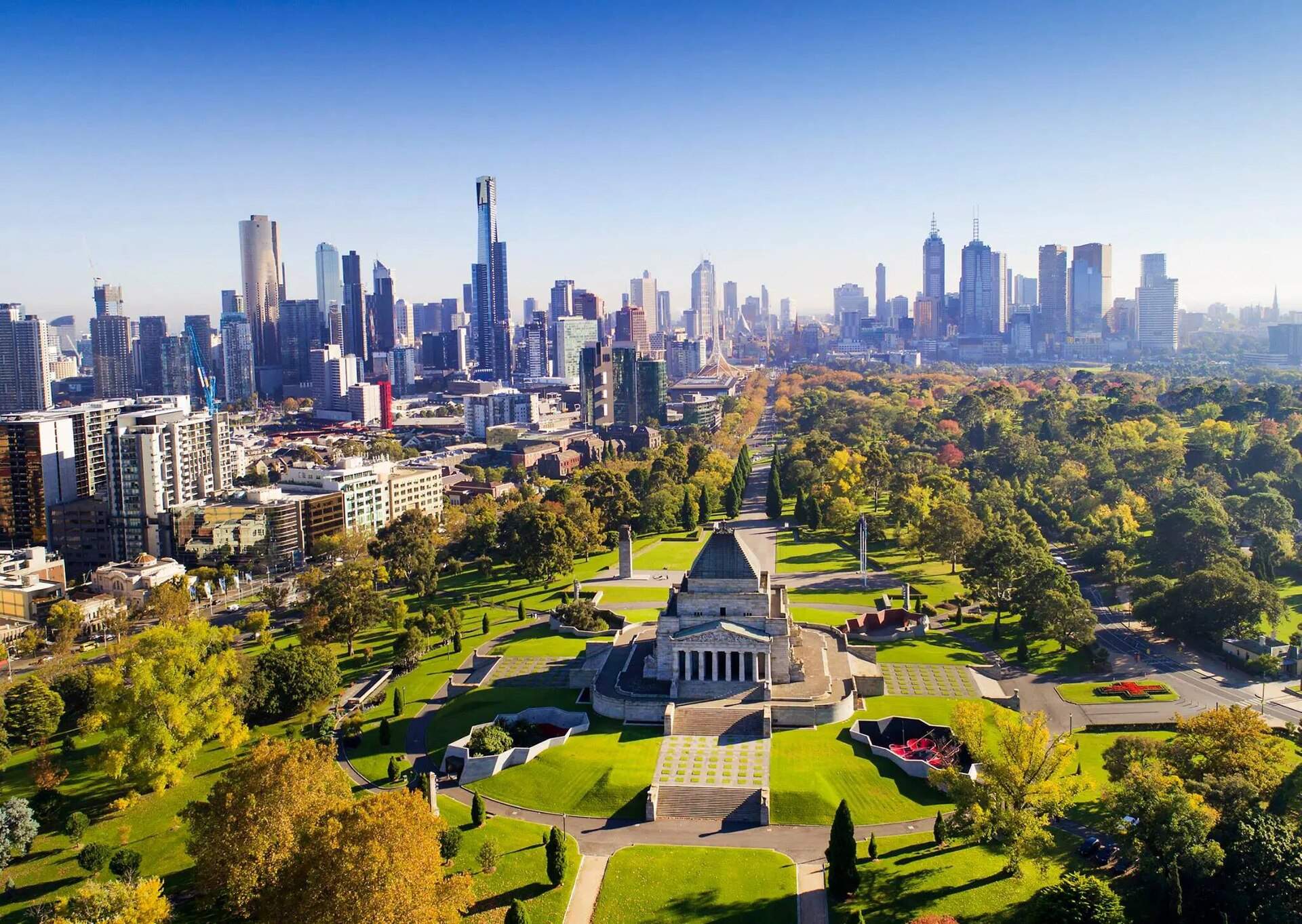
Exploring Melbourne
Combine central lanes and galleries with a separate neighbourhood or sporting visit. The National Gallery of Victoria can anchor a substantial indoor programme. The Great Ocean Road and wine regions require additional time, and the choice of airport should match the operator's arrangements and final address.
History of Melbourne
Melbourne developed in the nineteenth century on the lands of the Kulin nations. The Victorian gold rush accelerated its growth and financed major civic buildings. Immigration, industry and cultural institutions later helped shape its varied neighbourhoods and metropolitan scale.
The Kulin nations' history long predates the colonial settlement established in 1835. Gold discoveries in Victoria during the 1850s drew migrants and generated wealth for grand civic and commercial buildings.
Melbourne later served as the temporary seat of Australia's federal parliament before Canberra. Manufacturing, migration and cultural institutions expanded the city, leaving neighbourhoods whose identities reflect successive communities rather than one uniform colonial heritage.
Interesting facts
- The city's laneways originated partly as service routes behind larger street frontages.
- The Royal Exhibition Building is associated with nineteenth-century international exhibitions.
Best time to visit Melbourne
March–May and September–November often suit mixed visits. Weather can change quickly in any season, including during summer.
| When | Conditions and activities | Planning considerations |
|---|---|---|
| Choosing your travel dates | March–May and September–November often suit mixed visits. Weather can change quickly in any season, including during summer. | Match the season to your activities and consult the live forecast near departure. For event-led travel, confirm the programme and accommodation before fixing the flight. |
Plan your stay
Before you travel
A useful arrival plan
For Melbourne, organise the first day around the final transfer and one nearby activity. Keep passports and essential items accessible; if continuing beyond the arrival airport, agree how checked or bulky baggage will travel with you. A private flight changes the schedule you can request, while local operating hours still shape the day.
Suggested itinerary
An editorial starting point. Suggested visit lengths and transfer allowances are planning estimates, not service guarantees.
Arrival day
Complete the transfer and settle into your chosen base. A short local walk or an unhurried meal is a better first commitment than an excursion whose departure leaves no margin after landing.
Your main day
Give the main Melbourne experience a dedicated part of the day, with transport and any admission arranged beforehand. Leave time between visits for a meal and the journey back to the base. A weather-dependent outing benefits from an alternative indoor or local plan.
Departure day
Keep the final activity near the base and reconfirm the collection time with the handling team. If continuing to another destination, compare the whole journey, including the onward transfer, rather than airborne time alone.
Questions about visiting Melbourne
Which airport should I consider for Melbourne?
Melbourne Airport (MEL / YMML) is the gateway used in this guide. The operator should compare it with any suitable alternatives for your exact itinerary and confirm acceptance of the proposed aircraft.
When is a good time to visit Melbourne?
March–May and September–November often suit mixed visits. Weather can change quickly in any season, including during summer.
Does the private flight include the final transfer?
The aircraft charter and the road, boat or onward-air transfer are separate arrangements unless the written proposal specifically combines them. Confirm the final address, handling point and any connection before accepting the itinerary.
How should I plan a short stay?
Allow an arrival period, one full day for the main Melbourne programme and a departure buffer. Longer excursions or several bases need additional days; the flight schedule should follow the stay you want rather than forcing every activity into a short gap.
Nearby destinations and onward journeys
Hobart
Explore the Hobart guide when planning another stop in Oceania. Compare the airport choices, season and onward transfer before combining the visits.
Adelaide
Explore the Adelaide guide when planning another stop in Oceania. Compare the airport choices, season and onward transfer before combining the visits.