Where to land for Jaipur
Jaipur International Airport (JAI / VIJP) is a gateway to consider for Jaipur. The selected gateway is about 10 km in a straight line from the guide's reference location. The road or onward-air journey will be longer and depends on the final address. Choose the airport together with the hotel, lodge or meeting location, rather than simply selecting the closest name on a map.
Airport options and trade-offs| Airport | Location and access | Private aviation planning |
|---|
| Jaipur International AirportJAI / VIJP | The selected gateway is about 10 km in a straight line from the guide's reference location. The road or onward-air journey will be longer and depends on the final address. | For an international arrival, have the operator coordinate border clearance, handling and the approved passenger entry point before departure. Ask the operator to confirm runway performance for the aircraft, payload and weather, together with parking, handling and any operating permissions. Airport listings describe the location; they do not establish a live slot or aircraft acceptance. |
|---|
Airport transfers and getting around
From the airport to your stay
Arrange the final transfer before the flight is confirmed. Give the driver or onward operator the handling location, flight details and actual property address. Leave room between landing and a timed tour or meeting, especially when arrival includes border formalities.
Ask the operating carrier to confirm aircraft suitability, handling and permissions for the actual itinerary. For budgeting, see our private jet charter cost guide.
History of Jaipur
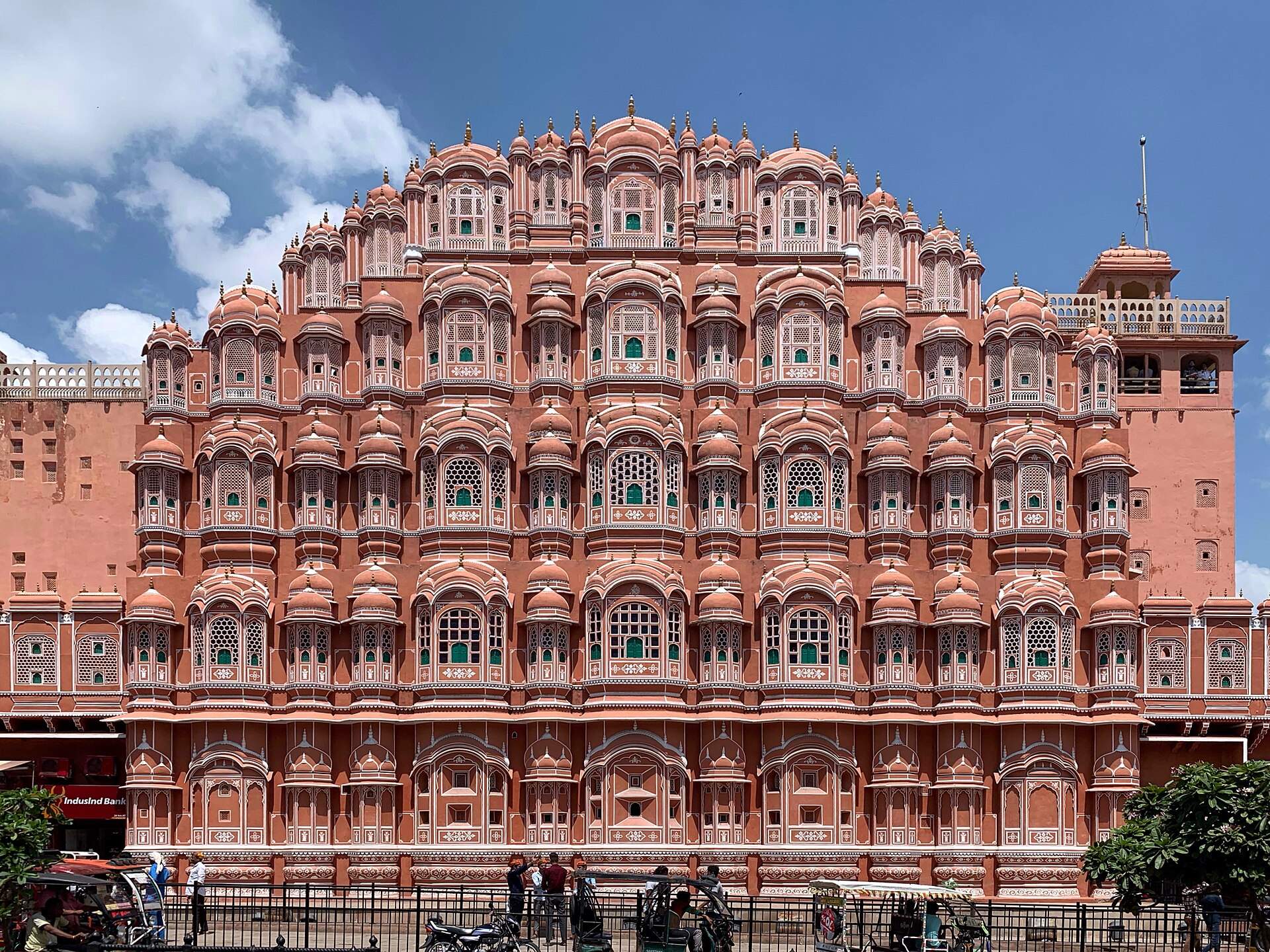
Jaipur was founded in 1727 by Jai Singh II as a planned capital to replace nearby Amber. Its ordered streets and royal institutions reflected both practical needs and courtly ambition. Later pink-coloured facades helped create the visual identity associated with the city today.
Sawai Jai Singh II founded Jaipur in 1727 as a planned capital beyond the older hill settlement at Amber. Its street grid, bazaars and palace precinct expressed a deliberate combination of political authority and commerce.
Later rulers added landmarks and infrastructure, while integration into independent India changed its administrative role. Jewellery, textiles and other crafts remain connected with the trading economy built into the original city plan.
Interesting facts
- The Jantar Mantar contains large astronomical instruments rather than conventional sculptures.
- The Hawa Mahal's screened windows allowed views onto street life from within the palace world.