Where to land for Brasilia
Presidente Juscelino Kubitschek International Airport (BSB / SBBR) is a gateway to consider for Brasilia. The selected gateway is about 9 km in a straight line from the guide's reference location. The road or onward-air journey will be longer and depends on the final address. Choose the airport together with the hotel, lodge or meeting location, rather than simply selecting the closest name on a map.
Airport options and trade-offs| Airport | Location and access | Private aviation planning |
|---|
| Presidente Juscelino Kubitschek International AirportBSB / SBBR | The selected gateway is about 9 km in a straight line from the guide's reference location. The road or onward-air journey will be longer and depends on the final address. | For an international arrival, have the operator coordinate border clearance, handling and the approved passenger entry point before departure. Ask the operator to confirm runway performance for the aircraft, payload and weather, together with parking, handling and any operating permissions. Airport listings describe the location; they do not establish a live slot or aircraft acceptance. |
|---|
Airport transfers and getting around
From the airport to your stay
Arrange the final transfer before the flight is confirmed. Give the driver or onward operator the handling location, flight details and actual property address. Leave room between landing and a timed tour or meeting, especially when arrival includes border formalities.
Ask the operating carrier to confirm aircraft suitability, handling and permissions for the actual itinerary. For budgeting, see our private jet charter cost guide.
History of Brasilia
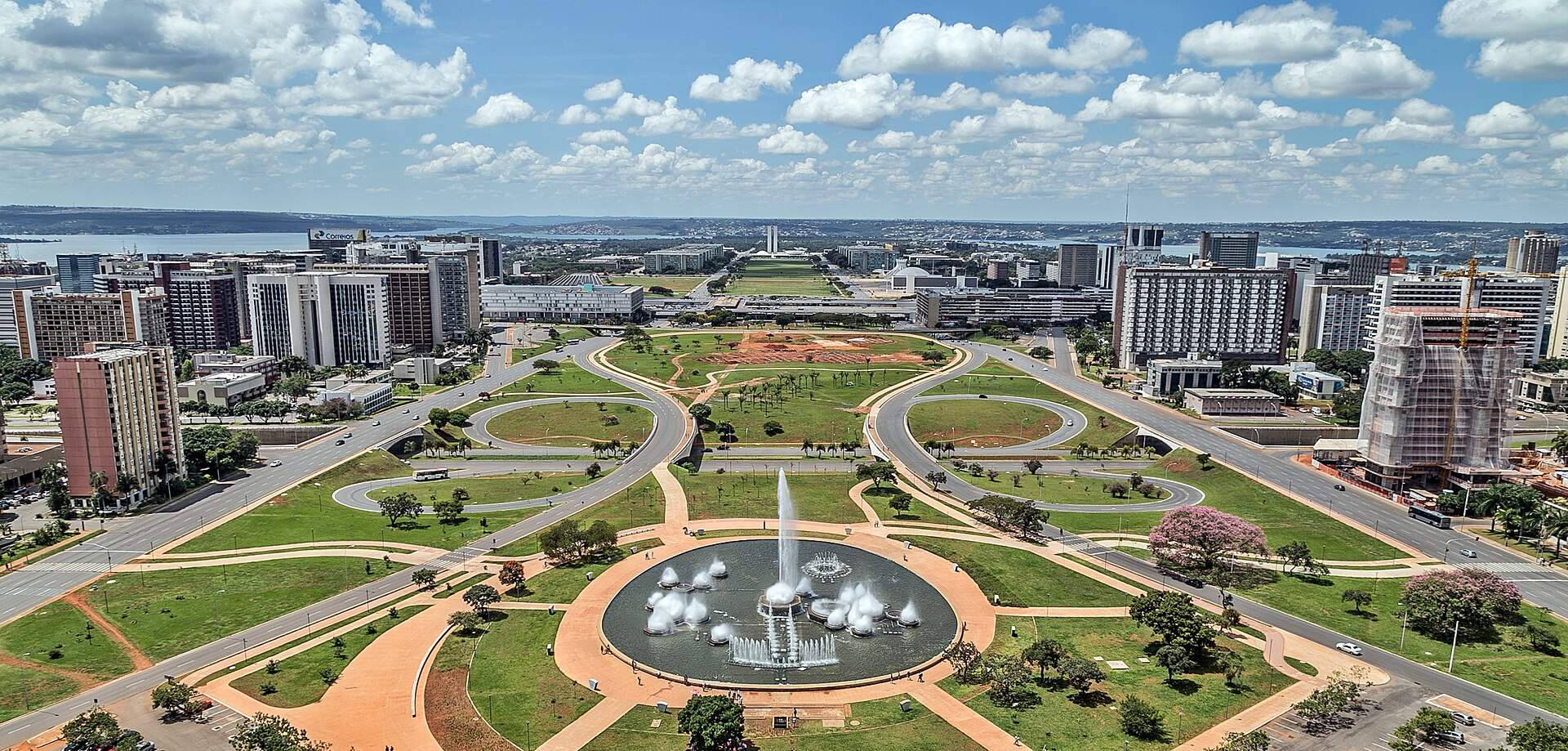
Brasília opened as Brazil's new capital in 1960, following a plan to shift the federal centre inland from Rio de Janeiro. Lúcio Costa's urban plan and Oscar Niemeyer's buildings created a distinctive modernist landscape. Its history is therefore closely tied to national planning and twentieth-century architecture.
Brazil's new capital was inaugurated in 1960 to move federal government inland from Rio de Janeiro. Lúcio Costa's urban plan and Oscar Niemeyer's public buildings expressed a vision of national modernisation.
The workers who built the city and the communities beyond its planned core are equally important to its history. Brasília's wider metropolitan growth reveals the difference between the original design and lived urban development.
Interesting facts
- The central plan organises civic and residential districts along two principal axes.
- The cathedral's concrete structure is one of the capital's most recognisable modernist landmarks.