
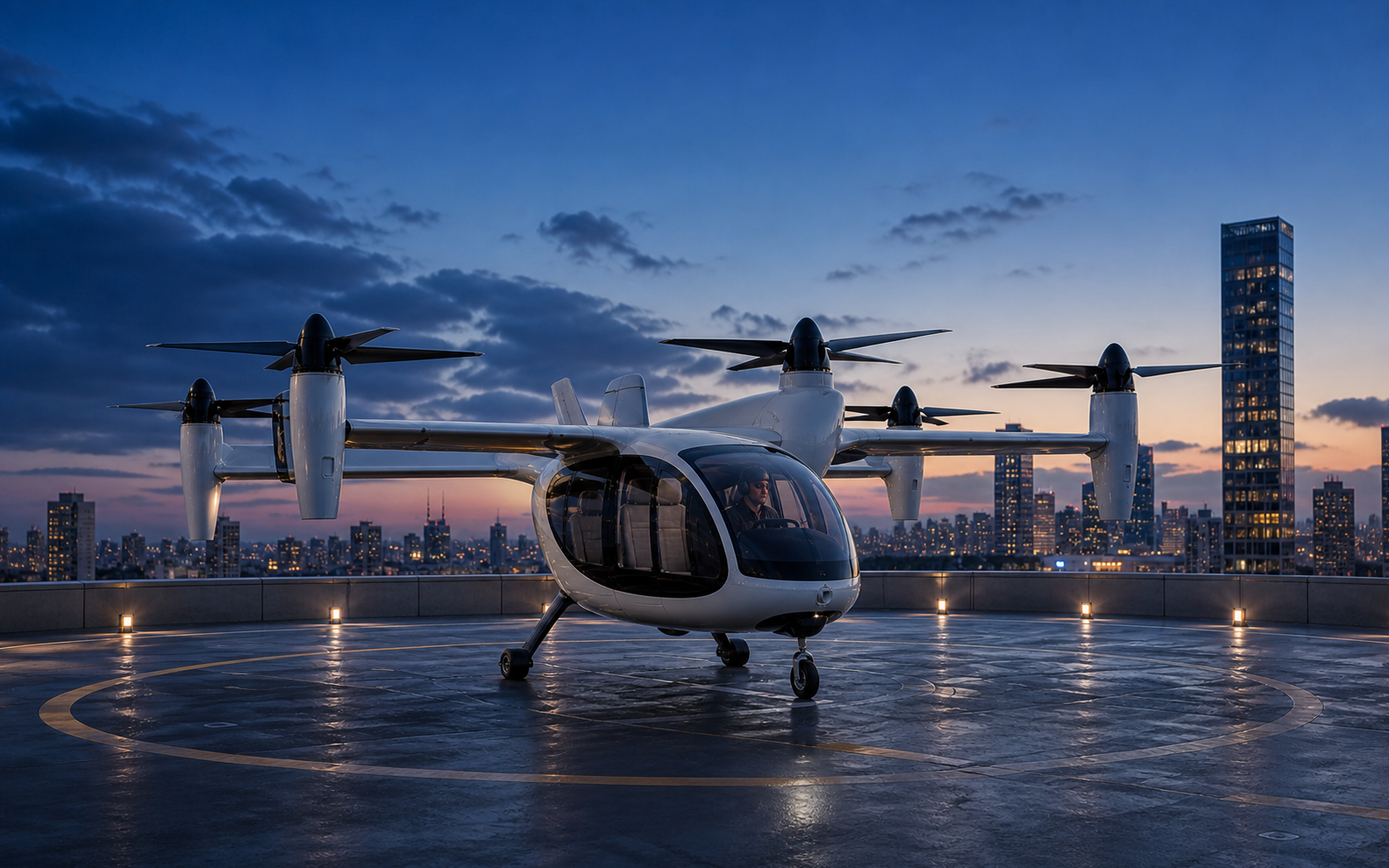
Advanced Air Mobility (AAM) promises a sci-fi future where electric vertical takeoff and landing aircraft carry passengers over traffic-clogged cities, shortening journeys while reducing local emissions.
Companies including Joby Aviation and Archer Aviation have helped move the idea from concept art to flight testing. Yet the distance between an attractive prototype and a repeatable commercial transport service remains significant.
The allure of eVTOLs
The proposition is compelling: aircraft that combine helicopter-like vertical takeoff with efficient wing-borne cruise, powered by electric propulsion and designed to operate from compact urban sites.
That opportunity has attracted manufacturers, airlines, automotive companies and investors. It has also raised the cost of failure in a sector where certification, manufacturing and operational infrastructure all demand substantial capital.
Technical and economic challenges
Battery mass, reserve requirements, payload, charging time and cycle life place tight constraints on useful range. Noise may be lower than a conventional helicopter in some flight phases, but community acceptance will depend on frequency as well as peak sound.
Vertiports, charging systems and air-traffic integration introduce another layer of investment. Early services are therefore more likely to be limited and premium than mass-market.
Regulation and public confidence
Powered-lift certification and operating rules are evolving. Manufacturers must demonstrate aircraft safety while regulators, operators and cities define how routes, pilots, maintenance and ground infrastructure will work together.
Commercial viability will depend as much on safe, reliable operations and public trust as on aircraft performance.
A measured outlook
Advanced Air Mobility remains plausible, but progress is likely to arrive through limited routes, cargo missions and carefully controlled operations before broad urban networks. The technology deserves serious coverage without treating ambitious timelines as settled fact.
Sources and verification
- Original BizJet Journal article: The Future of Advanced Air Mobility and the Reality — BizJet Journal · accessed 2026-08-25
Frequently asked questions
What is Advanced Air Mobility?
Advanced Air Mobility describes new aircraft and operating networks intended to move people or cargo using technologies such as electric vertical takeoff and landing aircraft.
What is the biggest near-term challenge for eVTOL services?
Certification, battery capability, operating economics and supporting infrastructure must all mature together; no single breakthrough resolves the whole system.
Will eVTOLs replace private jets?
They are designed for different missions. Early eVTOL services focus on short regional or urban trips, while business jets serve longer and more flexible routes.